 Peter Thiel
Avoid the prestige trap
Do not pursue roles just because they are highly competitive or prestigious if the people inside are unhappy.
Topic
What to work on and when to move
Picked for this topic from the basic records of many masters.
Principles are our summary of their public statements.
Peter ThielDo not pursue roles just because they are highly competitive or prestigious if the people inside are unhappy.
 Steve Jobs
True satisfaction comes from doing great work, and the only way to achieve that is to keep looking until you find what you love.
 Naval Ravikant
Utilize the unique combination of DNA and experience to find specific knowledge that no one else can substitute.
 Sam Altman
Taking too much inspiration from someone else's life path is dangerous. Success comes from pursuing what has not been done yet.
 Paul Graham
Success often comes from being in the most progressive and active hub of the current era, rather than studying where it used to be.
 Bill Gates
Wait for the moment when technology and market availability align before committing your life's work to a specific vision.
 Reid Hoffman
Understand that productivity enhancements don't necessarily mean less work; instead, work usually grows and evolves into new forms.
 Balaji Srinivasan
Creating something new from scratch provides more resilience and control than trying to fix or run an old, rigid institution.
 Noah Kagan
Engaging in activities that spark curiosity and interest naturally leads a person to the right professional or personal place.
 Nassim Nicholas Taleb
Treat formal degrees as a necessary stamp for the first job while focusing on actual skill acquisition through practice and self-study.
 Patrick Collison
Focus on maintaining productivity and usefulness over many decades rather than just seeking early success.
 Andrej Karpathy
Avoid working on problems where progress is already deterministic; instead, focus on areas where your individual contribution can uniquely change the outcome.
The most effective way to learn a complex discipline like growth hacking is to work directly for people who have already scaled products to millions of users.
 Greg McKeown
Understand that personal and professional growth plateaus at the same level as one's ability to be selective.
 Derek Sivers
Avoiding the subject of money leads to a hard life and ultimately hurts the quality of the work. Embracing the business side ensures the work finds an audience that truly values it.
 Robert Greene
Success comes from bringing out the specific individuality and experiences that no one else can replicate, rather than conforming to a group.
Update the way you describe your work to ensure it accurately reflects the strategic thinking you are already doing.
 Seneca the Younger
Relying on a single point of failure in social or professional support is dangerous. Always look to build new connections so that the loss of one does not leave you isolated.
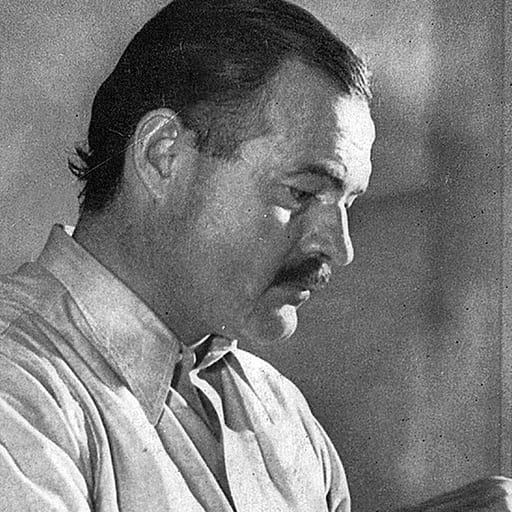 Ernest Hemingway
Relying on political causes or trends to build a career is a form of cheating that distracts from the hard work of creating honest, quality products.
 Ralph Waldo Emerson
True productivity and education happen when a person works to fulfill their own character's necessity rather than merely serving another's goals.
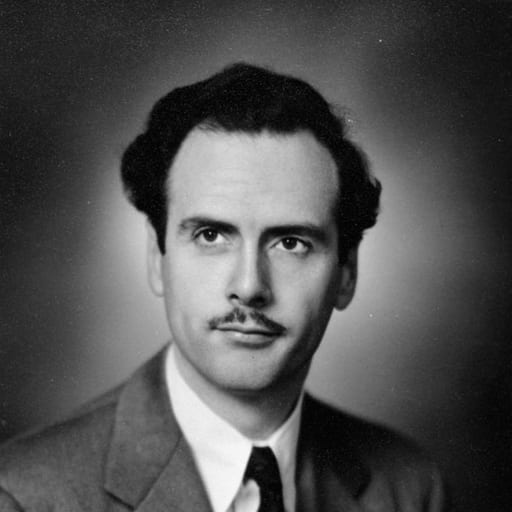 Marshall McLuhan
Apply academic or specialized knowledge to practical business problems like advertising and corporate consulting to sustain growth.
 William Shakespeare
A professional should reclaim and maintain their natural social or professional standing as soon as they have the means to do so.
 Scott Galloway
Earning money in physical environments helps develop social skills and a practical understanding of how capitalism works.
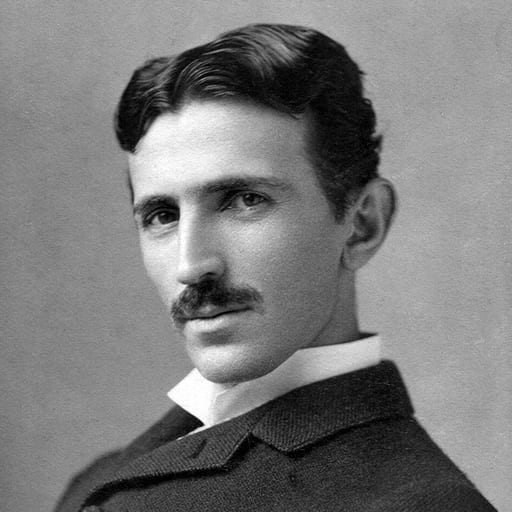 Nikola Tesla
By solving critical technical problems under pressure, such as repairing damaged dynamos overnight, Tesla earned the respect of top management and founders.
Episodes are real events from public sources, summarised by us.
Peter ThielThiel created a program offering $100,000 to young people to drop out of college and start their own ventures. He wanted to provide an alternative path for those who only went to college because they lacked other options.
LessonDisrupting established institutions requires creating viable alternatives that incentivize talent to take a different path.
Steve JobsAt age 13, Jobs called the co-founder of HP to ask for spare parts for an electronics project. This bold move resulted in a summer job at the company.
LessonDirectly reaching out to industry leaders can open doors and provide early career opportunities.
 Warren Buffett
Like Buffett, Munger worked at a grocery store as a youth and realized he disliked manual labor for low pay. He decided to use his intellect to build wealth instead of physical effort.
LessonIdentify the type of work that aligns with your strengths early to avoid unfulfilling labor.
 Charlie Munger
At age ten, Buffett visited the New York Stock Exchange and saw the immense wealth and custom services provided to traders. This experience solidified his ambition to find a way to participate in the financial markets.
LessonExposure to the centers of industry can leave a lasting impression and clarify long-term career goals.
Naval RavikantNaval realized he gets bored quickly but learns fast, making him ill-suited for deep research in one topic for decades. He chose venture investing because it rewards his ability to quickly master new technologies and his tendency to move on to the next big thing.
LessonAlign your career with your natural cognitive patterns and temperament rather than fighting against them.
Paul GrahamBefore starting Facebook, Mark Zuckerberg expected to work at a large corporation like Microsoft. The availability of modern technology allowed him to choose the startup path instead of a traditional corporate job.
LessonTechnology has lowered the barriers to starting high-growth companies, changing the default career path for the ambitious.
Bill GatesBill Gates enrolled at the Lakeside School in seventh grade, where he met his future co-founder Paul Allen. He used his early programming skills to write the school's class scheduling software.
LessonEarly technical mastery in a niche environment can lead to foundational partnerships and real-world problem-solving experience.
Reid HoffmanAfter college, David Autor felt unsatisfied with both psychology and computer science. While on a cross-country road trip, he heard about a computer learning center in San Francisco and decided to volunteer, which eventually led him to study technology and inequality.
LessonUnexpected volunteer opportunities can bridge disparate skills and lead to a meaningful career path.
 Marc Andreessen
Marc lists companies like Netscape, eBay, and Google as examples where being an early employee provides permanent credibility. He argues that having these names on a resume is as valuable as an advanced degree.
LessonJoining a high-growth winner early creates a lasting reputational benefit that opens doors for the rest of your career.
Andrew observed many designers spending years at big companies or doing local low-paid work, only to end up drained and starting from zero. He argued that the internet allows anyone with skills to build a high-end agency brand overnight without traditional gatekeepers.
LessonYou don't need permission or a long pedigree to target big clients; you just need a website that showcases expert-level work.
 Tim Urban
During college, Tim worked as a waiter at a restaurant where customers served themselves much of their food. This led to customers undertipping him because they misunderstood the extent of his labor.
LessonPersonal experience in a low-level role can deeply inform your perspective on fair compensation and business ethics.
Balaji SrinivasanAfter working at Airbnb, the author experimented with Ethereum in 2017. This experience led to the realization that money had become software, prompting a career shift into the blockchain industry.
LessonDirectly experimenting with new technology can lead to a paradigm shift in how you view a market.