Hall of Masters

Paul Graham

폴 그레이엄

Co-founder of Viaweb and Y Combinator and essayist known for advising founders to do things that don't scale and make something people genuinely want.

1,566 records in all

  • Principles 417
  • Episodes 232
  • Quotes 917
Ask with this master's words

3 free questions a day, no sign-up.

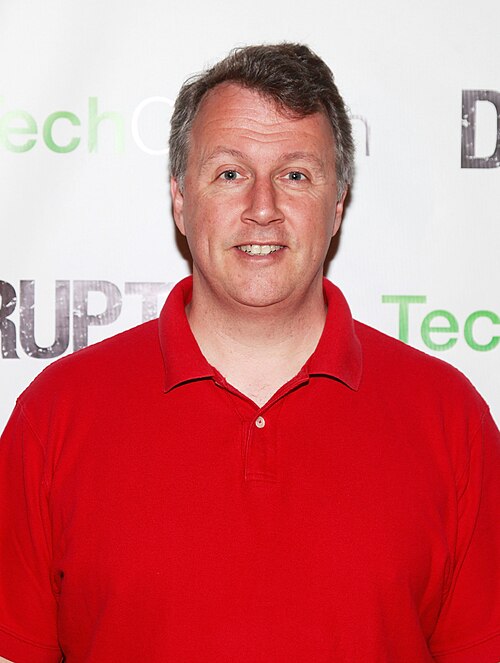
Photo: TechCrunch (Charles Eshelman/Getty Images for AOL)  CC BY 2.0  Original  cropped

Principles

63 basic records of 417

Principles are our summary of their public statements.

  • Do Things That Do Not Scale to Delight Early Users

    Paul Graham emphasizes that early startups must manually recruit and serve users before worrying about automation. Even if an early product is incomplete, founders can deliver an extraordinary overall experience through intense personal attentiveness. Long-term success after launch depends far more on how deeply a startup delights its initial core users than on how many users it initially attracts.

    Supporting quotes

    1 more supporting quote is in the member records.

    A question to consider

    In your business, what manual action can you take right now to give a single early user an extraordinary experience before automating?


  • Use Weekly Compound Growth as a Single Compass

    Graham defines a startup by its rapid growth and insists that every founder must constantly track their weekly growth rate. Focusing on weekly growth in revenue or active users reduces the overwhelming complexity of building a company to a single clear optimization problem. Because growth causes everything else to fall into place, founders can use it as a compass to drive immediate action over endless strategizing.

    Supporting quotes

    1 more supporting quote is in the member records.

    A question to consider

    In your business, what is your exact weekly growth rate in revenue or active users, and what immediate action will hit next week's target?

  • Notice Organic Problems Instead of Inventing Ideas

    Great startup ideas emerge not from brainstorming business concepts, but from noticing real problems that founders preferably experience themselves. When a programmer is also the target user, the entire cycle of building and testing new versions happens rapidly inside one head. Combining deep domain expertise with technical skill further reveals valuable problems at the intersection of fields.

    3 more supporting quotes are in the member records.

    A question to consider

    In your business, did your idea come from theoretical brainstorming, or did you notice it organically from a real problem you face?

  • Embrace Toy Projects and Technological Blind Spots

    Prematurely filtering ideas by whether they look like massive companies causes founders to miss promising seeds of innovation. Projects initially dismissed as toys or small markets ignored by incumbents frequently evolve into transformative businesses. Rapid technological shifts quietly make formerly bad ideas viable for founders whose unique perspective lets them see in others' blind spots.

    3 more supporting quotes are in the member records.

    A question to consider

    In your business, what project might outsiders dismiss as a toy today that recent technological shifts could turn into a major market?

  • Notice Organic Ideas

    He warns that forcing startup ideas leads to building products nobody wants. Instead, he advises observing everyday inconveniences and finding flexible ideas that can evolve gradually.

    2 more supporting quotes are in the member records.

    A question to consider

    What personal inconvenience in my daily life could I solve through my business?

  • Wealth Creation vs Money

    Paul Graham explains that the essence of business is creating value people want, not just making money. He analyzes that developing great software to create something out of nothing is the true creation of wealth.

    3 more supporting quotes are in the member records.

    A question to consider

    Beyond generating revenue, what tangible value can my business add to customers' lives?

  • Avoid Early M&A Distractions

    Focus

    Founders should avoid talking to corporate development teams in the first year unless they are ready to sell immediately, as it distracts from growth.

    3 more supporting quotes are in the member records.

  • Solve the human problem first

    Customers

    Good design focuses on how a human will actually use the product, rather than following a simple but impractical logic.

    Supporting quotes

    2 more supporting quotes are in the member records.

  • Acknowledge Objective Skill

    Learning

    One can distinguish quality by attempting the work themselves; the gap between a master and a beginner is a real, non-imaginary measure of quality.

    Supporting quotes

    2 more supporting quotes are in the member records.

  • Design for Human Commonality

    Product

    Effective products or art work because humans share common biological and psychological responses, making 'goodness' a measure of how well something triggers those responses.

    Supporting quotes

    2 more supporting quotes are in the member records.

  • Go Where the Puck Is

    Career

    Success often comes from being in the most progressive and active hub of the current era, rather than studying where it used to be.

    Supporting quotes

    2 more supporting quotes are in the member records.

You are seeing 236 basic records. Membership answers from all 1,566 of this master's records.

See membership

More masters in this field

See the whole field

Founders and company builders

These records are our compilation of public statements and sources. We are not affiliated with or endorsed by Paul Graham or any related company. If something should come down, tell us. Takedown request form