Hall of Masters

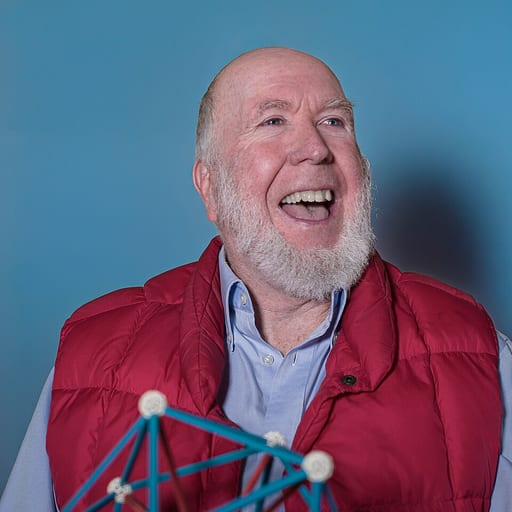
Kevin Kelly

케빈 켈리

Founding executive editor of Wired, author of the essay 1,000 True Fans

1,832 records in all

  • Principles 683
  • Episodes 339
  • Quotes 810
Ask with this master's words

3 free questions a day, no sign-up.

Photo: Cmichel67  CC BY-SA 4.0  Original  cropped

Episodes

51 basic records of 339

Episodes are real events from public sources, summarised by us.

  • Investigating Cell Phone Tracking Services

    Kevin Kelly discovered a service called Best411 that charged ninety-five dollars to provide the location of any cell phone. He questioned why a technologically trivial query cost so much and who was setting the price for this data access.

    LessonFounders should recognize that the price of data is often determined by access and legality rather than the actual cost of the technology.

  • Netflix Streaming vs. Discs

    Kevin noticed his family stopped watching Netflix DVDs even though the disc catalog was ten times larger and higher quality. They chose whatever was available for instant streaming because a two-day mail turnaround felt too slow.

    LessonConvenience and speed often trump variety and quality in the digital age.

  • Profit-Motivated Restraint

    Pirates avoided destroying captured ships or brutalizing captives not out of kindness, but to maximize their profits. Their greed led them to preserve the value of their 'prizes' and limit reliance on forced labor.

    LessonAligning profit motives with functional behavior can produce better social outcomes than moral appeals alone.

  • 2007Brand

    The EG Conference Presentation

    Kevin Kelly presented a new talk at the EG conference at the Getty Museum in Los Angeles. He reflected on the history of the web and projected its future over the next 5,000 days.

    LessonSharing long-term projections at high-level conferences can establish a founder as a thought leader in their field.

  • The Rise of Choice-Ad Systems

    Kevin Kelly observed that traditional big-brand advertising was being challenged by decentralized systems where users created and distributed ads. He predicted that small to middle-sized businesses would find more leverage in these new spaces than in traditional campaigns.

    LessonFounders can compete with giants by using decentralized, user-driven platforms that don't require massive upfront budgets.

  • Robotic Stair Construction

    To build a spiral staircase inside a mountain tunnel, Stuart Kendall invented a specialized stone-slicing robot. The robot grinds out a few stairs per day, allowing for extreme precision in a difficult environment.

    LessonUnique challenges often require inventing custom tools rather than relying on existing solutions.

  • 1957Risk

    The Tulsa Time Capsule Burial

    The city of Tulsa buried a new 1957 Plymouth Belvedere in a concrete tomb to celebrate the state's centennial. It was filled with everyday items like a woman's purse, gasoline, and beer, intended to be a pristine prize for a winner 50 years later.

    LessonEven well-intentioned long-term projects can fail if environmental risks like moisture and vibration are not perfectly managed.

  • The Failed Unveiling

    When the car was unearthed 50 years later, it was covered in gunk and rust rather than being in mint condition. Kelly noted that the same model car was actually better preserved by private collectors outside of the capsule.

    LessonDon't waste resources protecting what the market or enthusiasts are already naturally incentivized to save.

  • Formulating the Alien Visitation Theory

    Kevin Kelly analyzed the blurry evidence of UFOs and concluded that alien presence is the most logical explanation. He theorized that they are machine probes seeking novel ideas rather than physical beings wanting to land.

    LessonLook beyond the surface of 'blurry' data to find the underlying motivation or 'scarcity' that drives a market or behavior.

  • Human Genome Sequencing Debate

    Biologists debated whether to start sequencing the human genome immediately or wait. They realized that because technology was doubling in speed and efficiency, waiting a few years would actually allow them to finish faster and cheaper.

    LessonIn fields governed by Moore's Law, timing your entry can be more important than being first.

  • Analyzing Mineral Evolution Theory

    Kevin Kelly reviewed Robert Hazen's paper on Mineral Evolution, which argues that life is responsible for most of Earth's 4,300 mineral species. He extended this logic to suggest that technology will similarly create new 'technogenic' minerals.

    LessonFounders can find breakthrough ideas by taking a proven theory from one field and extrapolating its logic to their own industry.

  • The Videotex Forecast

    The National Science Foundation predicted that 40 percent of households would use 'videotex' by 2000. While the technology arrived, the forecast missed the shift toward peer-to-peer internet communication, focusing instead on two-way interaction with big content providers.

    LessonEven accurate technological forecasts can fail to grasp the social and structural shifts that define an era.

  • The Hotwire Editorial Debate

    When Wired launched Hotwire, Kevin Kelly debated Howard Rheingold about the role of editors. Rheingold believed in an editor-less crowd, while Kelly insisted that top-down guidance was essential for reliability.

    LessonEven in community-driven platforms, a clear editorial voice adds value that raw data cannot provide.

  • Launch of Encyclopedia of Life

    After years of persistence and a TED Wish grant, a consortium of museums and universities launched the Encyclopedia of Life. It started with 30,000 active pages and a million blank ones, proving that a project doesn't have to be complete to be real.

    LessonLaunch your ambitious project even if it is mostly blank, as long as the structure is real and functional.

  • 1993Brand

    The birth of Wired magazine

    Wired magazine was launched with the premise that a new tech culture was being born. The founders aimed to make nerds cool and celebrate geeks as the new celebrities of this emerging culture.

    LessonMedia and storytelling can define and accelerate the growth of a niche culture into the mainstream.

  • Crowdfunding Vanishing Asia

    Kevin Kelly used Kickstarter to finance his massive photobook set, Vanishing Asia. The project was so large that the printed books filled four 40-foot shipping containers after being printed in Turkey.

    LessonCrowdfunding can finance high-quality, large-scale physical products that would be too risky for traditional publishers or solo creators to fund upfront.

  • Debating Wendell Berry

    Kevin Kelly addressed the critic Wendell Berry's skepticism about whether machines can make men better. He argued that if we view technology as the sum of human imagination, including law and civilization, it clearly improves humanity.

    LessonBroadening the definition of your field can reveal the true value and purpose of your work.

  • Measuring Global Internet Power

    Kevin Kelly wanted to know the total power consumption of the global internet. He commissioned researchers at Uclue to estimate the electricity demand across data centers, PCs, and network infrastructure.

    LessonFounders should seek data to understand the true scale and environmental footprint of the platforms they build upon.

  • Lawrence Watt-Evans's Chapter Model

    Author Lawrence Watt-Evans asked fans to pay $100 per month to release his novel chapter by chapter online. He successfully supported himself with about 200 True Fans while also using traditional publishing for wider reach.

    LessonIncremental releases funded by a small core group can sustain a creator's work.

  • The Laptop Club Discovery

    Kevin Kelly highlighted a story about elementary school students who created 'laptops' out of construction paper because they didn't have computers in class. These children spent significant time pretending to email and designing keyboards with buttons for things like 'best friends' and 'pets'.

    LessonObserving how people play or pretend with tools reveals the deep social needs that professional designers often overlook.

You are seeing 275 basic records. Membership answers from all 1,832 of this master's records.

See membership

More masters in this field

See the whole field

Content and audience

These records are our compilation of public statements and sources. We are not affiliated with or endorsed by Kevin Kelly or any related company. If something should come down, tell us. Takedown request form