Hall of Masters

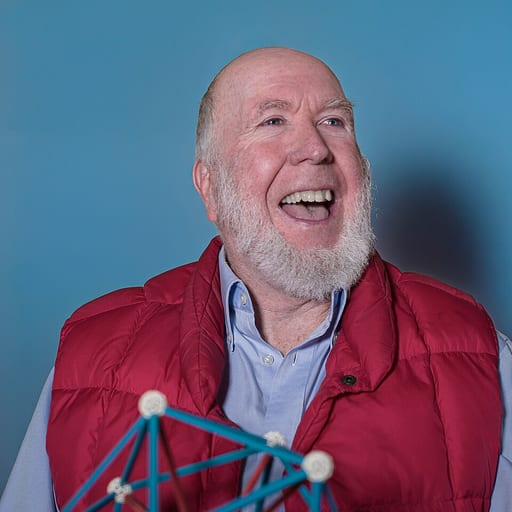
Kevin Kelly

케빈 켈리

Founding executive editor of Wired, author of the essay 1,000 True Fans

1,832 records in all

  • Principles 683
  • Episodes 339
  • Quotes 810
Ask with this master's words

3 free questions a day, no sign-up.

Photo: Cmichel67  CC BY-SA 4.0  Original  cropped

Episodes

51 basic records of 339

Episodes are real events from public sources, summarised by us.

  • Defining the Technium's Path

    Kevin Kelly analyzed the long-term trends of technology and evolution to understand why progress feels more visible now. He concluded that while technology increases free will, it is also constrained by its own history and complexity.

    LessonUnderstand that your business path becomes more specialized and articulated as you grow, even as your total options increase.

  • Einstein's Conceptual Leap

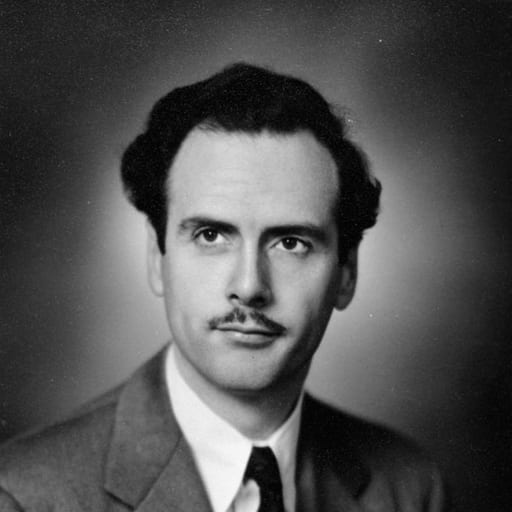
    While Lorentz and Poincare were working on the same mathematical problems of relativity, Einstein made a unique conceptual leap. He reduced the complex math to a simple principle that others couldn't grasp even after he explained it.

    LessonA genius can leap ahead of the inevitable by about a decade, but the core discovery would eventually happen anyway.

  • Mendel's Premature Discovery

    Gregor Mendel discovered the laws of genetic heredity, but his work was ignored for 35 years because it was too far ahead of the biological problems of his time. It was only rediscovered when the scientific culture caught up and had the right questions to ask.

    LessonBeing right is not enough if the market and culture are not ready to understand or use your solution.

  • The Mars500 Isolation Experiment

    Six international crew members were locked in a tubular facility in Moscow for 520 days to simulate a round trip to Mars. They practiced daily tasks, including virtual landings and surface excursions, while being monitored for psychological stress.

    LessonLong-term projects require rigorous rehearsal of daily routines to ensure the team can handle the psychological toll of the journey.

  • The AI Guru Consensus

    At a recent conference, nine highly informed AI experts agreed that superhuman intelligence was inevitable and coming soon. Kevin Kelly observed that this belief is shared by prominent figures like Elon Musk and Bill Gates despite a lack of evidence.

    LessonEven the smartest experts can fall into 'mythical' thinking when they rely on unexamined assumptions about technology.

  • The Edge Virtual Salon

    Kevin Kelly participated in a virtual salon hosted by John Brockman, answering how the internet changed his thinking. He reflected on his shift from remembering facts to summoning them and how his certainty has decreased in the face of ubiquitous 'anti-facts'.

    LessonTechnology doesn't just provide tools; it fundamentally reconfigures how we process information and establish truth.

  • Managing the Whole Earth Catalog

    Stewart Brand used McBee Keysort cards to manage 3,000 items for the Last Whole Earth Catalog. These physical cards with notched holes allowed him to sort and edit data without keeping them in a specific order.

    LessonA simple, functional sorting system can be the difference between organizational sanity and chaos when handling large datasets.

  • Archiving the Whole Earth Catalog

    Kevin Kelly announced that the entire 35-year archive of the Whole Earth Catalog was finally scanned and posted online for free study. Although he found the proprietary interface clunky, he celebrated the preservation of this 'gold mine' of lifehacking wisdom.

    LessonPreserving and digitizing past work can give a second life to valuable ideas and serve as a foundation for new creators.

  • 1979Risk

    The $500 Cross-Country Journey

    Kevin Kelly rode a cheap bicycle from San Francisco to New York over three months. He spent only $500 for the entire trip and did no physical training beforehand.

    LessonYou don't need a massive budget or perfect preparation to start a monumental project.

  • Analyzing computational DNA

    Kevin Kelly observed research where plants reverted to ancestral genes not present in their parents. He concluded that biological systems function like computers with archival backups and error-correcting circuits.

    LessonLook to nature to understand how to build resilient, self-correcting systems for long-term stability.

  • The Updated Last Whole Earth Catalog

    Kevin Kelly revisited the 1975 edition and realized it functioned exactly like a modern blog. Editors took handwritten letters from readers and typeset them with minimal changes to share niche knowledge with millions.

    LessonA successful platform can exist before its ideal technology if it captures the human desire to share and learn.

  • Summarizing What Technology Wants

    An Italian newspaper asked Kelly to summarize his book in 1,500 words. He used the opportunity to refine his thesis that technology has a moral dimension and a positive trajectory.

    LessonConstraints can force a founder to distill their complex vision into a single, powerful core message.

  • Exploring Generative AI Daily

    Kevin Kelly spent significant time daily creating text and images with generative AI systems. He noticed a striking similarity between AI hallucinations and human dream logic, leading to his theory on intelligence.

    LessonDirect, daily experimentation with new tools can lead to profound insights about how the world and our minds work.

  • The Camera-Free Bicycle Journey

    During a personal transition, Kevin decided to ride a bicycle across the US without a camera to break his addiction to seeing the world only through a lens. He used a sketchbook instead to appease his visual desires and eventually learned to enjoy the world without being dependent on framing shots.

    LessonSometimes you must intentionally remove your primary tools to regain a healthy perspective and creative freedom.

  • Amish Adoption of Cell Phones

    The Amish communities began adopting flip phones because they found the technology helped keep their families connected as they moved to different areas. They decide on technology usage in a decentralized way, parish by parish, based on whether it strengthens their social fabric.

    LessonEvaluate technology not by its features, but by whether it supports your core values and community goals.

  • The Digitization of Law and Journals

    Kelly observes that all English law and half of the scholarly journals from the last 25 years have been digitized and linked. This allows for machine translation and text mining to uncover patterns that were previously invisible in individual physical copies.

    LessonDigitizing and linking information unlocks hidden value that cannot be accessed when data is siloed.

  • 2006Risk

    The Copybot Boycott

    Linden Labs introduced a tool that allowed instant cloning of user-created items in Second Life. In response, over 100 virtual vendors closed their stores to protest the threat to their creative monopolies.

    LessonWhen a platform undermines the perceived ownership of its creators, it risks a mass exodus or strike by its most valuable users.

  • Sony vs Gold Farmers

    Sony attempted to ban the sale of EverQuest virtual items on eBay, claiming they owned the digital assets. While they blocked millions in sales, the market simply migrated to other auction sites, proving the demand for virtual-to-real currency exchange.

    LessonAttempting to suppress a natural secondary market for digital assets is often futile and can alienate the user base.

You are seeing 275 basic records. Membership answers from all 1,832 of this master's records.

See membership

More masters in this field

See the whole field

Content and audience

These records are our compilation of public statements and sources. We are not affiliated with or endorsed by Kevin Kelly or any related company. If something should come down, tell us. Takedown request form