Hall of Masters

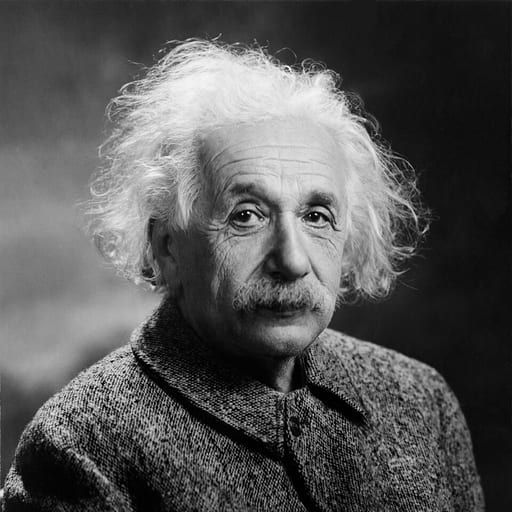
Albert Einstein

알베르트 아인슈타인

Physicist who developed the theory of relativity

515 records in all

  • Principles 173
  • Episodes 205
  • Quotes 137
Ask with this master's words

3 free questions a day, no sign-up.

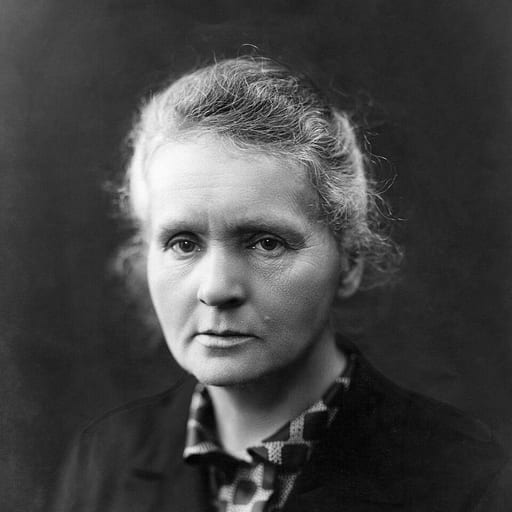
Photo: Oren Jack Turner  Public domain  Original  cropped

Episodes

31 basic records of 205

Episodes are real events from public sources, summarised by us.

  • Reflecting on Religion and Science

    Einstein wrote about the relationship between religion and science, showing his interest in the philosophical foundations of his work. His thoughts were later selected for a major anthology of modern science writing.

    LessonUnderstanding the broader philosophical implications of your work can differentiate your perspective in a crowded market.
  • 1919Brand

    External Validation of Theory

    영국 과학자들이 아프리카와 브라질로 원정대를 파견하여 일식 중에 별빛이 휘는 현상을 촬영했어요. 이 실험 결과가 아인슈타인의 가설과 일치함이 증명되면서 그는 세계적인 명성을 얻게 되었어요.

    Lesson이론이나 제품의 가치는 실제 현장에서의 엄격한 테스트를 통해 증명되어야 권위를 얻어요.

  • The Shift from Newton to Mach

    Einstein compared Newton's absolute space with Mach's idea that inertia depends on the totality of masses. He used these historical perspectives to build a new concept of space-time that is conditioned by matter.

    LessonSynthesizing opposing historical viewpoints can lead to a superior third way or a breakthrough product.

  • The Foundation of Relativity

    Einstein realized that Euclidean geometry could not hold in non-inert systems due to Lorentz contraction. He decided to bridge axiomatic geometry with physical reality to formulate the general theory of relativity.

    LessonBreakthroughs often require abandoning long-held conventional frameworks when they no longer fit the data.

  • The Invariance of Light Speed

    Unlike a shell fired from a moving tractor, light does not change its relative speed based on the observer's movement. Astronomer de Sitter proved that light reaching us from stars always maintains the same velocity regardless of whether the star is approaching or receding.

    LessonRecognizing fixed constraints that cannot be changed is essential for building a valid strategy.

  • The Chess Player's Mental Eye

    Einstein's theory suggests that some people, like skilled chess players, can visualize complex four-dimensional series simultaneously. They don't just see the current board; they see the entire chronological and spatial sequence of potential moves at once.

    LessonA leader should strive to see the entire sequence of cause and effect in a decision as a single, simultaneous picture.

  • Fizeau's Experimental Verification

    피조는 움직이는 액체 속에서 빛의 속도를 측정하는 실험을 수행했어요. 고전 역학은 이 결과를 설명하기 위해 복잡하고 불가능해 보이는 가설을 세워야 했지만, 아인슈타인의 새로운 속도 합성 법칙은 이를 완벽하게 설명해냈어요.

    LessonThe most accurate model is the one that explains existing data simply without needing improbable excuses.

  • Testing Relativity with Electrons

    Einstein's theory required high velocities to prove that mass varies with speed, but planets and vehicles were too slow. Scientists used cathode rays and radium's Beta rays, which travel near the speed of light, to provide the necessary data.

    LessonWhen standard tools cannot prove a new concept, look for specialized environments that push the boundaries of your data.

  • Discovery of Electromagnetic Mass

    Distinguished physicists conducted experiments to separate mechanical mass from electromagnetic mass in electrons. They were surprised to find that the 'real' mechanical mass was zero, meaning the entire mass was of electromagnetic origin.

    LessonDeep investigation can reveal that what we perceive as a solid property is actually the result of underlying forces.

  • Confirmation of New Mechanics

    Sommerfeld predicted that electrons near an atom's center move faster and thus have more mass, creating fine lines in the spectrum. In 1916, Paschen conducted experiments that observed these exact fine lines, confirming Einstein's theory of varying mass.

    LessonTheoretical predictions gain ultimate authority only when they are validated by precise, observable experiments.

  • Using the Sun as a Laboratory

    To prove his theory, Einstein needed a massive body like the sun, where gravity is twenty-seven times stronger than on Earth. A light ray passing near the sun would deviate by 1.75 arcseconds, a tiny but measurable angle for astronomers.

    LessonWhen your current tools or environment lack the necessary impact, seek out a 'giant laboratory' where your hypothesis can be tested.

  • The Shift from Flat to Round Earth

    In early ages, the flat earth theory was the most convenient because it matched local, everyday experiences. However, as navigators and astronomers explored more remote objects, this simple idea no longer fit the facts, leading to the adoption of the round earth model.

    LessonA business model that works for a small local market might become a liability as you scale and encounter more complex environments.

  • Gauss's Mountain Triangle Experiment

    Gauss attempted to verify Euclidean geometry by measuring the angles of a massive triangle formed by three distant mountain peaks. He found the sum to be approximately 180 degrees, but the technology of his time was not precise enough to detect the subtle deviations caused by the real universe's non-Euclidean nature.

    LessonEven if your initial tests don't show a difference, the failure might lie in the lack of precision or scale in your testing methods.

  • Failure to adapt technology

    Einstein's father and uncle lost a major lighting contract in Munich because they lacked the capital to switch from direct current to alternating current. This failure forced them to sell their factory and move the family to Italy to find new opportunities.

    LessonFailing to invest in more efficient, emerging technology can lead to the loss of competitive advantage and business failure.

  • The Role of Music in Creativity

    아인슈타인은 물리학자가 아니었다면 음악가가 되었을 것이라고 말할 정도로 음악을 사랑했어요. 그는 음악으로 생각하고 백일몽을 꾸며 음악을 통해 삶의 가장 큰 기쁨을 얻었어요.

    LessonEngaging in a different creative field can provide the mental framework for success in your primary work.

  • Postulating Light Quanta

    Einstein proposed that light consists of localized particles, an idea that was rejected by almost all leading physicists for over a decade. He persisted because he believed it explained experimental results like the photoelectric effect, and he was eventually proven right in 1919.

    LessonGroundbreaking ideas often face universal rejection before they become the new standard.

  • 1908Career

    Transition to Academia

    While working as a technical examiner at the patent office, Einstein continued his research and became a lecturer at the University of Bern. This move allowed him to formalize his influence on the foundation of physics through papers on wave-particle duality.

    LessonMaintaining a side pursuit while holding a stable job can eventually lead to a full career transition.

You are seeing 78 basic records. Membership answers from all 515 of this master's records.

See membership

More masters in this field

See the whole field

Science and first-principles thinking

These records are our compilation of public statements and sources. We are not affiliated with or endorsed by Albert Einstein or any related company. If something should come down, tell us. Takedown request form