Hall of Masters

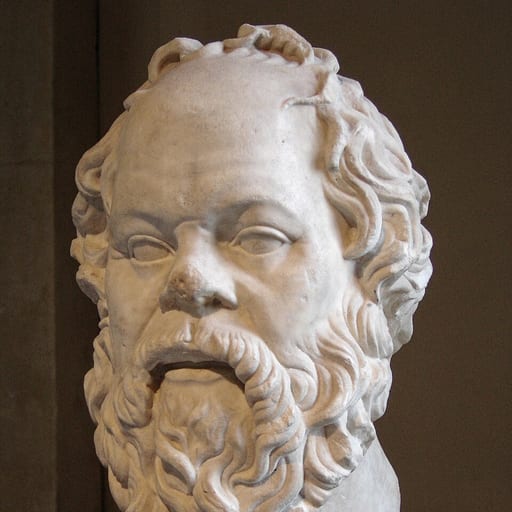
Socrates

소크라테스

Athenian philosopher known through Plato's dialogues

566 records in all

  • Principles 191
  • Episodes 116
  • Quotes 259
Ask with this master's words

3 free questions a day, no sign-up.

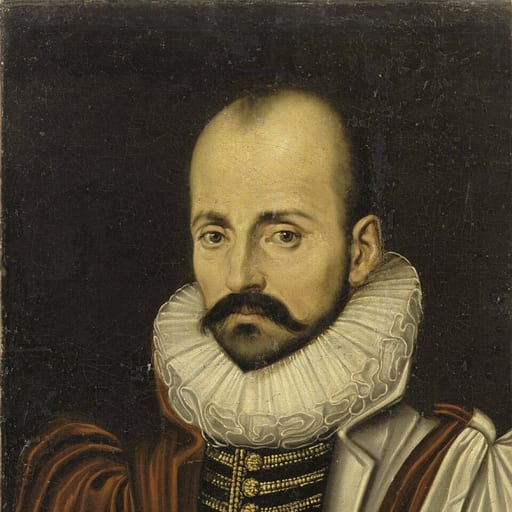
Photo: Copy of Lysippos (?)  Public domain  Original  cropped

Episodes

17 basic records of 116

Episodes are real events from public sources, summarised by us.

  • Socrates's Disappointment with Natural Science

    Socrates initially sought to understand the causes of all things through natural science but found it focused only on physical mechanics. He was disappointed that Anaxagoras's books explained the body's structure rather than the mind's choice as the reason for his actions.

    LessonFocusing on the 'how' of a process without understanding the 'why' of the purpose leads to incomplete conclusions.
  • The Shift to Abstract Reasoning

    Socrates feared that relying on his physical senses to understand existence would blind his soul. He decided to stop looking at things directly and instead sought truth through the medium of ideas and principles.

    LessonWhen direct observation leads to confusion, returning to first principles and abstract models can provide clearer direction.

  • The Misrepresentation of Socrates

    Socrates heard Plato read the Lysis and realized that Plato had attributed many things to him that he never actually said. He reacted with surprise at the number of lies or inaccuracies the young man had written.

    LessonBe aware that your public image and words can be distorted by others, even by your own students or followers.

  • The Midwife Method of Teaching

    Socrates used a dialectical method to help people realize their own contradictions. He believed that by asking questions rather than lecturing, he could lead others to correct judgments.

    LessonEffective leadership involves helping team members find the right answers themselves rather than just giving orders.

  • The Search for Justice

    Socrates engaged in a series of debates with different thinkers to define justice. He moved from simple proverbial morality to constructing an ideal state to see justice on a larger scale.

    LessonTo understand a complex core value, look at how it functions in a larger system or organization.

  • The Defeat of Thrasymachus

    Thrasymachus, a vain Sophist who demanded payment for his discourse, attempted to dominate the conversation with loud orations. Socrates used his dialectic method to expose Thrasymachus's inability to defend his general notions, eventually reducing the blustering giant to complete submission.

    LessonConfidence and loud claims are no substitute for a logically sound foundation when facing rigorous scrutiny.

  • Crowdfunded Learning

    Thrasymachus demanded payment for his wisdom, but Socrates explained he had no money. Glaucon and others immediately offered to contribute funds so that Socrates could listen and learn.

    LessonIf you provide immense value through your thinking, your community will often find ways to fund your continued growth.

  • Glaucon's Challenge

    After Thrasymachus gave up the argument, Glaucon was dissatisfied and demanded a deeper proof of why justice is better. He categorized goods into three types to force Socrates to be more precise in his reasoning.

    LessonA tough partner or client who demands deeper proof can force you to refine your value proposition.

  • The Defense of Female Guardians

    Socrates proposed that women should receive the same education in music and gymnastics as men to become guardians. He argued that while women might be physically weaker on average, their nature and capacity for leadership can be equal to men's.

    LessonA founder should look for talent in overlooked demographics, as the underlying nature of excellence is not restricted by outward appearance.

  • Abolishing Private Family Ties

    To prevent nepotism and internal conflict, Socrates argued that guardians should have wives and children in common. No parent should know their own child, and every peer should be treated as a sibling to foster absolute unity.

    LessonRemoving individual silos and 'private' interests can create a powerful, unified culture, though it requires extreme sacrifice.

  • The Analogy of the Sun

    Socrates hesitated to define the absolute nature of 'the good' directly, fearing he would fail or be ridiculed. Instead, he used the sun as a metaphor to explain how the good provides truth and being to the intellectual world.

    LessonWhen a concept is too complex to explain directly, use a powerful analogy to make the core value clear to your audience.

  • The Allegory of the Cave

    Socrates describes prisoners chained in a cave who believe shadows on a wall are the only reality. When one is freed and sees the sun, he realizes his previous life was an illusion, though the transition is painful.

    LessonMarket leaders often mistake current trends (shadows) for permanent truths until a disruptive shift forces them to see the real world.

  • The Cycle of Decay

    Socrates describes how even a perfect state eventually fails because rulers lose the ability to select the right successors. This leads to a mixing of different 'metals' or qualities of people, causing internal discord and war.

    LessonThe long-term survival of a business depends on the rigorous selection and training of the next generation of leaders.

  • The Rise of the Avaricious Leader

    A son watches his ambitious father lose everything to legal battles and informers. Driven by fear and poverty, he suppresses all other passions to focus exclusively on hoarding money and working hard to rebuild a fortune.

    LessonTraumatic loss can shift a leader's focus from healthy ambition to a narrow, obsessive pursuit of financial security.

  • Public Caricature

    By age 45, Socrates was famous enough to be a central character in Aristophanes's play, The Clouds. The play ridiculed him as an absurd atheist and a sophist to the Athenian public.

    LessonHigh visibility often brings public ridicule and misinterpretation of your actual work or character.

  • Learning from Diotima

    Socrates, who usually claimed to know nothing, made an exception regarding the nature of love. He credited his understanding of love to a 'clever woman' named Diotima, showing his willingness to learn from experts regardless of their status.

    LessonBe humble enough to admit when you don't know something and seek out those who possess true expertise.

  • Socrates as an Icon of Individual Conscience

    2차 세계대전 이후 칼 포퍼와 같은 학자들은 소크라테스를 전체주의에 저항하는 개인주의의 상징으로 보았어요. 포퍼는 소크라테스의 정신이 열린 사회의 기초가 된다고 주장했어요.

    Lesson개인의 비판적 사고와 양심은 억압적인 조직이나 사회 시스템에 대항하는 가장 강력한 도구예요.

You are seeing 85 basic records. Membership answers from all 566 of this master's records.

See membership

More masters in this field

See the whole field

Philosophy and wisdom traditions

These records are our compilation of public statements and sources. We are not affiliated with or endorsed by Socrates or any related company. If something should come down, tell us. Takedown request form