Hall of Masters

Paul Graham

폴 그레이엄

Co-founder of Viaweb and Y Combinator and essayist known for advising founders to do things that don't scale and make something people genuinely want.

1,566 records in all

  • Principles 417
  • Episodes 232
  • Quotes 917
Ask with this master's words

3 free questions a day, no sign-up.

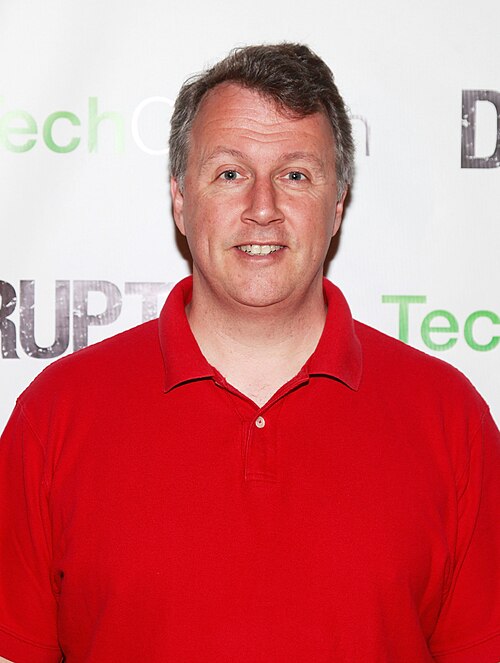
Photo: TechCrunch (Charles Eshelman/Getty Images for AOL)  CC BY 2.0  Original  cropped

Episodes

35 basic records of 232

Episodes are real events from public sources, summarised by us.

  • Building Online Stores Manually for Viaweb Merchants

    When Paul Graham and his team approached merchants to use Viaweb software to build online stores, some declined to use it themselves but allowed the founders to build stores for them. The founders manually built the online stores on the merchants' behalf and implemented missing software features on the fly.

    LessonUsing your own product on behalf of lukewarm users recruits initial customers and creates an immediate feedback loop showing what features are truly needed.


  • Stripe's Collison Installation and Manual Merchant Accounts

    Early on at Y Combinator, Stripe needed to acquire initial users among fellow startups and provide them with instant merchant accounts. Instead of sending links, the Collison brothers took users' laptops to set up Stripe on the spot and manually signed users up for traditional merchant accounts behind the scenes.

    LessonFounders should not wait for self-onboarding or complete backend automation when they can eliminate friction immediately by doing the setup manually.

  • 2012

    Revising His Earlier Definition of a Startup to Rapid Growth

    In an earlier essay, Paul Graham had defined a startup as a small company that takes on a hard technical problem. He publicly corrected his earlier statement, noting that solving hard technical problems is merely a common recipe whereas rapid growth is the true defining characteristic.

    LessonFounders should not conflate the most common mechanism for achieving rapid growth with the fundamental definition of a startup, which is growth itself.

  • Stripe's Collison Installation and Manual Merchant Accounts

    To acquire early users, the founders of Stripe did not just send signup links but directly took customers' laptops to install the payment system on the spot. They eliminated initial friction entirely by manually setting up customer accounts instead of waiting for backend automation to be completed.

    LessonIn the early stages, founders must actively and manually help customers use the service immediately rather than obsessing over automation or scalability.

  • 2012

    Pebble Assembling Their First Watches by Hand

    The hardware startup Pebble faced massive initial costs and risks before they could begin large-scale factory production. The founders manually assembled the first several hundred smartwatches themselves before launching their Kickstarter campaign.

    LessonManually fabricating early products allows for rapid design iteration and provides invaluable manufacturing experience needed for future mass production.

  • The Origin of Microsoft and Meta

    Both companies were started during Harvard's reading period, a time when students are on campus but have no immediate deadlines. This unstructured time allowed the founders to focus entirely on their new projects.

    LessonUnstructured free time is essential for ambitious people to build significant new things.

  • The Revenue Loop Pitch

    Paul Graham showed Jerry Yang a search algorithm that sorted results by potential revenue and user behavior. Jerry Yang showed no interest because Yahoo was already making massive money from overpriced banner ads.

    LessonCurrent easy profits can prevent you from adopting the very technology that will define the future.

  • Paul Buchheit's Natural Talent

    Paul Buchheit began angel investing a year after Paul Graham but was immediately effective at picking winners. His success came from his ability to empathize with founders rather than his years of experience.

    LessonThe ability to recognize and resonate with talented founders is more important than technical investment experience.

  • 2007Hiring

    Y Combinator's realization on credentials

    Y Combinator initially overestimated founders from elite schools like Harvard and MIT. After seeing the actual results of their startups, they learned to trust their own senses during interviews rather than the school name.

    LessonReal-world performance is the only accurate measure of talent, regardless of where someone was educated.

  • Funding the Airbnb Outlier

    YC decided to fund Airbnb despite thinking it was a crazy idea that other investors might not like. They had to consciously ignore what the market thought to capture a potential big winner.

    LessonTo find big winners, you must be willing to fund ideas that seem crazy to the general market.

  • Mark Zuckerberg's Default Career Path

    Before starting Facebook, Mark Zuckerberg expected to work at a large corporation like Microsoft. The availability of modern technology allowed him to choose the startup path instead of a traditional corporate job.

    LessonTechnology has lowered the barriers to starting high-growth companies, changing the default career path for the ambitious.

  • The mathematician's reward

    Paul Graham's father loved solving math problems so much that he would complete every exercise in a new textbook immediately. To him, the problems were the reward rather than a chore to be finished.

    LessonTrue aptitude is found when the hardest part of a job feels like the most rewarding part.

  • Sequoia Capital's Investment Strategy

    Sequoia Capital typically takes about 30% of a company when investing alone. They intentionally limit their holdings to ensure founders still feel a strong sense of ownership, even though their brand alone often increases a startup's value by more than the 43% required to break even.

    LessonTop-tier investors often provide value that far exceeds the equity they take, making their investment an extraordinary bargain.

  • The Productive Rogue Project

    Paul describes how programmers often succeed by working on unsanctioned ideas during off-hours. This environment naturally provides long stretches of time, no meetings, and the freedom to use powerful tools and rewrite code frequently.

    LessonThe best work often happens when you ignore corporate 'best practices' and focus on maintaining a complete mental model of the project.

  • The Acquired Programmers' Sacrifice

    Three programmers whose startup was acquired by a large company found that their release cycle slowed from instant to two weeks. They told Paul Graham they would have traded up to half of their acquisition price just to regain the ability to release code immediately.

    LessonHigh-performing talent values the autonomy to ship work more than significant amounts of personal wealth.

  • 2009Brand

    The Faustian iMac Purchase

    Paul Graham bought a new 27인치 iMac because the hardware was beautiful, but he felt guilty about it for the first time. He compared the feeling to buying products from a country with a poor human rights record because of Apple's treatment of developers.

    LessonEven great products can't fully compensate for a brand reputation that starts to feel 'evil' to its core users.

  • Microsoft's Talent Drain

    In the 1990s, Microsoft's reputation suffered among programmers, leading many to feel like they were 'selling out' by working there. This allowed Google and Apple to recruit the best talent who viewed themselves as the 'Rebel Alliance' against Microsoft's 'Empire'.

    LessonA company's cultural image is its most powerful recruiting tool or its biggest liability.

  • Rich Glossip's Near Execution

    Rich Glossip spent 20 years on death row based on the testimony of the actual killer. In 2015, he came within minutes of execution before a drug error halted the process, despite new evidence of his innocence.

    LessonSystems often resist admitting errors even when presented with clear evidence of a mistake.

  • Writing under pressure

    Paul Graham admits that when he has a talk to give and hasn't started until a few days before, he uses the list format. This protects him from running out of ideas or hitting a dead end in his reasoning.

    LessonA modular structure acts as a safety net when you need to produce quality work quickly.

You are seeing 236 basic records. Membership answers from all 1,566 of this master's records.

See membership

More masters in this field

See the whole field

Founders and company builders

These records are our compilation of public statements and sources. We are not affiliated with or endorsed by Paul Graham or any related company. If something should come down, tell us. Takedown request form