Hall of Masters

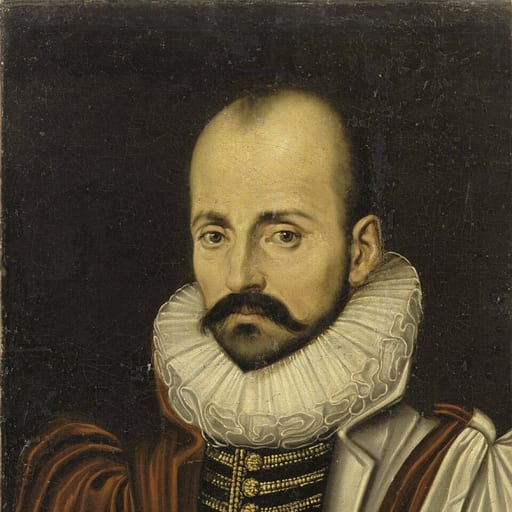
Michel de Montaigne

미셸 드 몽테뉴

French writer who invented the essay

1,105 records in all

  • Principles 358
  • Episodes 243
  • Quotes 504
Ask with this master's words

3 free questions a day, no sign-up.

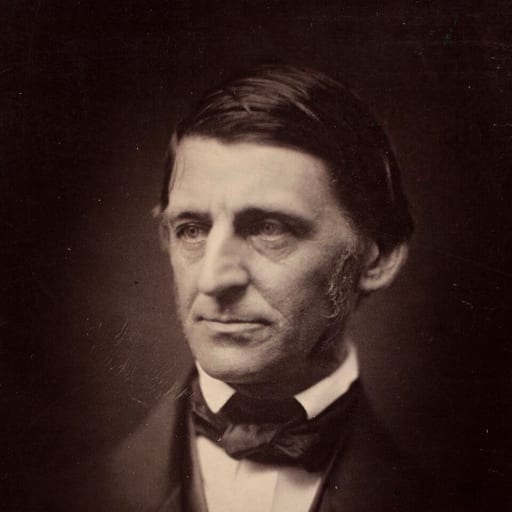
Photo: Unknown author  Public domain  Original  cropped

Episodes

36 basic records of 243

Episodes are real events from public sources, summarised by us.

  • Emerson's Recognition of Sincerity

    Ralph Waldo Emerson was so moved by Montaigne's writing that he felt as if he had written the book himself in a past life. He praised Montaigne as the most honest of all writers for his ability to treat any topic with sincerity and masculine sense.

    LessonAuthentic and sincere communication creates a deep, lasting connection with your audience.

  • Socrates and the Tyrants

    When Socrates was told that the thirty tyrants had sentenced him to death, he calmly replied that nature had already sentenced them. He refused to be troubled by a fate that is universal and inevitable for all living things.

    LessonA leader should maintain composure by recognizing that external threats are often subject to the same natural laws as themselves.

  • The Discovery of Weakness

    Montaigne often encountered the same topics he wrote about in the works of great authors like Plutarch. Seeing their superior execution made him feel weak and flat, yet he chose to continue his own writing without trying to patch over his defects.

    LessonComparing yourself to masters should serve as a calibration of your own level, not a reason to hide your authentic voice.

  • The German negotiation challenge

    Montaigne observed that some French negotiators struggled in Germany because they could not adapt to the local custom of heavy drinking. He praised a lord who, despite being temperate, could drink when necessary for diplomatic affairs.

    LessonBeing able to adapt to local customs, even those you dislike, is a vital skill for successful negotiation.

  • The Flexible Tutor

    As a child, Montaigne became obsessed with reading Ovid instead of his prescribed lessons. His tutor wisely allowed this 'truantry,' which led Montaigne to devour other classics like Virgil and Terence instead of growing to hate books.

    LessonRigid adherence to a curriculum can kill passion; flexibility often leads to better long-term results.

  • The Resolve of Pomponius Atticus

    Atticus was sick and found that medical treatments only prolonged his pain. He decided to stop eating to end his life, and even when the fasting unexpectedly cured his disease, he refused to restart his life because he had already prepared himself for the end.

    LessonOnce a firm decision is made after long deliberation, do not let a change in circumstances lure you back into a cycle you already chose to leave.

  • The Mariner's Resolve

    Montaigne recalls an ancient mariner who, during a great storm, told Neptune that while the god could save or destroy him, he would keep his rudder straight. This illustrates the commitment to one's duty regardless of the outcome controlled by fortune.

    LessonFocus on controlling your own actions and integrity, even when the market or environment is chaotic.

  • 1838Brand

    Hamlet as a Reflection of Montaigne

    존 스털링은 햄릿의 유명한 독백이 몽테뉴의 글과 매우 유사하다고 주장했어요. 그는 햄릿이라는 인물이 몽테뉴를 더 높은 지위와 가혹한 운명 속에 놓인 모습으로 형상화한 것이라는 가설을 제시했어요.

    Lesson강력한 캐릭터를 만들기 위해 실존하는 철학자나 인물의 사고방식을 빌려올 수 있어요.

  • Anticipating Modern Social Sciences

    몽테뉴는 사치 금지법, 형법, 교육 등 다양한 분야를 논하며 수 세기 뒤의 경제학적, 법적 아이디어들을 예견했어요. 그는 관습의 신성함을 주장하던 이전의 태도를 버리고 나쁜 법률에 반대하는 캠페인을 벌이기도 했어요.

    Lesson기존의 관습에 얽매이지 않고 사실을 바탕으로 미래의 흐름을 읽는 통찰력이 필요해요.

  • Montaigne's Influence on English Writers

    Montaigne's writing style was so modern and accessible that many English writers of the time were accused of stealing his ideas. His work was seen as perfectly fitting the court's ear and the general spirit of the era.

    LessonCreating content that resonates with the current zeitgeist can lead to widespread adoption and influence.

  • Traveling by Night

    To avoid the exhausting heat of the sun, Montaigne adopted the Spanish style of traveling from sunset to sunrise. This allowed his horses to perform better and kept him from being worn out by the climate.

    LessonAdapt your working hours and methods to the environment to maintain peak performance and preserve your resources.

  • The Cycle of Learning and Detachment

    Montaigne noted that even when someone devotes themselves entirely to a master's school of thought, they eventually detach and find independence. Just as a biological cell divides, a student's mind naturally moves toward its own path after absorbing what it needs.

    LessonDo not fear losing your identity when learning from others; your natural drive for independence will eventually assert itself.

  • The Arithmetic of Strategy

    Napoleon viewed the art of war as a calculation to ensure he always had superior forces at the specific point of engagement. By maneuvering rapidly, he could bring two men against one even when his total army was smaller.

    LessonSuccess often comes from the skillful arrangement of resources to create a local advantage where it matters most.

  • The Nature of the Writer

    The writer acts as a secretary for the spirit of life, receiving facts and selecting the most characteristic experiences to report. They believe that anything that can be thought can eventually be written down.

    LessonA founder should view every experience as data that can be processed and shared to create value.

  • The Family Rejection of Medicine

    Montaigne's father, grandfather, and great-grandfather lived long lives by avoiding physicians and sticking to a regular diet. They viewed medicine as an obstacle rather than a help, relying on their natural constitution instead.

    LessonSuccess can often be found by sticking to simple, proven habits rather than chasing the latest complex solutions.

  • The Corruption of Lahontan

    A secluded village lived happily under custom until a resident became a notary and introduced litigation. Later, a physician moved in, teaching them to fear the air and replace simple garlic with complex drugs, leading to a decline in their health.

    LessonIntroducing professional intermediaries into a simple market can create artificial needs and dependencies that didn't exist before.

  • Alexander's Singing Lesson

    King Philip of Macedon heard his son Alexander sing exceptionally well at a feast. He asked his son if he was not ashamed to sing so well, implying that a future king should focus on more important matters than musical performance.

    LessonMastering a minor skill can be a sign that you are neglecting your primary professional duties.

You are seeing 166 basic records. Membership answers from all 1,105 of this master's records.

See membership

More masters in this field

See the whole field

Philosophy and wisdom traditions

These records are our compilation of public statements and sources. We are not affiliated with or endorsed by Michel de Montaigne or any related company. If something should come down, tell us. Takedown request form