Hall of Masters

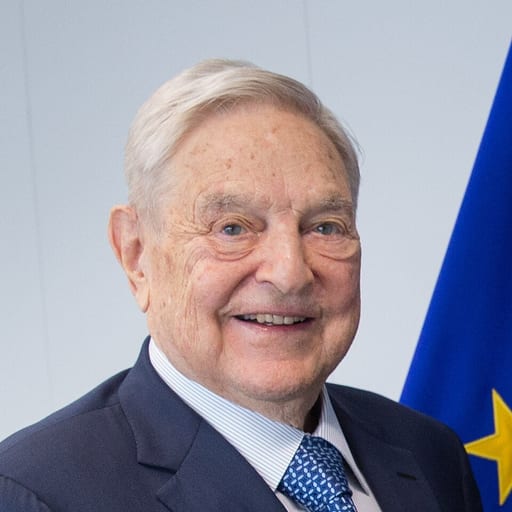
George Soros

조지 소로스

Hedge fund investor and philanthropist; theory of reflexivity

921 records in all

  • Principles 312
  • Episodes 195
  • Quotes 414
Ask with this master's words

3 free questions a day, no sign-up.

Photo: Aris Oikonomou / European Commission  CC BY 4.0  Original  cropped

Episodes

29 basic records of 195

Episodes are real events from public sources, summarised by us.

  • Embedded staff strategy

    In 2016, Facebook provided the Trump campaign with embedded staff to optimize their advertising program. While Hillary Clinton's campaign was offered the same, they declined the offer, giving Trump a perceived edge in digital strategy.

    LessonDirect collaboration with a platform's experts can provide a significant competitive advantage in reaching customers.


  • Publishing The Alchemy of Finance

    George Soros documented his investment practices and the theory of reflexivity in a book to explain his success. He aimed to provide a theoretical and practical account of financial trends.

    LessonDocumenting your unique methodology can solidify your strategy and establish your authority in your field.

  • 2008Risk

    The 2008 Financial Crisis Culmination

    Soros observed the collapse of the US housing bubble, which he identified as the end of a 60-year 'super-boom' era. The crisis spread from subprime mortgages to interbank lending, forcing central banks to inject unprecedented liquidity.

    LessonLong-term trends eventually reach a breaking point when the underlying misconceptions can no longer be sustained by intervention.

  • Lessons from WWII Budapest

    During the German occupation of Budapest, Soros's father saved many lives by refusing to submit to the harsh reality. This personal history inspired Soros to take action in Greece rather than watching the EU's decline passively.

    LessonPersonal or family history of resilience can serve as a powerful blueprint for making bold decisions in modern crises.

  • The EPP and Viktor Orbán Conflict

    Manfred Weber attempted to keep Viktor Orbán's party in the EPP by setting a simple condition regarding the Central European University. Despite Orbán's failure to comply, the EPP only suspended the party to maintain its voting power.

    LessonCompromising on core principles to maintain a numerical majority can undermine long-term institutional integrity.

  • Navigating financial disruptions

    George Soros emerged as a beacon of wisdom during violent financial disruptions by applying his experience with market cycles. He used his understanding of shifting global tides to navigate treacherous terrain where others followed the herd.

    LessonLong-term survival in business requires skepticism toward market frenzies and a deep understanding of emotional cycles.

  • Funding Reform Prosecutors

    Soros decided to transparently fund the election and re-election of reform-minded prosecutors to change the criminal justice system. He faced criticism from politicians who blamed these prosecutors for crime spikes, but he relied on academic data to maintain his stance.

    LessonStand by your data-backed strategy even when faced with loud, partisan opposition.

  • The $500 Million Commitment

    In response to the global migration crisis, Soros pledged $500 million of his nonprofit's funds to invest in businesses and startups that aid migrants. He aimed to complement his existing philanthropic work by using investment equity to drive integration and economic opportunity.

    LessonStrategic investment can sometimes achieve social goals more effectively than pure philanthropy by creating sustainable business models.

  • The Germany Exit Alternative

    Faced with German opposition to Eurobonds, Soros suggested that Germany leaving the euro would be better than a debtor country leaving. This would allow the euro to depreciate, making debtor countries competitive again without crashing the global system.

    LessonWhen a partnership is stuck, the strongest member leaving can sometimes be less damaging than forcing the weakest member out.

  • The G20 Attitudinal Conflict

    During the 2009 crisis, the US wanted to use state credit to reverse the private sector collapse, while Germany feared future inflation due to its history of hyperinflation. This disagreement threatened the success of the G20 meeting intended to aid developing nations.

    LessonHistorical trauma and different economic philosophies can block necessary collective action during a crisis.

  • The TARP Equity Injection Maneuver

    Soros and his colleagues realized the original TARP bill didn't allow for equity injections into banks. They coordinated with Representative Jim Moran to ask a pre-arranged question to Chairman Barney Frank on the House floor to establish that such injections were within the spirit of the law.

    LessonWhen formal rules are restrictive, use public record and legislative intent to create the necessary flexibility for a better strategy.

  • The Baltimore Foundation Launch

    Soros established a local foundation in Baltimore to address systemic injustices and the school-to-prison pipeline. He initially felt skeptical about making a real impact, but stayed committed until graduation rates for African American boys significantly improved.

    LessonMeaningful change in complex systems takes time and persistence before it shows up in the data.

  • The European Fiscal Authority Proposal

    Soros proposed creating a European Fiscal Authority (EFA) to work with the ECB. This body would issue European Treasury Bills to finance debt reduction for struggling countries in exchange for structural reforms, solving the legal deadlock preventing the ECB from acting alone.

    LessonWhen existing institutions are legally blocked, creating a specialized partner entity can provide a workaround for necessary action.

  • Supporting Sarajevo during the siege

    During the Bosnian War, Soros directed resources to help the people of Sarajevo endure a three-year siege. This was part of his broader effort to protect civil society in conflict zones.

    LessonDirecting resources to critical points during a crisis can sustain a community's resilience.

  • Creation of the EFSF

    The EU member states agreed on the European Financial Stability Facility to provide a safety net. However, it was undercapitalized and lacked the authority to spend money without individual government instructions.

    LessonA rescue mechanism without discretionary power or adequate funding is useless in a fast-moving crisis.

  • Funding Independent Advocacy

    George Soros committed 12.5 million dollars to organizations like America Coming Together and MoveOn.org to counter the fundraising advantage of the Bush administration. He chose these '527' organizations because they were transparent and allowed for unlimited individual contributions within the law.

    LessonWhen the established system favors a rival, look for legal, transparent alternative structures to exert influence.

  • Greenspan's Irrational Exuberance

    Alan Greenspan identified 'irrational exuberance' during the internet boom but failed to act because he felt monetary tools were too blunt. Soros argues that specific measures like freezing new share issues could have averted the disaster.

    LessonIdentifying a problem is useless without the willingness to use specific, targeted tools to address it.

You are seeing 138 basic records. Membership answers from all 921 of this master's records.

See membership

More masters in this field

See the whole field

Investing and capital allocation

These records are our compilation of public statements and sources. We are not affiliated with or endorsed by George Soros or any related company. If something should come down, tell us. Takedown request form