Hall of Masters

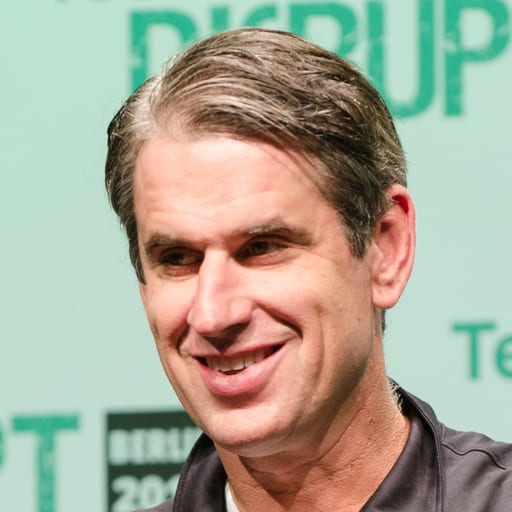
Bill Gurley

빌 걸리

General partner at Benchmark; early investor in Uber; blog Above the Crowd

916 records in all

  • Principles 362
  • Episodes 227
  • Quotes 327
Ask with this master's words

3 free questions a day, no sign-up.

Photo: TechCrunch  CC BY 2.0  Original  cropped

Episodes

34 basic records of 227

Episodes are real events from public sources, summarised by us.

  • eBags Efficiency Model

    Benchmark portfolio company eBags achieved profitability with only 50 employees. They managed to turn inventory 29 times per year and maintained a negative 27-day cash conversion cycle.

    LessonHigh operational efficiency and negative cash cycles allow small teams to build very profitable businesses.


  • eBay's Demand-Driven Start

    Pierre Omidyar created eBay because his girlfriend needed a specific place to trade Pez dispensers online. The market's reaction to this simple solution proved the demand before it became a massive company.

    LessonA successful business often starts by solving a very specific, niche demand for a real person.

  • The 2008 Financial Crisis Letter

    During the 2008 economic collapse, Gurley sent a letter to all his portfolio CEOs. He advised them to cut spending but also to stay alert for new opportunities created by the harsh environment.

    LessonIn a crisis, survival is the priority, but the resulting market shifts can provide a competitive edge to those who are prepared.

  • The St. Cloud Wi-Fi Controversy

    A news story criticized a city-wide Wi-Fi network in St. Cloud based on very few interviews. Bill Gurley pointed out that 3,600 residents had already registered, showing a massive penetration rate despite the negative press.

    LessonHigh demand from customers who cannot yet access your service is often a sign of success, not failure.

  • 2015Risk

    Aggressive Price Cuts in 48 Cities

    Uber announced simultaneous price cuts in 48 cities while providing income guarantees for drivers. They used their historical supply and demand data to 'forward invest' capital, betting that the math would lead to market efficiency.

    LessonHistorical data allows a company to take aggressive risks with confidence in the eventual outcome.

  • The Two-Year Deep Dive

    After deciding to focus on healthcare, Gurley spent two years meeting with startups and reading extensively before making his first investment. He realized the system was far more complex than other industries Benchmark had disrupted.

    LessonComplex industries require a long-term commitment to learning before capital or resources should be committed.

  • Apple's Carrier Disruption

    Apple secured an unprecedented deal with AT&T by demanding control over the user interface and a cut of service revenue. This forced other carriers to look for an alternative to solve their iPhone problem.

    LessonA dominant product allows you to demand aggressive economics from established industry players.

  • 2014Hiring

    Recruiting Eric Vishria

    Benchmark recruited Eric Vishria as a General Partner after observing his career from Loudcloud to founding RockMelt. Despite RockMelt not hitting all its goals, his resilience and character impressed the partners and their mentor Bill Campbell.

    LessonA founder's true character is best revealed during the 'roller coaster' of a startup, and that character is what top-tier firms value most.

  • 2017Hiring

    Hiring Sarah Tavel

    Benchmark spent a year getting to know Sarah Tavel after a recommendation from Scott Belsky. They observed her thinking on disruptive markets and her ability to influence others before officially asking her to join as an equal partner.

    LessonTake the time to observe a potential key hire's instincts and relationship-building skills in action before committing.

  • The nCino IPO Underpricing

    The company nCino went public and saw a 195% first-day surge in its stock price. This happened because investment banks ignored massive oversupply and priced the shares far below market demand.

    LessonMassive first-day pops are often a sign of poor pricing strategy that leaves money on the table for the company.

  • 2022Risk

    The FTX Governance Failure

    FTX collapsed due to a complete absence of corporate controls and trustworthy financial information under a small group of inexperienced individuals. Bill Gurley uses this as a primary example of why investors must look for red flags like the lack of a legitimate board.

    LessonA complete lack of internal controls and professional oversight is a precursor to unprecedented corporate failure.

  • The Rise of Wi-Fi Adoption

    In early 2001, despite a tech market downturn, Wi-Fi began expanding from corporate LANs to universities like Stanford and MIT. Major companies like Dell started embedding it in laptops, and Starbucks announced plans to offer access in their coffee houses.

    LessonA technology becomes a 'next big thing' when it solves infrastructure problems, like avoiding the cost of wiring old buildings.

  • Investing in Vessel

    Benchmark announced a partnership with Jason Kilar and Richard Tom, the former leaders of Hulu, for their new startup Vessel. They chose to invest based on the founders' track record and leadership qualities before the company's specifics were public.

    LessonBet on the quality of the people and their past successes when the future product is still under wraps.

  • The Texas Municipal Wireless Battle

    Incumbent carriers hired over 160 lobbyists to pass a bill outlawing municipal wireless networks in Texas. Pro-broadband advocates organized online and used real deployment data to successfully block the restrictive language in the legislature.

    LessonEven heavily funded incumbents can be defeated by a well-organized movement that uses transparency and real-world evidence.

  • The Post-9/11 Surveillance Debate

    After the World Trade Center tragedy, politicians pushed for internet backdoors and encryption bans. Gurley argued that these measures were technically impossible to enforce because strong encryption was already globally distributed.

    LessonTrying to outlaw a widely known idea or algorithm is as futile as trying to outlaw a famous story.

  • The Ousting of Travis Kalanick

    After a series of scandals including the Greyball software and cultural issues, Bill Gurley and Benchmark led a group of investors to demand Travis Kalanick's resignation. They flew to Chicago to present a letter forcing him to step down as CEO to save the company's future.

    LessonEven the most successful founders must be held accountable when their leadership threatens the company's existence.

  • Benchmark Suing Their Own Founder

    In an unprecedented move for a top-tier VC firm, Benchmark filed a lawsuit against Travis Kalanick for fraud and breach of fiduciary duty. This happened after Kalanick attempted to drum up support to return as CEO following his forced resignation.

    LessonWhen private negotiations fail to stop destructive behavior, legal action may be the final necessary tool for investors.

You are seeing 137 basic records. Membership answers from all 916 of this master's records.

See membership

More masters in this field

See the whole field

Investing and capital allocation

These records are our compilation of public statements and sources. We are not affiliated with or endorsed by Bill Gurley or any related company. If something should come down, tell us. Takedown request form