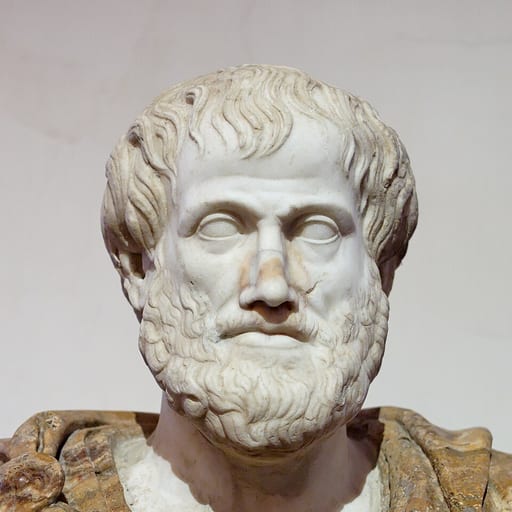
Hall of Masters

Aristotle

아리스토텔레스

Greek philosopher; ethics, rhetoric and logic

952 records in all

  • Principles 311
  • Episodes 302
  • Quotes 339
Ask with this master's words

3 free questions a day, no sign-up.

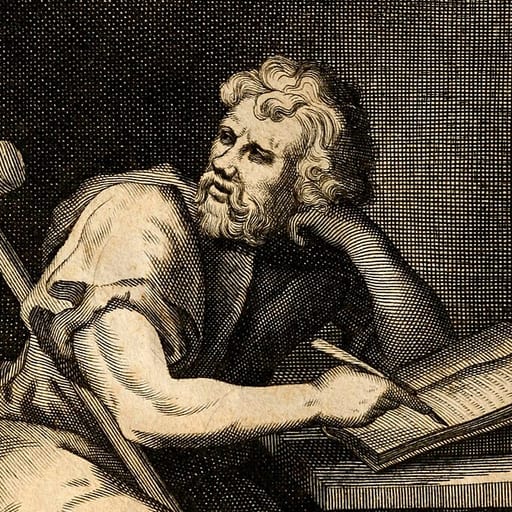
Photo: After Lysippos  Public domain  Original  cropped

Episodes

45 basic records of 302

Episodes are real events from public sources, summarised by us.

  • The Exclusive Lectures

    Aristotle wrote to Alexander the Great explaining that his lectures were both published and unpublished. He intended them to be understood only by those who had actually attended and heard his explanations.

    LessonContext and direct communication are often necessary for deep knowledge to be useful.
  • Critiquing the Ancients on Fortune

    Aristotle examined why previous wise men failed to define fortune despite its obvious role in production and life. He noted that while some attributed everything to definite causes, others like Empedocles admitted that chance played a role in the generation of animals.

    LessonAcknowledge the role of chance in your ventures rather than pretending every outcome is purely the result of a planned cause.

  • The Invention of Leisure Arts

    Aristotle observed that as societies advanced, they moved from inventing necessities to inventing arts for recreation. He noted that the mathematical arts specifically flourished in Egypt because the priestly class was granted the leisure time required for such deep study.

    LessonInnovation and high-level strategy often require dedicated time away from the immediate pressures of survival and utility.

  • The Agent Intellect Argument

    Aristotle argued that for the mind to move from potential knowing to actual thinking, there must be an active cause. He compared this to how art acts upon matter to create a finished product.

    LessonIdentify the specific trigger or 'agent' that turns potential knowledge into actionable results.

  • Hebrew Translation for New Markets

    Zerahiah ben Shealtiel Hen translated the treatise from Arabic into Hebrew in the 13th century. He utilized existing Arabic translations to bridge the language gap for Hebrew speakers.

    LessonLeveraging existing versions to enter a new niche market can accelerate distribution.

  • The Euripides Substitution

    Aristotle compares a line written by Aeschylus with a version by Euripides. By changing just one ordinary word to a more distinguished, 'strange' word, Euripides transformed a poor line into a beautiful one.

    LessonA single strategic word choice can significantly elevate the perceived quality of your marketing or product copy.

  • Homer's Strategic Selection

    Homer realized the entire Trojan War was too long and complicated for a single view. He chose to focus on one specific section while bringing in other events as brief episodes.

    LessonNarrow your scope to a single compelling problem rather than trying to solve an entire industry's issues at once.

  • Hiring Experts for New Ventures

    When the Athenians founded the colony of Thurii, they hired specific experts for different tasks. They employed Hippodamus for town-planning and Protagoras for law-making to ensure the new city had a solid foundation.

    LessonAssign critical structural tasks to proven experts rather than generalists or politicians.

  • Critique of Plato's Commonwealth

    Aristotle analyzed Plato's proposal for a city where everything, including property and families, was held in common. He argued that this extreme unity would actually destroy the city by reducing it to a single unit and removing necessary diversity.

    LessonTotal uniformity in a business or community can lead to its collapse by removing the specialized roles needed for survival.

  • Clisthenes' Enrollment of New Citizens

    After the expulsion of tyrants in Athens, Clisthenes enrolled many foreigners and slaves into the tribes to expand the citizenry. This created a debate not about whether they were citizens, but whether they had been made so legally.

    LessonWhen expanding a team or community rapidly, the legitimacy of the process is as important as the inclusion itself.

  • The Fall of Cnidus

    The ruling elite in Cnidus limited power so strictly that even sons of officials were excluded. The excluded nobles joined with the common people to overthrow the government during a period of internal dispute.

    LessonStrictly limiting power to a tiny inner circle creates enemies out of potential allies.

  • The Stability of Pharsalus

    Despite being a small state, Pharsalus maintained its power and stability through the prudent and unified behavior of its citizens. Their ability to agree among themselves prevented the typical collapse seen in other small governments.

    LessonA small team can be disproportionately powerful if they maintain absolute internal alignment.

  • Cyrus Dethrones Astyages

    Cyrus, a general, decided to overthrow King Astyages because he held the king's effeminate lifestyle and inactive army in contempt. He felt his own strength made the attempt low-risk.

    LessonA leader's perceived weakness or lack of action invites challenges from powerful subordinates.

  • Classification of Species

    Aristotle distinguished and arranged about 500 animal species into a graded scale. He grouped them based on physical characteristics like blood type and reproductive methods, even noting exceptions like sharks with placentas.

    LessonSystematic observation and categorization of data are essential for understanding complex systems.

  • Analysis of Mimesis in Art

    Aristotle categorized various arts as forms of 'mimesis' or imitation, noting that they differ by medium and object. He argued that humans have a natural instinct to imitate, which is fundamental to all artistry.

    LessonCreativity often follows the patterns of nature and relies on structured procedures to achieve its purpose.

  • Predicting Antarctica

    Long before the continent was discovered, Aristotle conjectured the existence of a landmass in the southern high-latitude region. He even gave it the name Antarctica in his book Meteorology.

    LessonLogical deduction and vision can help you identify opportunities in 'uncharted territories' before they are visible to others.

  • Direct Observation Through Dissection

    Hippocrates gained a remarkable understanding of anatomy by directly observing the human body, even when social feelings were opposed to it. He described surgical procedures that could only be understood by examining internal structures in dead bodies.

    LessonTo master a field, you must be willing to look directly at the raw data, even if the process is uncomfortable or unconventional.

  • Securing Research Funding

    알렉산더 대왕은 아리스토텔레스의 연구를 돕기 위해 수천 명의 인력을 배치하여 표본을 수집하게 했어요. 또한 동물학 연구를 위해 당시 거금이었던 800달란트를 지원하며 스승의 지적 탐구를 전폭적으로 도왔어요.

    LessonStrategic partnerships can provide the massive scale of data and capital needed for groundbreaking innovation.

  • 0322Life

    Death in Exile

    아리스토텔레스는 정치적 혼란이 가라앉으면 아테네로 돌아가려 했으나, 322년 칼키스에서 위장 질환으로 사망했어요. 일각에서는 그가 독약을 먹었거나 익사했다는 주장을 하기도 했어요.

    LessonEven the greatest thinkers face physical limits and political risks that can cut their long-term plans short.

  • Observation of Marine Life

    아리스토텔레스는 해양 생물의 해부학적 구조와 습성에 대해 매우 정확한 지식을 보여주었어요. 그는 수컷 두족류의 팔 중 하나가 변형되는 현상(교접완화)을 직접 관찰하여 기록했어요.

    LessonDeep expertise comes from getting your hands dirty and observing the actual product or market environment firsthand.

You are seeing 143 basic records. Membership answers from all 952 of this master's records.

See membership

More masters in this field

See the whole field

Philosophy and wisdom traditions

These records are our compilation of public statements and sources. We are not affiliated with or endorsed by Aristotle or any related company. If something should come down, tell us. Takedown request form