Hall of Masters

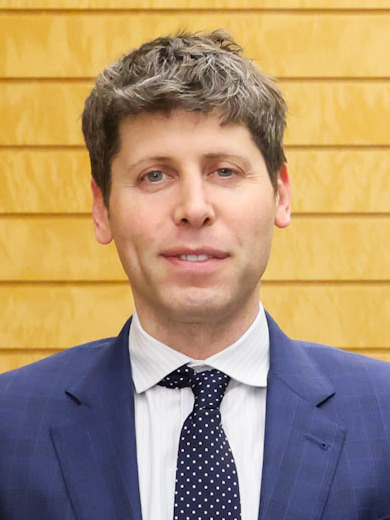
Sam Altman

샘 올트먼

Former president of Y Combinator and CEO of OpenAI who emphasizes compounding personal growth, high conviction, and intense execution with small focused teams.

1,250 records in all

  • Principles 365
  • Episodes 193
  • Quotes 692
Ask with this master's words

3 free questions a day, no sign-up.

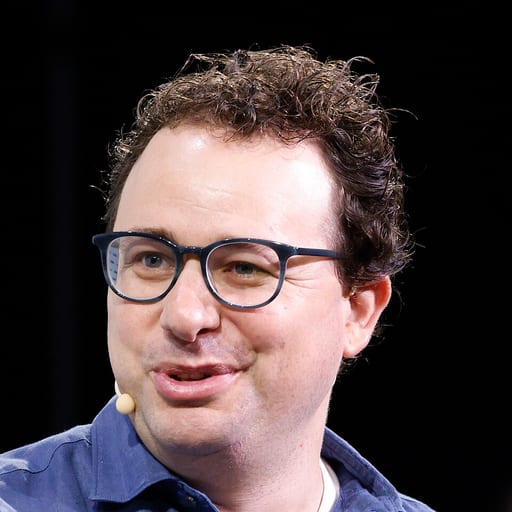
Photo: 首相官邸ホームページ / Office of the Prime Minister of Japan Official Website  CC BY 4.0  Original  cropped

Episodes

29 basic records of 193

Episodes are real events from public sources, summarised by us.

  • 2005

    Dropping Out of Stanford to Co-Found Loopt

    After two years studying computer science at Stanford University, 19-year-old Sam Altman saw an early opportunity in mobile location-based social networking. He left Stanford without a degree to co-found Loopt, joined Y Combinator's inaugural batch, and raised over $30 million in venture capital.

    LessonEntering an emerging technology wave early builds top-tier venture backing and operational grit even if mass-market product-market fit proves elusive.
  • Always Getting on a Plane to Show Up in Person

    When starting out in his career, Altman faced numerous important meetings and deals in distant cities where remote communication might have sufficed. He made it a personal rule to always get on a plane and show up in person, which directly swung three career-defining turning points in his favor.

    LessonWillingness to absorb travel friction and show up physically for key moments creates asymmetric upside in deal-making and trust building.

  • 2019

    Overcoming the Habit of Avoiding Criticism

    Early in his career, Altman hated criticism of any kind and actively avoided it, before realizing that unchecked self-belief easily turns into self-delusion. He trained himself to listen to every piece of criticism under the initial assumption that it is true, evaluating it calmly before deciding whether to act.

    LessonWelcoming painful feedback and assuming criticism has merit separates productive founder conviction from blind delusion.

  • Getting on a Plane to Show Up in Person

    Early in his career, he made a habit of flying out to attend important meetings or deals in person, even when it wasn't strictly necessary. He prioritized face-to-face meetings above all, and this effort directly created three decisive opportunities that changed his career.

    LessonShowing up in person at critical moments brings asymmetric, massive rewards in relationship building and business.

  • 2015

    Co-founding OpenAI and Recruiting Top Researchers

    Feeling a sense of crisis over big tech's AI monopoly and safety issues, he gathered like-minded individuals to establish a new research lab. After launching the nonprofit organization, he persistently persuaded world-class researchers by pouring immense time and resources into recruiting them.

    LessonCompeting with heavily funded tech giants requires presenting a compelling vision and personally hustling to recruit top-tier technical talent.

  • 2022

    Supervising the Launch of ChatGPT

    The team refined the language model developed internally into an easily accessible format for the public and prepared to release it as a free preview. He boldly pushed for the public release, and this decision sparked a global AI boom, gathering over a million users in just a few days.

    LessonLayering an intuitive, accessible interface over complex foundational technology can instantly turn a laboratory project into a world-changing phenomenon.

  • Success of referral programs

    Sam observed that companies like Dropbox and Uber successfully used referral programs to grow. These programs worked because the core products were already good enough for users to want to recommend them.

    LessonReferral incentives only work as a multiplier for a product that people already love.

  • The Biotech Response to COVID-19

    During the early stages of the pandemic, Sam Altman observed biotech companies and labs increasing their operational speed by over 10x. He advocated for private investors to fill the funding gap left by the federal government's insufficient R&D stimulus.

    LessonWhen a critical problem attracts intense focus from top talent, private capital should move quickly to support them.

  • The AI CEO Experiment

    Sam Altman uses a mental model where he imagines an AI taking over his role as CEO. He uses this to identify what tasks are uniquely human and what organizational pieces are currently roadblocks to efficiency.

    LessonFounders can improve their organizations by identifying which of their own functions could eventually be automated.

  • The Exploding Offer Lesson

    Sam Altman once received an investment offer with a strict expiration date that pressured him as a founder. This negative experience led him to remove expiration dates from his own term sheets to respect founders' decision-making processes.

    LessonPast negative experiences as a customer or founder should inform how you treat others in your business dealings.

  • Y Combinator Peer Support

    Altman observed that one of the most effective aspects of Y Combinator was providing a peer group for founders. This group allowed them to lean on each other for support during the dark times of running a company.

    LessonBuilding or joining a community of peers is essential for surviving the psychological toll of entrepreneurship.

  • Observing YC Blockchain Trends

    During Y Combinator interviews, Sam noticed a shift where more high-quality companies were focusing on general blockchain applications rather than just Bitcoin itself. This led him to believe the underlying concept was more durable than any single currency.

    LessonLook at the quality of founders entering a space to judge the long-term importance of a technology.

  • Founders Pricing Out Good Investors

    Sam observed many founders who were so obsessed with a high valuation that they rejected high-quality investors. This often resulted in the company facing a difficult down round just a year later.

    LessonFocusing on a quantitative 'sticker price' can damage long-term investor alignment and future funding stability.

  • GPT-4 as a Brainstorming Partner

    Sam Altman personally uses GPT-4 as a creative partner for tasks like naming things or looking at problems from new angles. He finds this creative collaboration more promising than simple productivity tasks like coding or translation.

    LessonAI's highest value may lie in its ability to act as a creative collaborator that helps humans operate at a higher level of abstraction.

  • The ChatGPT Interface Breakthrough

    OpenAI realized that the shift from non-believers to believers in AI was driven more by the ChatGPT interface and post-training tuning than the underlying model alone. They focused on making the model helpful and accessible through a specific product wrapper.

    LessonA great underlying technology needs a thoughtful product interface to achieve mass adoption.

  • China Overtakes US Economy

    In 2014, the Chinese economy surpassed the US economy based on purchasing power parity. Sam noted this as a major turning point that many ignored, signaling a shift in global competitiveness.

    LessonFounders must watch macro trends and recognize when the competitive landscape has fundamentally shifted.

  • 2014Hiring

    Diversifying YC Interview Panels

    After receiving feedback that women wanted to see female representation during the selection process, YC increased its number of female partners. They committed to having a woman in every interview track for the upcoming batch.

    LessonTo attract a specific demographic, ensure they are represented in your decision-making and gatekeeping processes.

  • 2013Hiring

    The Sunday Test

    Sam mentions Stripe's practice of asking if they would want to hang out with a candidate on a Sunday. He once hired someone he didn't like, and it turned out to be a mistake.

    LessonLiking the people you work with is essential for building the right company culture.

  • The rise of party rounds

    Altman observed a trend where startups raised small amounts from 10 to 50+ investors instead of a few large ones. He noticed these companies often lacked focus and struggled to raise subsequent rounds.

    LessonRaising from too many small investors can leave you without a champion when things get difficult.

You are seeing 188 basic records. Membership answers from all 1,250 of this master's records.

See membership

More masters in this field

See the whole field

AI and frontier tech

These records are our compilation of public statements and sources. We are not affiliated with or endorsed by Sam Altman or any related company. If something should come down, tell us. Takedown request form