Hall of Masters

Patrick Collison

패트릭 콜리슨

Co-founder and CEO of Stripe

345 records in all

  • Principles 149
  • Episodes 84
  • Quotes 112
Ask with this master's words

3 free questions a day, no sign-up.

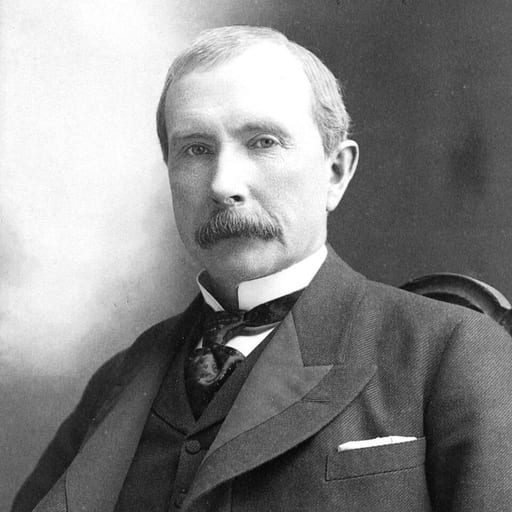
Photo: JD Lasica  CC BY 2.0  Original  cropped

Episodes

13 basic records of 84

Episodes are real events from public sources, summarised by us.

  • New Aesthetics Grants Launch

    Patrick Collison and Tyler Cowen launched a grant program to support artists moving beyond current aesthetic trends. They received so many applications that they had to close the process early, eventually funding 28 grantees.

    LessonThere is significant latent demand for alternatives to the status quo in creative fields.

  • Reflecting on Pandemic Discontinuities

    Patrick observed that many global trends, from French retail to UK economic statistics, failed to return to their pre-COVID baselines. He noted that while some changes like increased firm creation were positive, others like declining student engagement were concerning.

    LessonFounders should identify which industry shifts are permanent rather than assuming a return to the old normal.

  • The Invention of Faroese Cuisine

    Chef Leif Sørensen opened the restaurant Koks in 2011, essentially creating Faroese haute cuisine single-handedly. This followed a broader Nordic movement to define new gastronomic cultures through intentional manifestos.

    LessonA founder can define a new market or category through sheer cultural contingency and will.

  • Berkeley's Development Economics

    George Berkeley published The Querist, which used 895 questions to diagnose Ireland's poverty. He identified culture and human capital as central to economic development, rather than just trade or fiscal policy.

    LessonLook beyond technical metrics to cultural and human factors when solving systemic problems.

  • The Endurance of Good Ideas

    After centuries of destructive governance, T.K. Whitaker published a report that finally enacted the liberal, trade-led vision first suggested by Irish Enlightenment thinkers. This led to Ireland's economic boom decades later.

    LessonGreat ideas may face long delays in adoption, but their fundamental truth can eventually transform a system.

  • Historical Novel Deep Dive

    Patrick read ten major historical novels to understand the evolution of the form and the impact of authorial age on wisdom. He found that works by authors in their 50s, like Eliot and Tolstoy, showed a depth of character that younger writers lacked.

    LessonDeep immersion in classic literature can reveal how complex skills like empathy and character development compound over a lifetime.

  • Learning from Zweig's Memoir

    Patrick read Stefan Zweig's memoir to understand the history of Vienna and World War I. He found that the emotional context provided more insight than traditional history books.

    LessonMemoirs and biographies capture the essential human details that formal histories often miss.

  • Stripe's early banking struggles

    When starting Stripe, Patrick had to convince banks to take a risk on an unproven startup. He spoke to banks in Ireland but realized that getting them to cooperate would have been an extremely difficult battle compared to the US.

    LessonThe local institutional environment and its willingness to bet on startups can determine if a high-friction business can even exist.

  • Stripe's Early Infrastructure Focus

    When Stripe started, the founders focused on building a superior payments API rather than following 'cool' trends. They deliberately attracted people who enjoyed solving unglamorous infrastructure problems like building 'roads' for the internet.

    LessonBuilding essential, unglamorous infrastructure can lead to a highly consequential and durable organization.

  • The Rise of American Universities

    Between 1861 and 1891, seven of today's top 25 universities were founded in the U.S. These institutions were created by reform-minded people who deliberately chose to experiment with the German research model instead of copying Harvard or Yale.

    LessonSignificant progress requires a willingness to break from established prestige and try fundamentally different organizational models.

  • Analyzing the NIH's effectiveness

    Patrick observed that despite the NIH's massive role in biomedical funding, there were no comprehensive books or studies evaluating its performance over time. He argued that knowing whether the old or new NIH worked better is essential for progress.

    LessonFounders should look for massive systems that lack rigorous performance data to find opportunities for improvement.

You are seeing 52 basic records. Membership answers from all 345 of this master's records.

See membership

More masters in this field

See the whole field

Founders and company builders

These records are our compilation of public statements and sources. We are not affiliated with or endorsed by Patrick Collison or any related company. If something should come down, tell us. Takedown request form