The Failure of Side Projects
해즐릿은 문법책을 쓰거나 방대한 나폴레옹 전기를 집필하는 등 다양한 시도를 했어요. 하지만 그의 사후에 가장 가치 있게 평가받고 읽히는 것은 그의 핵심 역량인 비평 에세이들이에요.
Lesson다양한 시도도 좋지만, 결국 시장과 역사에 남는 것은 자신의 가장 강력한 재능이 담긴 핵심 제품이에요.
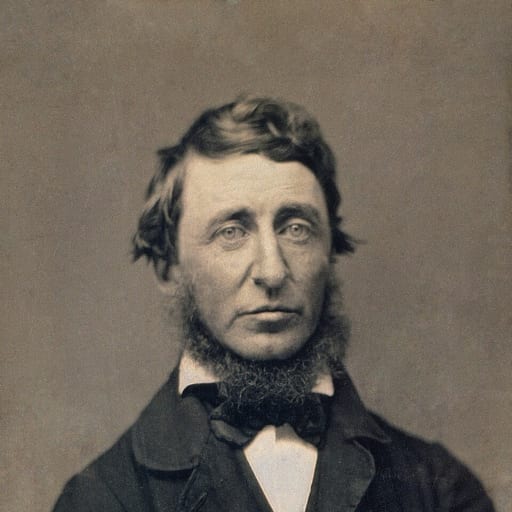
헨리 데이비드 소로
Author of Walden and Civil Disobedience
909 records in all
3 free questions a day, no sign-up.
Photo: Benjamin D. Maxham active 1848 - 1858 Public domain Original cropped
43 basic records of 287
Episodes are real events from public sources, summarised by us.
해즐릿은 문법책을 쓰거나 방대한 나폴레옹 전기를 집필하는 등 다양한 시도를 했어요. 하지만 그의 사후에 가장 가치 있게 평가받고 읽히는 것은 그의 핵심 역량인 비평 에세이들이에요.
Lesson다양한 시도도 좋지만, 결국 시장과 역사에 남는 것은 자신의 가장 강력한 재능이 담긴 핵심 제품이에요.
피츠제럴드는 외모나 복장에 전혀 신경 쓰지 않았으며, 어머니가 화려한 마차를 타고 대학에 찾아왔을 때도 구두가 수선점에 있다는 이유로 나가지 않았어요. 그는 신사로서의 격식보다는 자신의 편안함과 진실함을 우선시했어요.
LessonFocusing on your work and internal values is more productive than maintaining an image to satisfy social expectations.
Thoreau preferred the company of common people over scholars for his daily life. He spent his time with a sailor, a clergyman's family, and local villagers, finding their company as beneficial as that of famous men.
LessonSurround yourself with people who offer genuine character rather than just status or titles.
When a local rector criticized him for not attending church, he firmly defended his right to his own reflections. He told the rector that he had thought about these matters deeply and that further visits were unnecessary.
LessonProtect your focus and personal philosophy from those who try to impose their standards on you.
소로는 세련된 매너나 화려한 옷차림보다는 거칠고 길들여지지 않은 자연스러운 사람들과 어울리는 것을 좋아했어요. 그는 초라하더라도 실제 현실이 가식적인 모습보다 더 목적에 부합한다고 생각했어요.
Lesson비즈니스에서도 세련된 포장보다는 투박하더라도 진실된 데이터와 현장의 목소리에 집중해야 해요.
소로우는 거친 야생을 사랑했지만 메인 숲의 극심한 황량함을 경험한 후 적절한 환경의 중요성을 깨달았어요. 그는 영감을 위해 가끔 거친 곳을 찾더라도 실제 거주하며 작업하기에는 문명과 자연이 조화된 곳이 낫다는 결론을 내렸어요.
LessonBalance extreme inspiration with a stable environment that supports consistent long-term work.
Thoreau approached the study of nature with the same laboriousness and definite purpose as a farmer tending to a farm. He rejected the role of an amateur or hobbyist, viewing his observations as the serious work of his life.
LessonTreat your core business or craft with professional rigor rather than as a casual interest if you want to achieve original results.
스티븐슨은 글쓰기를 배우기 위해 항상 주머니에 책 두 권을 넣고 다녔어요. 한 권은 읽기 위한 것이었고, 다른 한 권은 본 것을 적절한 단어로 묘사하거나 장면의 특징을 기록하기 위한 연습장이었어요.
LessonAlways keep a tool for capturing ideas and practicing your craft in real-time.
After a successful day of fishing at age twenty-one, Stevenson felt deep remorse for the suffering of the fish. This moral realization led him to decide never to fish again for the rest of his life.
LessonPersonal ethics and empathy should guide your actions, even when it means giving up a successful activity.
Despite his immense literary talent, Thoreau maintained that high conduct and disinterestedness were superior to works of genius. He valued the probity and charity found in character above the mere creation of fine phrases.
LessonEthical conduct and personal integrity are the ultimate measures of success, even for those with exceptional creative or technical skills.
Thoreau refused to be intimidated by the established philosophies of famous contemporaries like Wordsworth. He criticized poetry that had a 'palpable design' on the reader, preferring work that was great yet unobtrusive.
LessonMaintain your own perspective and resist following industry trends or 'gurus' who try to force their specific philosophies onto your business.
Despite feeling a lack of formal education and a deep thirst for knowledge, Keats did not stop his poetic production to become a full-time student. He continued to write his major works while simultaneously pursuing a 'continual drinking of knowledge' through his own reading.
LessonDo not wait until you feel fully 'qualified' or educated to start building; the best work often happens during the learning process.
Anatole France believed that a writer's duty is to make truth beautiful and easy to understand. He avoided dullness and rhetoric, focusing on clarity and surprise to keep his readers engaged throughout their journey.
LessonTrue mastery in communication is making complex truths feel effortless and engaging for the audience.
헨리 데이비드 소로우는 자신의 신념과 풍자를 세상에 알리기 위해 소설이라는 형식을 빌리는 것이 효과적임을 깨달았어요. 그는 자신의 목소리로 직접 말하는 대신 캐릭터를 통해 메시지를 전달함으로써 더 큰 자유를 누릴 수 있다고 믿었어요.
LessonDirect confrontation can be risky; using a creative medium or a 'character' allows for bolder truth-telling.
While others urged for more concrete and artistic structure, Thoreau encouraged Emerson to focus on 'far-off heats' and 'star-dust.' He valued the raw, undissolved essence of thought over polished, bronze-like statues of prose.
LessonPrioritize the raw power and originality of your ideas over the pressure to make them fit a standard commercial form.
Despite the controversial nature of the topic, Thoreau's speech at Concord attracted a full house from all political parties. His earnest defense of Brown's character was heard respectfully, even by those who initially disagreed.
LessonAuthentic and earnest communication can command respect and change minds even in a hostile or divided market.
When Thoreau died, his obituary was not even a separate article but was grouped with others in a yearbook. It took decades and the publication of his journals in the 1880s for a dedicated following to emerge.
LessonTrue innovation often requires a long time horizon before the general public or critics can appreciate its value.
After moving to Walden Pond, Thoreau faced numerous intrusive questions from townsmen about his diet, loneliness, and finances. He decided to address these inquiries directly in his book Walden to explain his unconventional mode of life.
LessonWhen your unconventional methods spark curiosity or criticism, use that attention as an opportunity to clarify your vision through your work.
Thoreau committed to spending at least four hours every day walking through nature, away from all worldly business. He felt that staying indoors for even a single day caused his spirit to 'rust'.
LessonRegularly disconnecting from the office is essential to maintain mental clarity and long-term health.
Thoreau watched a neighbor's cow break out of its pasture and swim across a wide, cold river swollen with melted snow. He saw this as a reassertion of the animal's native vigor and dignity, comparing it to a wild buffalo.
LessonEven in highly controlled environments, innate talent and drive will occasionally break through constraints.
You are seeing 137 basic records. Membership answers from all 909 of this master's records.
See membershipPhilosophy and wisdom traditions
These records are our compilation of public statements and sources. We are not affiliated with or endorsed by Henry David Thoreau or any related company. If something should come down, tell us. Takedown request form