Hall of Masters

Bill Gurley

빌 걸리

General partner at Benchmark; early investor in Uber; blog Above the Crowd

916 records in all

  • Principles 362
  • Episodes 227
  • Quotes 327
Ask with this master's words

3 free questions a day, no sign-up.

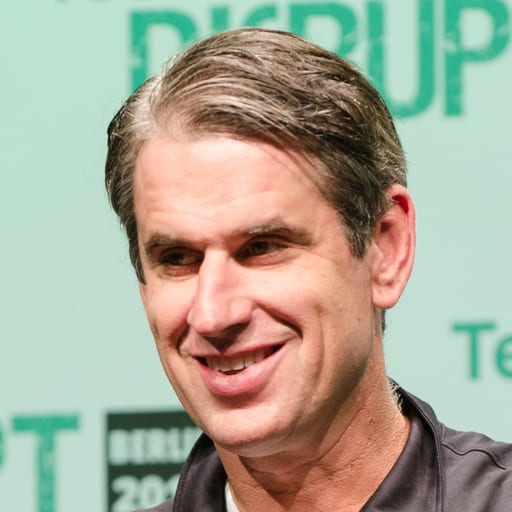
Photo: TechCrunch  CC BY 2.0  Original  cropped

Episodes

34 basic records of 227

Episodes are real events from public sources, summarised by us.

  • The Amazon One-Click Example

    Bill Gurley highlights Amazon's one-click service as the gold standard for convenience. By removing the friction of re-entering credit card and address information, Amazon significantly boosted its conversion rate.

    LessonReducing friction in the final steps of a transaction is one of the fastest ways to increase revenue.

  • Microsoft's Strategic Acquisition of Massive

    Microsoft acquired Massive.com to lead in-game advertising and prevent the ad network from falling into competitors' hands. Bill estimated the price was closer to $100 million, despite higher press reports.

    LessonStrategic acquisitions are often about controlling a key network or infrastructure before competitors can.

  • The Unbounded Monday Meeting

    Benchmark partners hold Monday meetings without a fixed agenda or a list of topics to jump through. They allow for open, roving conversations where substantive topics emerge naturally from their collective discoveries.

    LessonRemoving rigid structure can foster a more authentic environment for team-based truth seeking.

  • Chetan's Last-Minute Europe Trip

    When a portfolio company's decision went off track due to rising emotions over a weekend, Chetan flew to Europe on a Monday to show support in person. His physical presence alone, without needing to say anything new, signaled such commitment that the situation resolved itself by the time he landed.

    LessonShowing up in person during a crisis can change the entire dynamic of a relationship and prove your commitment to the team.

  • Benchmark's Non-Consensus eBay Investment

    Benchmark invested $6.7 million in eBay when other VCs turned them down because the founder didn't fit the typical CEO profile. They structured the deal with equity-backed loans to the founders to compete with a $50 million acquisition offer from Knight Ridder.

    LessonBeing the only firm willing to structure a non-traditional deal can lead to capturing a generational opportunity.

  • Recruiting Matt Cohler

    Benchmark recruited Matt Cohler, who was employee number five at Facebook and an early employee at LinkedIn. Despite not having a venture background, his deep understanding of consumer psychology and social products made him a vital addition.

    LessonDeep operational experience in emerging sectors can be more valuable for a VC partner than a traditional background in finance.

  • Sounding the Alarm on Valuations

    As Uber's private valuation reached unprecedented levels, Bill Gurley began publicly warning about out-of-control valuations in Silicon Valley. He argued that raising too much money at extreme valuations in opaque private markets might not be in a company's best interest.

    LessonExcessive private valuations and capital can create immense pressure and opacity that eventually harm the company's long-term health.

  • Benchmark's Counter-Positioning Strategy

    Benchmark explicitly marketed against 'mega funds' by highlighting their smaller partner-to-capital ratio. They argued that having fewer board seats per partner ensured better responsiveness and support for founders.

    LessonClearly defining what you don't do can be a powerful way to differentiate your service from larger competitors.

  • The Benchmark Monday Dinners

    Benchmark partners host weekly dinners at a custom table, inviting high-profile CEOs like Jeff Bezos and even founders they passed on. They use these sessions to learn from missed opportunities and understand why certain companies succeeded without them.

    LessonDirectly engaging with the winners you missed is the fastest way to fix your blind spots.

  • Healtheon's Future-Based IPO

    Healtheon went public based on a big idea of simplifying healthcare via the Internet, even though its actual revenue at the time came from non-Internet services. Investors bought into the story of what the company would become rather than what it currently was.

    LessonEarly-stage success often depends on selling the uniqueness and boldness of an idea before the proof exists.

  • Writing Runnin' Down a Dream

    Bill Gurley noticed success patterns among a restaurateur, a coach, and a singer nearly a decade ago. He spent six years researching job satisfaction and career regret to create a methodology for others to chase their dreams.

    LessonDeep research and pattern recognition in unrelated fields can lead to original and impactful insights.

You are seeing 137 basic records. Membership answers from all 916 of this master's records.

See membership

More masters in this field

See the whole field

Investing and capital allocation

These records are our compilation of public statements and sources. We are not affiliated with or endorsed by Bill Gurley or any related company. If something should come down, tell us. Takedown request form