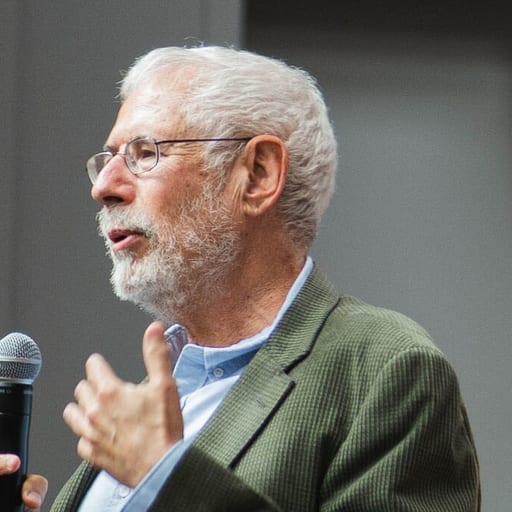
Steve Blank
스티브 블랭크
Creator of customer development; Stanford lecturer
920 records in all
- Principles 331
- Episodes 187
- Quotes 402
3 free questions a day, no sign-up.
Quotes
60 basic records of 402
Quotes are word for word from the source.
Customer Knowledge
Knowing your customers is the single biggest driver of startup success, and there's no substitute for getting out of the building to learn about their problems and needs.
Our noteSteve explains why founders must leave their offices to talk to real people.
Product Market Fit
You can build the greatest product in the world (but it) doesn't matter if it doesn't work for the end users.
Our noteSteve discusses the futility of building products without user validation.
Message testing
You should be brainstorming messages with current and potential customers
Our noteSteve advises against creating marketing messages in isolation.
International Security Hopes
We had great hopes for an international security environment that would advance common interests among large and small nations through international cooperation and engagement.
Our noteSteve Blank discusses the optimistic outlook for global cooperation following the end of the Cold War.
Military Transformation Strategy
The NDS provided an outline of what we need to do (called Lines of Effort) to transform our military.
Our noteExplaining the framework used by the Department of Defense to adapt to new global threats.
Non-linear Progress
Progress to outcomes (solution/mission ft) is non-linear and not all teams progress at the same rate
Our noteSteve explains that innovation doesn't follow a straight, predictable timeline.
Model utility
For any model to be useful it has to predict what happens in the real world - including the web.
Our noteSteve discusses the need for the Customer Development model to adapt to web-based businesses.
Recruiting Vision
We're three now, but if we do this right we could be selling $100 million dollars a year of your software.
Our noteSteve Blank trying to recruit the developer who built an internal tool at SGI.
Speed of bad news
In a startup "Good news needs to travel fast, but bad news needs to travel faster.
Our noteSteve Blank emphasizes the importance of transparency regarding failures in a startup environment.
Danger of cover-ups
Institutional cover-up's are so ingrained that we take them for granted. Yet for a startup a cover-up culture is death.
Our noteHe explains why startups cannot afford the hierarchical habit of hiding mistakes.
Action Over Planning
the idea is that they write little and spend the time programming and getting out of the building to talk to customers.)
Our noteThe focus of the Lean Launchpad curriculum is on customer interaction rather than paperwork.
Tenacity in teaching
Only rarely does the teaching itself require tenacity, as it did late last month in Kiev, Ukraine.
Our noteBob Dorf describes a difficult travel situation while trying to reach a teaching engagement.
Digital business risk
It pretty clear that for a company going online today is equivalent to playing with a loaded gun.
Our noteHe compares the inherent danger of operating a business online to handling a lethal weapon.
Purpose of MVP
The reality is that the minimum feature set is 1) a tactic to reduce wasted engineering hours (code left on the floor) and 2) to get the product in the hands of early visionary customers as soon as possible.
Our noteExplaining why startups should focus on a minimum feature set rather than a complete product.
Earlyvangelist Loyalty
Earlyvangelists will stick with you through good and bad because they share your vision . In reality Earlyvangelists are now part of your team.
Our noteDescribing the deep commitment of early adopters who believe in the startup's long-term goal.
Military background benefits
I can always tell when one of my students has been in the military. They're focused, they're world-wise past their years, and they don't break a sweat in the fast pace and chaotic nature of the class and entrepreneurship.
Our noteSteve Blank reflects on the qualities that former military students bring to entrepreneurship.
Commitment and customers
A startup is not a part-time activity. Trying to do a startup while keeping your day job may doom you to failure. So will failing to understand your customers.
Our noteSteve discusses the common pitfalls that lead to startup failure.
Data driven decisions
Having real data turns conversations from faith-based to evidence-based.
Our noteSteve describes how data changes the dynamic of internal company arguments.
Agility vs Execution
One of the key distinctions between an entrepreneur and an operating executive is an entrepreneur's almost seamless agility in the face of changing circumstances versus an operating executive's intense execution focus on a plan.
Our noteSteve explains the difference between founders and professional managers.
Inspiring through facts
Change happens only when you could educate and inspire others. When you could use facts to create faith in what's possible...
Our noteDiscussing the requirements for creating meaningful social or corporate change.
Understanding the customer
They had no model of who their own customers were and what it would take to make those customers bang down their doors to buy their products.
Our noteSteve describes the internal state of SuperMac when he first joined as the head of marketing.
Passion and blindness
The same passion that got your startup idea off the ground can blind you to signs that your company is failing.
Our noteSteve discusses how founder enthusiasm can become a liability when it prevents objective assessment of failure.
Knowing when to stop
I always told myself that I would stop pushing forward when there was an overwhelming force from the outside saying that this is not working.
Our noteSteve quotes a founder reflecting on the difficulty of recognizing when a startup is no longer viable.
Slide deck security
If you present slides publicly, assume everyone including your competitors will have them. If you present slides privately, assume a high probability that your competitors will acquire them
Our noteSteve warns founders to assume their presentation materials will eventually reach competitors.
Protecting secret sauce
Do not put your trade secrets, proprietary algorithms, patentable technology, secret sauce, etc. on presentation slides - ever.
Our noteSteve advises against including sensitive intellectual property in pitch decks.
Hours versus effectiveness
The number of hours worked is not the same as how effective they (and you) are.
Our noteSteve emphasizes that output matters more than the time spent at a desk.
Asynchronous board updates
Interaction with advisors and board members can now be decoupled from the - once every six weeks, "big event" - board meeting.
Our noteSteve argues for moving away from traditional, infrequent board meetings.
Real-time coaching
This approach allows real-time monitoring of a startup's progress and zero-lag for coaching and course-correction .
Our noteHe highlights the benefits of continuous information access for advisors.
Incumbent Threats
Are there incumbents who will view us as a threat to the status quo ? Can they use laws and regulations to impede our growth?
Our noteSteve provides diagnostic questions for founders to determine if they are in a regulated market.
Timing for Fundraising
Raise as much money as you can after you have tangible evidence you have product/market fit, not before.
Our noteAdvice on the optimal time to seek significant investment.
You are seeing 138 basic records. Membership answers from all 920 of this master's records.
See membershipMore masters in this field
See the whole fieldFounders and company builders


These records are our compilation of public statements and sources. We are not affiliated with or endorsed by Steve Blank or any related company. If something should come down, tell us. Takedown request form