Hall of Masters

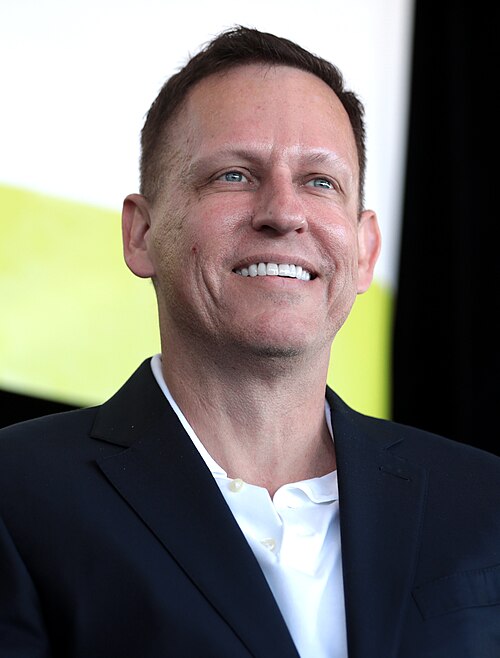
Peter Thiel

피터 틸

Co-founder of PayPal and Palantir and technology investor who emphasizes contrarian thinking and building monopolies in small niche markets rather than competing.

372 records in all

  • Principles 119
  • Episodes 129
  • Quotes 124
Ask with this master's words

3 free questions a day, no sign-up.

Photo: Gage Skidmore  CC BY-SA 3.0  Original  cropped

Episodes

19 basic records of 129

Episodes are real events from public sources, summarised by us.

  • Co-founding Confinity and Launching PayPal

    In the late 1990s, consumers lacked a convenient way to send money online when merchants did not have credit card hardware. Traditional paper money and payment rails created high friction for internet transactions. Thiel provided the initial $100,000 to co-found Confinity alongside Max Levchin. They pivoted their device encryption software into a secure digital wallet and launched PayPal in 1999.

    LessonCombining strong technical advantages like encryption with acute friction in financial infrastructure can create transformative consumer utility.
  • PayPal Mergers, IPO, and Sale to eBay

    As PayPal scaled rapidly, it faced fierce competition in online financial services from Elon Musk's X.com. Prolonged head-to-head rivalry threatened to drain resources on both sides. PayPal merged with X.com and Pixo in 2000 to consolidate the market. The combined company went public in February 2002 and sold to eBay for $1.5 billion in October 2002.

    LessonExecuting strategic mergers with direct competitors can eliminate destructive rivalry and consolidate market leadership.

  • The Birth of Palantir from PayPal Fraud Tech

    Peter Thiel and core engineers from PayPal used the fraud detection technology they developed to start Palantir. This technology was originally built to keep PayPal alive by identifying and stopping fraudulent transactions on the immature internet.

    LessonA deep technical solution for a specific internal problem can often become the foundation for an entirely new, massive business.

  • The Mississippi Company Bubble

    John Law attempted to solve France's debt by securitizing it through the Mississippi Company, promising riches from the New World. Investors bid the company's value to equal that of France itself before realizing the Louisiana Territory was mostly undeveloped wilderness.

    LessonA great vision of the future can become a catastrophic bubble if it ignores the practical difficulties and time required for implementation.

  • 2008Risk

    The Fed's desperate gambit

    Thiel observed the Federal Reserve attempting to stave off a recession through loose monetary policy. He viewed this as a desperate effort to maintain the political tenability of globalization despite growing economic weaknesses.

    LessonPolicy interventions intended to fix one problem often create new risks like inflation or asset bubbles.

  • Founding Clarium Capital

    After his time at PayPal, Peter Thiel founded Clarium Capital in San Francisco to pursue a global macro investment strategy. The firm used an unconventional fee structure, charging 0% for management and 25% for performance.

    LessonDifferentiating your business model through a unique pricing structure can attract clients by signaling high confidence in your results.

  • America's Frontier Fund Mission

    Thiel co-founded a bipartisan fund to bring semiconductor manufacturing back to the United States. The organization operates with a mission to succeed regardless of state assistance.

    LessonAlign business goals with national strategic interests to build resilient, mission-driven organizations.

  • Financing the Gawker lawsuit

    Peter Thiel은 Gawker Media가 헐크 호건의 사생활을 침해한 것에 대해 제기된 소송 비용 1,000만 달러를 지원했어요. 결국 배심원단은 1억 4,000만 달러의 배상 판결을 내렸고, Gawker는 파산하여 문을 닫게 되었어요.

    LessonStrategic use of resources can hold powerful entities accountable for their actions and protect individual rights.

  • Call for Economic Reset with China

    Thiel advocated for a drastic reset in economic relations with China, viewing the situation as a geopolitical necessity. He warned against falling for inconsistent messages about China's strength or weakness that lead to political inaction.

    LessonLeaders should avoid being paralyzed by contradictory market signals and instead take a firm stance based on long-term strategic goals.

  • Cornering the Satellite Imagery Market

    Since the 2010s, Thiel used multiple funds to invest in various private satellite imagery companies. He then sold these essential services to the U.S. and other governments as part of a global strategy.

    LessonConsolidate control over a niche but essential technology to create a powerful market position.

  • 2010Career

    Launching the Thiel Fellowship

    Thiel created a program offering $100,000 to young people to drop out of college and start their own ventures. He wanted to provide an alternative path for those who only went to college because they lacked other options.

    LessonDisrupting established institutions requires creating viable alternatives that incentivize talent to take a different path.

  • Obtaining New Zealand Citizenship

    He received citizenship despite not meeting the typical residency requirements by citing his economic contributions. He had founded a venture capital fund and invested millions in local companies and disaster relief.

    LessonSignificant economic impact and strategic investment can provide leverage in navigating complex regulatory or legal requirements.

  • Publishing Zero to One

    After teaching a startup class at Stanford, he turned the course notes taken by a student into a book. The book focuses on how to build the future and create new things rather than copying existing ones.

    LessonEducational content and internal knowledge can be packaged into powerful thought leadership assets for a wider audience.

  • Silicon Valley's Missed Crypto Opportunity

    Thiel noted that Silicon Valley largely missed the early crypto movement compared to other sectors. Because crypto was inherently decentralized, many of its key players and companies emerged outside of the traditional California tech bubble.

    LessonDominant hubs often miss disruptive trends that don't fit their existing centralized power structures.

  • 2024Career

    Advising Impulse Space Founder

    SpaceX의 엔지니어였던 톰 뮬러는 피터 틸의 조언을 듣고 우주 운송 스타트업인 임펄스 스페이스를 설립했어요. 파운더스 펀드는 이후 2024년에 이 회사의 1억 5천만 달러 규모 투자 라운드를 주도했어요.

    LessonExperienced talent from leading companies can be guided to start new, strategically important ventures.

  • Early Bet on Cybersecurity with Qadium

    Peter Thiel and Founders Fund led a $6 million seed round for Qadium, a cybersecurity firm founded by experts from the CIA and DARPA. They maintained their support through Series A, B, and C rounds as the company worked with the Department of Defense.

    LessonFounders with deep domain expertise in government agencies are valuable partners for long-term defense-tech plays.

  • Airbnb Deal Negotiation

    Founders Fund competed with Mithril Capital for an Airbnb investment. Thiel argued that since he was already a backer, it was more natural for Founders Fund to lead, and he compensated Mithril by arranging a deal with Palantir.

    LessonInternal conflicts between related funds can be resolved by swapping opportunities in different portfolio companies.

  • 1987Brand

    Founding of The Stanford Review

    피터 틸은 1987년 노먼 북과 함께 스탠퍼드 리뷰를 창간했어요. 이는 당시 학내의 주류 의견이었던 '레인보우 아젠다'에 대한 대안적인 관점을 제공하고 합리적인 토론의 장을 만들기 위함이었어요.

    Lesson주류 의견에 의문을 제기하는 독립적인 매체를 만드는 것은 강력한 네트워크의 시작이 될 수 있어요.

You are seeing 56 basic records. Membership answers from all 372 of this master's records.

See membership

More masters in this field

See the whole field

Strategy and mental models

These records are our compilation of public statements and sources. We are not affiliated with or endorsed by Peter Thiel or any related company. If something should come down, tell us. Takedown request form