The Theory of Respiration
아리스토텔레스는 폐를 풀무에 비유하며 심장의 과도한 열을 식히는 냉각 시스템으로 정의했어요. 그는 외부의 공기가 혈관으로 스며들어 온몸의 혈액을 식혀준다고 설명했어요.
Lesson복잡한 메커니즘을 설명할 때 익숙한 도구에 비유하면 구조를 더 명확하게 전달할 수 있어요.
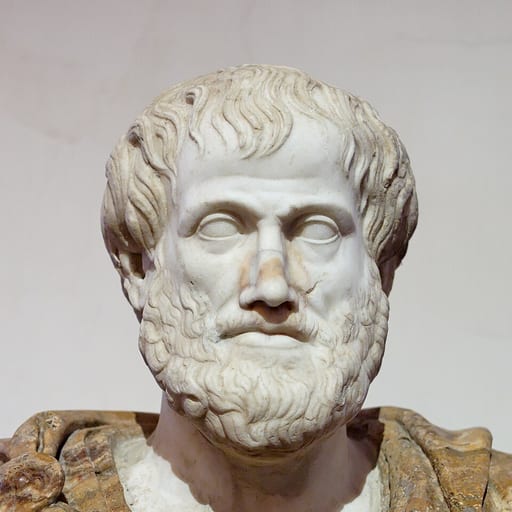
아리스토텔레스
Greek philosopher; ethics, rhetoric and logic
952 records in all
3 free questions a day, no sign-up.
Photo: After Lysippos Public domain Original cropped
45 basic records of 302
Episodes are real events from public sources, summarised by us.
아리스토텔레스는 폐를 풀무에 비유하며 심장의 과도한 열을 식히는 냉각 시스템으로 정의했어요. 그는 외부의 공기가 혈관으로 스며들어 온몸의 혈액을 식혀준다고 설명했어요.
Lesson복잡한 메커니즘을 설명할 때 익숙한 도구에 비유하면 구조를 더 명확하게 전달할 수 있어요.
In his pursuit of a complete biological system, Aristotle sometimes used hasty generalizations or incorrect information when data was missing. This led to errors like claiming lions have only one neck bone or that males have more teeth than females.
LessonThe desire for a complete plan can lead to dangerous assumptions if you lack real-world data to fill the gaps.
Aristotle studied under various schools including the Stoics and Academics. He did not attach himself to just one but took what he thought were the essential parts from each system.
LessonBroad exposure to different perspectives allows you to build a more robust and unique framework for your own work.
Aristotle used vivisection and experiments to determine the functions of body parts, such as proving the pylorus acts as a valve. His students even funded an experiment to prove to a skeptical teacher that arteries contain blood.
LessonConcrete evidence and demonstrations are the most effective ways to overcome skepticism and prove a product's value.
Vesalius realized that the standard textbooks of his time were full of errors because they were based on animal dissections. He spent years documenting discrepancies and hired top artists to create the most accurate anatomical plates ever produced.
LessonInvesting in high-quality presentation and accurate data can disrupt an entire industry's established standards.
Despite physical proof from dissections, older teachers like Sylvius refused to admit they were wrong. They even claimed that human anatomy had changed since ancient times just to avoid admitting that their traditional texts were incorrect.
LessonBe prepared for irrational resistance from incumbents when your innovations challenge their lifelong beliefs.
Some ancient Athenian kings were found to be weak in military matters during times of crisis. To solve this, the city invited Ion to take a new office called the Polemarch to handle war duties.
LessonIf a founder is weak in a core area, they should hire a specialist rather than struggling ineffectively.
Solon implemented a significant economic overhaul by increasing the standards of weights, measures, and currency. He raised the mina from seventy drachmas to a full hundred and adjusted weights to correspond with the new coinage.
LessonStandardizing units of value and measurement is a foundational step for creating a stable and scalable marketplace.
아리스토텔레스는 지혜를 얻기 위해 원인을 찾는 과정이 무한히 계속될 수 있다는 반론에 직면했어요. 그는 무한한 인과 관계는 불가능하며, 반드시 영원한 제1원인이 존재해야 한다고 논증했어요.
Lesson의사결정 시 끝없는 분석에 빠지기보다 모든 결과의 뿌리가 되는 핵심 원인을 찾아야 해요.
Aristotle observed that while instruction can inspire the noble-minded, it often fails to change the masses who act out of fear rather than reverence. He noted that many people avoid wrongdoing only to escape punishment, not because they find it disgraceful.
LessonLeadership requires understanding that different people are motivated by different incentives, from honor to fear.
Even high-ranking figures in the Homeric age engaged in manual labor and useful arts alongside their leadership duties. Figures like Odysseus and Paris built their own homes and furniture, showing that practical skills were not considered shameful for rulers.
LessonFounders should not be above the practical work that builds the foundation of their enterprise.
Spartan cadets were required to present themselves for inspection every ten days to ensure they remained fit and strong. Those who showed signs of laziness or physical softness were immediately punished.
LessonRegular, rigorous performance reviews prevent standards from slipping over time.
Parents prioritized good behavior and modesty, keeping children away from the spotlight. They believed in strict discipline and did not applaud children for precocious or irreverent remarks.
LessonEarly discipline and humility prevent the development of ego-driven habits that can hinder professional growth.
Aristotle and other great thinkers established their schools within public gymnasia where physical training occurred. This ensured that intellectual discussions and physical exercise were not separated but happened in the same environment.
LessonIntegrating different types of growth, mental and physical, creates a more robust and versatile individual.
Aristotle observed that parents in Athens had significant freedom in how they managed their children's education. He noted that this led to inconsistencies in how time was divided between physical and intellectual training.
LessonLack of standardized structure in training can lead to inefficient use of time and resources.
Pericles built the Lyceum and an odeon to encourage physical and musical education among the youth. He aimed to prepare citizens for a united Greece with Athens as its capital.
LessonInfrastructure and facilities are tools to shape the ambition and energy of a community toward a larger goal.
Socrates engaged people in the streets and schools to elicit truth through questioning. He exposed the superficiality of the Sophists, who claimed to have knowledge but only held fragmented opinions.
LessonTrue expertise comes from understanding the whole of a subject rather than relying on fragmented opinions.
Socrates developed a conversational method to help others think through their thoughts completely. He believed that by questioning, he could deliver the mind of the truths it already possessed.
LessonEffective coaching involves asking the right questions to help others realize the implications of their own ideas.
In his ideal state, Xenophon proposed a 'Freemen's Square' where all commercial noise and vulgarity were removed to a different location. This was intended to ensure that the din of the marketplace did not interfere with the decorum and focus of the cultivated class.
LessonCreating a focused environment free from daily operational distractions is essential for high-level strategic thinking.
Aristotle examined how multiple predicates combine to describe a subject. He distinguished between unities that form a single definition and mere collections of attributes that do not create a single fact.
LessonEnsure your product's features combine into a single, unified value proposition rather than a disjointed list.
You are seeing 143 basic records. Membership answers from all 952 of this master's records.
See membershipPhilosophy and wisdom traditions
These records are our compilation of public statements and sources. We are not affiliated with or endorsed by Aristotle or any related company. If something should come down, tell us. Takedown request form