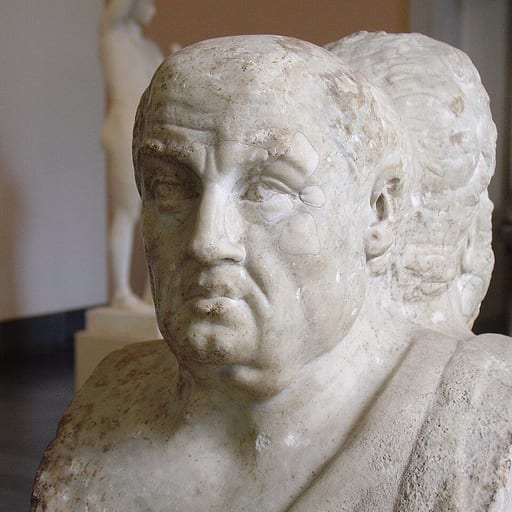
Seneca the Younger
세네카
Roman Stoic philosopher and statesman; Letters to Lucilius
1,047 records in all
- Principles 346
- Episodes 150
- Quotes 551
3 free questions a day, no sign-up.
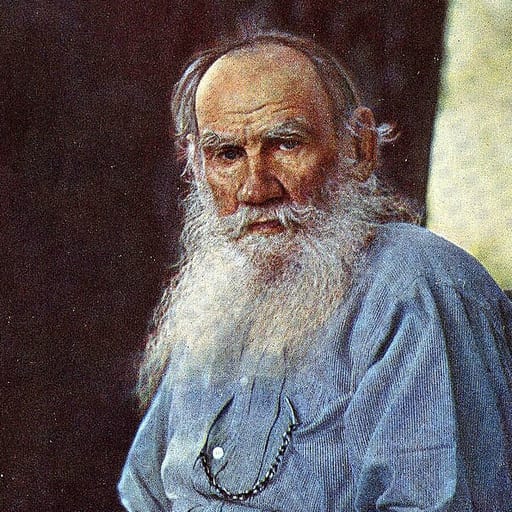
Photo: Calidius CC BY-SA 3.0 Original cropped
Quotes
83 basic records of 551
Quotes are word for word from the source.
Enduring the unchangeable
That which you cannot reform, it is best to endure, and to attend uncomplainingly upon the God under whose guidance everything progresses
Our noteHe argues for accepting the natural order of events instead of fighting them.
Dangers of Solitude
No thoughtless person ought to be left alone; in such cases he only plans folly, and heaps up future dangers for himself or for others; he brings into play his base desires
Our noteSeneca warns that solitude is only beneficial for those who have achieved self-mastery.
Prioritize Mental Health
pray for a sound mind and for good health, first of soul and then of body. And of course you should offer those prayers frequently.
Our noteSeneca advises Lucilius on what goals are truly worth pursuing.
The fragility of success
Do not trust her seeming calm; in a moment the sea is moved to its depths. The very day the ships have made a brave show in the games, they are engulfed.
Our noteSeneca warns that fortune can change instantly, even when things look most promising.
Intellectual intemperance
This desire to know more than is sufficient is a sort of intemperance.
Our noteHe warns against the trap of collecting useless information instead of essential knowledge.
Inevitability of Risk
Unrighteous fortune seldom spares the highest worth; no one with safety can long front so frequent perils. Whom calamity oft passes by she finds at last.
Our noteA reflection on how even the most virtuous cannot escape misfortune forever.
Enduring Public Criticism
To be able to endure odium is the first art to be learned by those who aspire to power
Our noteLycus explains that leadership requires the strength to handle being hated.
Hardship in Success
No easy way leads from the earth to heaven.
Our noteMegara speaks on the difficulty of achieving greatness or reaching the stars.
Value of Past Struggles
Things that were hard to bear are sweet to remember.
Our noteAmphitryon reflects on how past hardships become pleasant memories once overcome.
Timely Resource Management
It is too late to be thrifty when the bottom has been reached.
Our noteSeneca warns that thriftiness is useless if you wait until resources are exhausted.
Lead by example
Teaching by precept is a long road, but short and beneficial is the way by example.
Our noteSeneca explains why practical examples are more effective than theoretical rules.
Seek out work
It is not enough if you do not shrink from work; ask for it.
Our noteHe encouraged Lucilius to be proactive and embrace labor rather than just enduring it.
Effective time use
Show me that the good in life does not depend upon life's length, but upon the use we make of it; also, that it is possible, or rather usual, for a man who has lived long to have lived too little.
Our noteSeneca reflects on how the quality of life is determined by action, not duration.
adaptability in action
Whatever fortune he finds, he will accomplish therefrom something noteworthy.
Our noteSeneca discusses how virtue can be developed in any circumstance.
Balanced expectations
If you are wise, mingle these two elements: do not hope without despair, or despair without hope.
Our noteSeneca suggests a middle path between optimism and pessimism.
Accepting the inevitable
Whatever happens, assume that it was bound to happen, and do not be willing to rail at Nature.
Our noteHe explains the importance of adjusting one's soul to the universal law.
Testing character
Fire is the test of gold; adversity, of strong men.
Our noteA concise metaphor for how hardship reveals true character.
Leadership and humility
No one is able to rule unless he is also able to be ruled.
Our noteSeneca discusses the prerequisites for exercising authority over others.
Problem solving
Apply reason to difficulties; harsh circumstances can be softened, narrow limits can be widened, and burdensome things can be made to press less severely
Our noteHe encourages using reason to mitigate the hardships of one's condition.
Diverse ways to help
Help one man with money, another with credit, another with your favour; this man with good advice, that one with sound maxims.
Our noteHe lists various forms of support a leader can provide to others beyond just financial aid.
Intentional Giving
The next condition, which is the most important of all, must necessarily be present, namely, that I should confer the benefit for the sake of him whom I wish to receive it
Our noteThe intention behind a gift is what defines it as a true benefit.
Repaying obligations
Pay your debts in that kind in which you incurred them.
Our noteSeneca explains that even if a gift isn't a 'true benefit' of the mind, one must return it in kind.
Naming and perception
Some things, on account of their similarity, are included under the same designation, although they do not really deserve it.
Our noteDiscussing how common language often groups similar things under one label.
Personalized value
If you wish me to be grateful for what you give, you must not merely give it to me, but show that you mean it specially for me
Our noteThe importance of making a client or customer feel that a service was intended specifically for them.
Effortless possession
Only the wise man possesses everything without having to struggle to retain it; he alone does not need to send ambassadors across the seas, measure out camps upon hostile shores
Our noteHe contrasts the mental ownership of the wise with the military struggles of kings.
Shared ownership
What I have is not necessarily not mine because it belongs to you; for the same thing may belong both to me and to you.
Our noteSeneca explains the nuance of how something can be legally owned by one but mentally by another.
Control over ego
You can make us cease to crave, if you only make us cease to display.
Our noteSeneca explains that much of our ambition is driven by the desire for public display.
Self-consistency and progress
Hasten to find me, but hasten to find yourself first. Make progress, and, before all else, endeavour to be consistent with yourself.
Our noteHe advises his pupil to prioritize self-discovery and internal consistency over external relationships.
Don't alienate your audience
otherwise, we shall frighten away and repel the very persons whom we are trying to improve.
Our noteSeneca discusses how extreme behavior prevents others from following your lead.
Avoid public boasting
To boast of our retirement is but idle self-seeking.
Our noteSeneca advises against advertising one's withdrawal from public life.
You are seeing 158 basic records. Membership answers from all 1,047 of this master's records.
See membershipMore masters in this field
See the whole fieldPhilosophy and wisdom traditions

These records are our compilation of public statements and sources. We are not affiliated with or endorsed by Seneca the Younger or any related company. If something should come down, tell us. Takedown request form