Hall of Masters

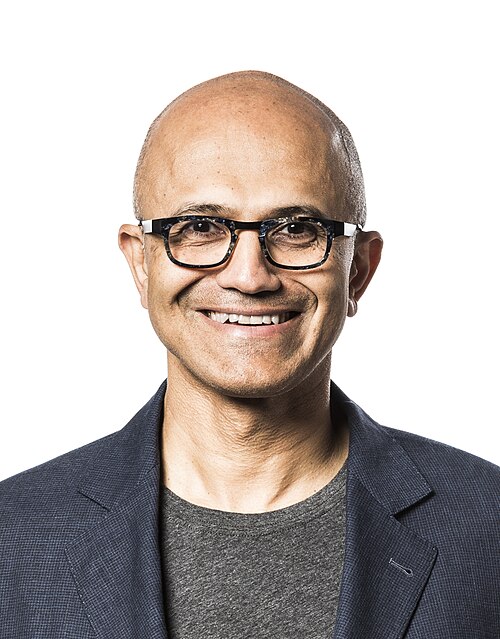
Satya Nadella

사티아 나델라

CEO of Microsoft who successfully transformed the company around cloud and AI by deeply embedding a growth mindset into its organizational culture.

619 records in all

  • Principles 217
  • Episodes 151
  • Quotes 251
Ask with this master's words

3 free questions a day, no sign-up.

Photo: Brian Smale and Microsoft  CC BY-SA 4.0  Original  cropped

Episodes

23 basic records of 151

Episodes are real events from public sources, summarised by us.

  • 2025

    Facing AI Power Constraints

    Microsoft encountered an unexpected barrier to artificial intelligence growth due to power supply limits rather than a shortage of chips. Nadella publicly acknowledged that the lack of power infrastructure to run acquired chips was the most urgent bottleneck.

    LessonScaling advanced technology requires anticipating and preparing for physical infrastructure limits, like power, beyond just acquiring hardware.


  • 2014

    Acknowledging the Mobile Market Reality

    At the time, Microsoft dominated the PC market but held a very low share in the overall device market. He openly revealed the brutal reality of the massive gap they needed to overcome to compete in the mobile era.

    LessonTo fundamentally change an organization's strategy, leaders must first transparently acknowledge current weaknesses and unfavorable market conditions.

  • Activision Blizzard Acquisition Plan

    Microsoft announced plans to acquire Activision Blizzard in January 2022 to strengthen its position in the gaming industry. This move aimed to bolster content, community, and cloud gaming services across all devices.

    LessonInvesting in massive content libraries and established communities can secure a leading position in high-growth consumer markets.

  • Carbon Negative Commitment

    In 2020, Microsoft committed to becoming carbon negative by 2030 and removing all historical carbon emissions by 2050. They backed this with a $1 billion investment fund for climate technologies.

    LessonSetting bold, long-term environmental goals requires significant financial commitment and a willingness to tackle historical impact.

  • Simplifying Customer Agreements

    The company introduced the Microsoft Customer Agreement, a non-expiring digital contract. It was designed to support all customers regardless of whether they buy through a partner or directly.

    LessonReducing friction in the purchasing process through digital-first, simplified agreements can improve long-term customer retention.

  • The Shift to AI Outcomes

    Microsoft transitioned from discussing AI potential to implementing it across diverse sectors, such as helping Unilever run thousands of simulations and enabling Kenyan street vendors to access credit.

    LessonSuccess is measured by how effectively customers can translate your technology into their own specific business wins.

  • Shift to Subscription Models

    Microsoft managed a major transition from on-premises licensed software to cloud-based subscription services like Office 365 and Microsoft 365. This shift changed how revenue is generated, moving toward per-user and consumption-based models.

    LessonTransitioning from one-time sales to recurring subscriptions requires adding continuous value through AI and new features to maintain growth.

  • Tax Benefit from Phone Business Losses

    Microsoft realized significant tax benefits in 2017 due to previous losses in its phone business. This contributed to a decrease in their effective tax rate from 15% in 2016 to 8% in 2017.

    LessonPast business failures can sometimes provide financial resilience through tax offsets in later profitable years.

  • Windows 10 Revenue Recognition

    Microsoft decided to recognize revenue from Windows 10 licenses ratably over the estimated life of the device, typically two to four years. This was because the license includes unspecified future updates that are not sold separately.

    LessonWhen a product includes ongoing updates or services, the revenue should be spread over the period the customer actually uses the product.

  • Public Apology for Misstatement

    At an event, Nadella suggested women should trust the system instead of asking for raises, which caused significant backlash. He quickly admitted he was completely wrong and issued a public apology to employees and the public.

    LessonWhen a leader makes a mistake, admitting it quickly and completely is essential for maintaining trust.

  • Transitioning Select Plus to MPSA

    Microsoft announced the end of new Select Plus agreements for commercial organizations to streamline their licensing. They encouraged customers to transition to the Microsoft Products and Services Agreement (MPSA) for a more unified experience.

    LessonConsolidate fragmented product offerings into a single, flexible agreement to reduce friction for growing customers.

  • 2000Risk

    The Microsoft Breakup Order

    In June 2000, Judge Jackson ruled that Microsoft had abused its monopoly power and ordered the company to be split into two separate entities: one for operating systems and one for applications. This ruling caused Microsoft's market cap to drop by 55% over a year, falling from $600 billion to $270 billion.

    LessonLegal and regulatory battles can cause massive market value destruction and internal cultural damage even before a final resolution is reached.

  • The Failure of Windows 8

    Microsoft attempted to force a single touch-first interface across all devices, including desktop PCs. This mixed metaphor confused users and failed to attract developers, leading to a commercial failure that stalled the company's consumer growth.

    LessonForcing a single user experience across different hardware contexts can alienate core users and ruin product-market fit.

  • The Shift to Cloud Partnership

    Microsoft recognized that moving to the cloud allowed IT departments to stop being antagonistic toward their users. This shift enabled Microsoft to serve customers regardless of whether they used iPhones or open-source tools.

    LessonFocus on serving the customer's choice of platform rather than forcing them into your own ecosystem.

  • 2016Sales

    Expanding SMB Cloud Reach

    Microsoft enabled new sales programs specifically to reach small and medium-sized businesses with cloud services. These included direct sales and partnerships with telephone and cable providers to bundle services.

    LessonReaching smaller customers often requires leveraging existing utility or operator channels they already use.

  • Advertising Spend Reduction

    Microsoft managed to reduce its advertising expenses from $2.3 billion in 2014 to $1.6 billion by 2016. This occurred while maintaining sales and marketing operations including payroll and trade shows.

    LessonA large company can optimize its marketing mix to significantly reduce direct advertising spend without halting overall sales operations.

  • 2014Risk

    China Antitrust Investigation

    China's State Administration for Industry and Commerce (SAIC) began a formal investigation into Microsoft regarding compatibility and bundle sales. Officials conducted onsite inspections of several Microsoft offices across China.

    LessonOperating in international markets brings scrutiny from local regulators that can impact product bundling and sales strategies.

  • GitHub Universe Agent Strategy

    At GitHub Universe, Microsoft introduced 'Mission Control' to act as a hub for various AI agents. This allows developers to use multiple competing models like Claude and Grok within a single GitHub subscription and workflow.

    LessonPositioning your product as the central management layer for competing tools ensures you remain essential regardless of which specific tool wins.

You are seeing 94 basic records. Membership answers from all 619 of this master's records.

See membership

More masters in this field

See the whole field

Management and leadership

These records are our compilation of public statements and sources. We are not affiliated with or endorsed by Satya Nadella or any related company. If something should come down, tell us. Takedown request form