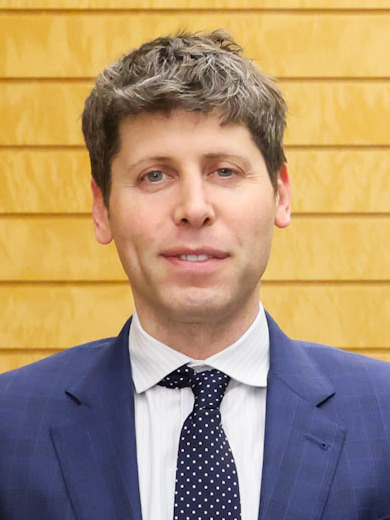
Sam Altman
샘 올트먼
Former president of Y Combinator and CEO of OpenAI who emphasizes compounding personal growth, high conviction, and intense execution with small focused teams.
1,250 records in all
- Principles 365
- Episodes 193
- Quotes 692
3 free questions a day, no sign-up.
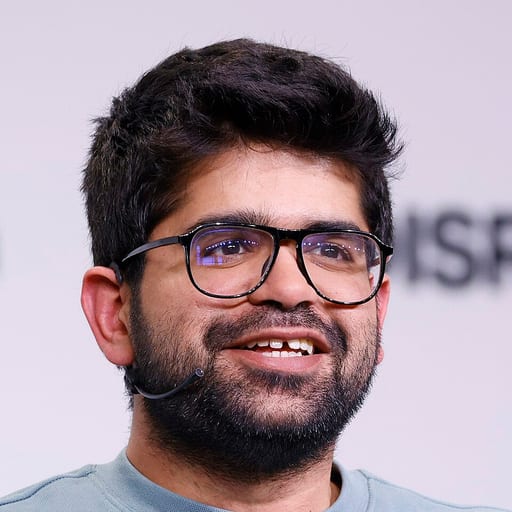
Photo: 首相官邸ホームページ / Office of the Prime Minister of Japan Official Website CC BY 4.0 Original cropped
Quotes
104 basic records of 692
Quotes are word for word from the source.
Admitting Mistakes
I am not proud of handling myself badly in a conflict with our previous board that led to a huge mess for the company.
Our noteHe admits his past mistake of poorly handling a board conflict which led to a massive crisis for the company.
Empowering scientific solutions
Scientists can get us out of this. What they need are money and connections.
Our noteSam Altman emphasizes that funding and networking are the primary bottlenecks for scientific breakthroughs.
Identifying bottlenecks
Almost every company and non-profit working on COVID-19 that I offered to help asked for support with clinical trials
Our noteAltman noticed a recurring pattern of need among organizations fighting the pandemic.
Time allocation
I don't think there's one single takeaway other than I think people almost never allocate their time as well as they think they do.
Our noteSam discusses how he manages his productivity despite increasing demands.
Competence and conspiracies
a true massive global government cover-up, that requires a level of competence to people I just rarely ascribe.
Our noteSam explains why he is skeptical of large-scale conspiracy theories.
The Ultimate Prompt
You get the opportunity to type in the prompt before you say okay. The question is, what should you type in?
Our noteSam poses a philosophical question about the final instruction given to a superintelligence.
AI's bad reputation
AI has not worked for so long that it's acquired a bad reputation. CS professors mention it with a smirk.
Our noteSam discusses why people were pessimistic about AI's potential in 2014.
Long term focus
And he has a very long-term focus, which has become a rare commodity in tech companies these days.
Our noteSam praises Adam D'Angelo's leadership style at Quora.
Founder Qualities
Having ideas is among the most important qualities for a startup founder to have - you will need to generate lots of new ideas in the course of running a startup.
Our noteAltman explains why founders must be good at generating their own ideas.
Minimize cognitive load
Minimize your own cognitive load from distracting things that don't really matter. It's hard to overstate how important this is, and how bad most people are at it.
Our noteSam emphasizes the importance of removing mental distractions to maintain focus on what matters.
Concentration of power
The software revolution is likely to do what technology usually does, and make more power available to small groups.
Our noteSam explains how software empowers small teams to have outsized impact, both good and bad.
Effective pitching
The way to pitch well is to focus on the parts of the business that truly excite you. That will shine through, and it will get the investors excited.
Our noteSam emphasizes the importance of genuine passion during investor presentations.
Global talent distribution
If you believe that intelligence and determination are evenly distributed, less than 5% of the best founders are born in the US.
Our noteSam argues for the importance of attracting international talent to the US.
Focus on substance
I would much rather read about what companies are doing than the state of the markets.
Our noteSam expresses his preference for company progress over market speculation.
Resilience in crisis
I think it was Friday evening for the first time that I heard from the exec team here, which is like, "Hey, we're going to fight this." and then I went to bed just still being like, okay, excited. Onward.
Our noteSam describes his immediate reaction and mindset after being fired from OpenAI.
Economic model evolution
The model changes but people have got to get paid.
Our noteSam discusses the need for new compensation models for creators in the AI era.
Applying startup methods
The U.S. Digital Service is actually trying to do something about it, by applying the way startups build products to make government services work better for veterans, immigrants, students, seniors, and the American public as a whole.
Our noteSam Altman explains how the USDS uses startup methodologies to improve government technology.
Leaving money on table
YC has left a lot of money on the table; other people have made more money from the ecosystem than YC has itself.
Our noteSam discusses how not being greedy helped YC build a lasting ecosystem.
Hard vs Easy
it's easier to do something new and hard than something derivative and easy. People will want to help you and join you if it's the former
Our noteExplaining why ambitious projects attract more talent and support.
Investing in women
We want to fund more women because we are greedy in the good way--we want to fund the most successful startups, and many of those are going to be founded by women.
Our noteSam explains that Y Combinator's push for diversity is driven by a desire for better returns.
Pursuing significance
Why shouldn't you do significant things in this one life, however you define significant?
Our noteHamming challenges the audience to aim for greatness in their single life.
Treating capital as final
it's always possible that the capital you've raised now will be the last you've ever raised. You should treat it that way.
Our noteSam advises founders on how to view their current cash reserves.
Founder time allocation
After you figure out your vision and get product-market fit, you should probably be spending between a third and a half of your time hiring.
Our noteSam advises founders on how much time to dedicate to recruiting.
Investor involvement
It turns out that investors are generally about as involved as they are invested.
Our noteAltman explains why having many small investors leads to a lack of support.
Ignoring bubble predictions
A lot of people have been saying we're in a tech bubble for quite some time. Someday they'll be right, but in the meantime, I thought it'd be fun to look back at some articles from the last 10 years
Our noteSam Altman reflects on a decade of premature warnings about a technology bubble.
Knowing what to ignore
Most founders know what to do; they just don't know what not to do.
Our noteAltman explains that restraint is the hardest part of execution for founders.
Resilience in chaos
I try to remember that on any given Friday, when seven things go badly wrong by 1 pm.
Our noteSam reflects on how he maintains perspective when facing daily operational failures.
Quality and terms
the best companies usually have the most common-stock-like terms (and "the best companies" are never the ones that seem overpriced for long anyway
Our noteSam discusses how top-tier companies avoid complex debt-like deal structures.
Avoid busywork
Be suspicious of any work that is not building product or getting customers.
Our noteSam warns against getting distracted by tasks that don't drive core value.
Unpopular Truths
Usually mainstream ideas are right and heterodox ideas are wrong, but the true and unpopular ideas are what drive the world forward.
Our noteHe explains the value of protecting ideas that challenge the status quo.
You are seeing 188 basic records. Membership answers from all 1,250 of this master's records.
See membershipMore masters in this field
See the whole fieldAI and frontier tech

These records are our compilation of public statements and sources. We are not affiliated with or endorsed by Sam Altman or any related company. If something should come down, tell us. Takedown request form