
Rob Walling
롭 월링
Founder of Drip, TinySeed and MicroConf; host of Startups for the Rest of Us
4,700 records in all
- Principles 1,000
- Episodes 700
- Quotes 3,000
3 free questions a day, no sign-up.
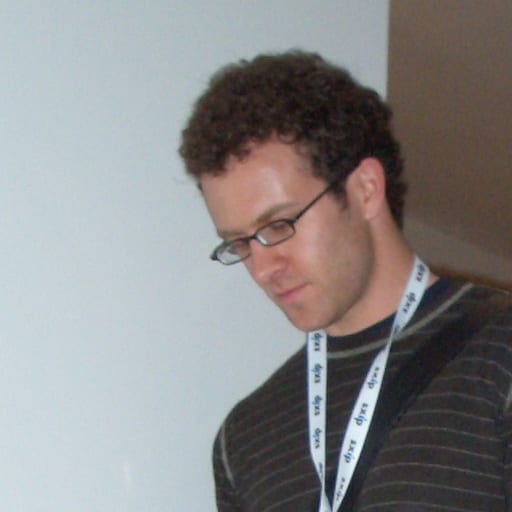
Photo: 49945carlo CC BY-SA 4.0 Original cropped
Quotes
450 basic records of 3,000
Quotes are word for word from the source.
Finding opportunity
But at any point in time since the internet has launched, there's always opportunity and that's our challenge it is to find that opportunity and attack it.
Our noteRob encourages founders to look for opportunities despite the competitive landscape.
Niche design expectations
The thing you have to remember is that certain niches are really going to care about design. So, a lot of freelancers, designers, web people, they care more about design. Photographers are the same way.
Our noteRob notes that design importance varies depending on the target audience.
Single point of failure
it's such a single point of failure. It's such a way to piss off thousands of your customers.
Our noteRob criticizes software vendors who use phone-home validation that breaks when their servers go down.
early stage focus
I think these one-one-conversations are more critical up front.
Our noteRob agrees that direct outreach is more valuable than driving broad traffic at the start.
WordPress subscription challenges
I don't know of any WordPress plugins that don't rely on an external service that are able to pull off a monthly pricing tier
Our noteRob discusses the difficulty of implementing monthly subscriptions for WordPress plugins without external service justification.
Targeting early revenue
I personally would be going for that early revenue. Let's try to get to between 2 and 5 grand a month as quickly as possible
Our noteAdvising a founder to prioritize quick cash flow over long-term subscription models initially.
Upfront payment benefits
If their payment doesn't go through, then you don't deliver the leads. You're not out the money.
Our noteExplaining why getting paid in advance is safer for a service provider.
Leveraging existing audience
They took their existing audience and they very intelligently turned it into a software success.
Our noteRob discusses how companies like SumoMe used their email lists to launch software products.
Benefit of doubt
when I said, "I'm launching something and I think it's good.", people would listen. They would at least give me the time of day.
Our noteRob explains how having an audience ensures people pay attention to your new launches.
Entrepreneurial hardship
I'm speechless because like I've gone through hard things, but I've never had to do that. So many people will never have to in their entire entrepreneurial career.
Our noteRob reacts to Maren Kate's story about the collapse of her company Zirtual.
Travel as therapy
I think that travel can be such a therapeutic thing in that respect.
Our noteRob discusses how traveling abroad helped Maren recover from business failure.
High quality swag
I want this to be something that could appear in a store like in Urban Outfitters, or some store that someone might see.
Our noteRob shared his philosophy on creating company merchandise that people actually want to wear.
Sustainability of lifetime deals
If you had zero customers next month, you have zero revenue, do you have to lay off all your developers and you can't support it anymore? Does that work?
Our noteRob questions the long-term viability of funding a business solely through new customer acquisition without recurring revenue.
Subscription vs one-time
We talk about SaaS, and SaaS is and should be subscription because there's all these costs and stuff associated with building and maintaining it. Are there products that should be sold one time? Absolutely.
Our noteRob explains that while SaaS favors subscriptions, other products like books or content are better suited for one-time sales.
Software performance decay
If you have a Windows installation that's 5 or 10 years old, it gets really, really slow and you have to repave it. On my laptop I would reinstall Windows every 18 to 24 months.
Our noteRob describes the 'cruft' that slows down Windows over time compared to OS X.
Need for Orchestration
with Drip it's had to be more orchestrated. One: because I've worked with other people, like I had a marketing intern for a while. I've had other people helping me with it, and so a calendar is actually necessary.
Our noteRob explains why scaling a team requires moving from mental notes to a shared marketing calendar.
Avoiding Bad Deals
It's just too easy for someone to approach with kind of a sky high idea that requires a lot of work for me that isn't actually going to yield you any customers.
Our noteRob warns against partnerships that demand high effort for low customer acquisition returns.
Financial Accuracy
I know it's all dialed in and the numbers are correct and I don't have to go back and do a bunch of comparing with PayPal spreadsheets like I used to
Our noteRob describes the peace of mind that comes from having professional bookkeeping.
Filtering customer feedback
you can't just blindly listen to folks and invest a month of development just to get your next customer.
Our noteRob warns against building every requested feature just to land a single customer without a roadmap.
Testing new markets
if you aren't already in Canada I do think that's a no brainer to get listed in the Canadian app store to give it a try because what's the worse that happens?
Our noteRob discusses the low risk of expanding a mobile app into the Canadian market as a test.
Focus on local market
Consider looking at those and keeping it within the US at this point rather than branching out into other countries. And I say that because I think there's probably other marketing channels you haven't explored.
Our noteRob suggests exhausting domestic marketing channels before dealing with international complexity.
Startup journey series
Welcome back to TinySeed Tales, a series where I follow a founder through the wild rollercoaster of building their startup.
Our noteRob introduces the podcast series focusing on the emotional and practical ups and downs of entrepreneurship.
Avoiding regret
It would be terrible to feel like huge waves of regret of like, oh, can I go get that back?
Our noteRob discusses the emotional difficulty of regretting past business decisions like closing a consultancy.
Early simple launches
I think about the very first launch that I did. I'm trying to think of what it was. It was probably launching a new version of DotNetInvoice, and it was release the code and email my customers, and that was the launch and that was it.
Our noteRob reflects on how simple his first product launches were compared to his current complex ones.
Building for revenue
We were literally losing deals over just that and they were significant deals. They were hundreds of dollars a month, obviously thousands of dollars in ACV
Our noteRob explains why they eventually built the RSS-to-email feature despite hating it.
Market demand importance
The biggest mistake I see people make is launching a product that has no market. You know, there is a common belief that building a good product is enough to succeed. But unfortunately, it is not.
Our noteRob explains why building a great product alone doesn't guarantee business success.
Developer focus trap
as developers, we focus almost solely on the product, when, in fact, it is much less important than the other two legs of the triangle.
Our noteRob discusses the Product Success Triangle: product, market, and execution.
Validating with people
Ideally, you would use that as a first step and then you would move into contacting actual people who might be interested in the product and talking to them one on one
Our noteRob suggests moving beyond keyword research to direct customer interviews.
The Illusion of Progress
But reading books doesn't get you any closer to launching your product. Personally, I love reading business books. But I stopped kidding myself a long time ago that reading them is going to help me launch my next product.
Our noteRob clarifies that reading business books is often a hobby, not a launch activity.
Key support metric
If you pay attention to only one metric, make it response time.
Our noteRob introduces the first tactic for providing excellent customer support.
You are seeing 705 basic records. Membership answers from all 4,700 of this master's records.
See membershipMore masters in this field
See the whole fieldSolo business and indie makers



These records are our compilation of public statements and sources. We are not affiliated with or endorsed by Rob Walling or any related company. If something should come down, tell us. Takedown request form