
Rob Walling
롭 월링
Founder of Drip, TinySeed and MicroConf; host of Startups for the Rest of Us
4,700 records in all
- Principles 1,000
- Episodes 700
- Quotes 3,000
3 free questions a day, no sign-up.
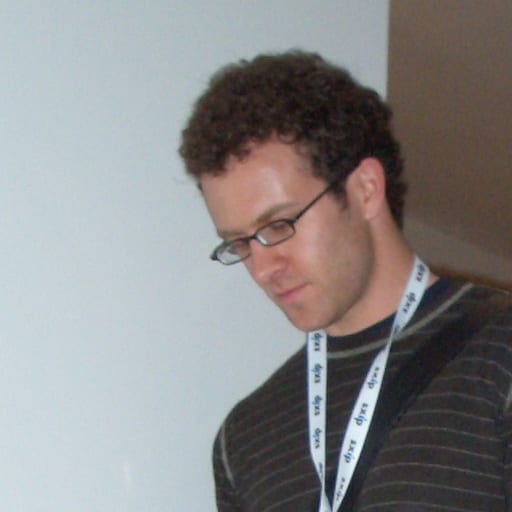
Photo: 49945carlo CC BY-SA 4.0 Original cropped
Quotes
450 basic records of 3,000
Quotes are word for word from the source.
Resistance to marketing
most of the time, that's an excuse, that's the resistance talking because you want to go back in to your basement and build more features rather than get out there and figure out what is really going on with your positioning, your marketing, the way you're selling it, your niche, your channels.
Our noteRob explains that building features is often a way to avoid the harder work of marketing.
Technology adoption curves
Every language and every platform has an adoption curve and we've seen all these languages that come. They have their heyday, and then eventually they don't last. Computer languages don't last 50 years.
Our noteWarning about the risk of building on a specific programming language or framework.
Realistic expectations
If you think you're going to get to $300,000 in 12 months, you're going to be disappointed or you're going to burn out.
Our noteRob warns against setting unrealistic financial goals in a short timeframe.
Avoiding Multitasking
I'm not bouncing around and trying to do all of them at once. I know that they are on my long-term road map and that I will get to them eventually.
Our noteRob talks about keeping future ideas on a roadmap instead of acting on them immediately.
Persistence and Failure
You probably shouldn't even get in to this game because you're going to have a lot of failures. You're going to have to deal with that and you're going to have to - you kind of get over them, learn from them and get better the next time.
Our noteRob emphasizes persistence as a core requirement for entrepreneurship.
Separating work and life
It's trying to figure out how do I go on this journey and deal with hard things and not let it poison the rest of my life
Our noteRob discusses the importance of not letting business stress negatively impact personal relationships.
Long term crypto
Bitcoin and crypto in general is this movement and long-term is going to stick around even after a crash.
Our noteRob expresses his long-term bullish stance on cryptocurrency despite potential short-term crashes.
Maintaining founder motivation
it's good to have a win now and again to keep you motivated. There was like several months there where it just felt like all losses and the winner, it discourages you especially if it comes during that dark and cold time of year
Our noteRob discusses the psychological impact of business wins and losses on a founder's morale.
Transitioning from consulting
I mean you've been spending time talking to these guys that this is a possibility for you and I think another thing that you told me offline that perhaps opens this up to be more possible for you is consulting.
Our noteRob explores how reducing consulting hours can help a founder focus on their product.
Problem vs Market Fit
You had problem solution fit. You didn't product market fit because you didn't know what market you should go after.
Our noteRob explains the difference between solving a technical problem and finding a viable market for it.
Momentum and Results
You get your mojo back and then you really start hitting things hard and something comes out of that.
Our noteRob observes how Mike's renewed focus on marketing led to a Fortune 500 lead.
Time tracking ROI
I would track my time to figure out which apps I was spending the most time on. And then at the end of the month, I used to do a dollar per hour, per app.
Our noteRob explains how he used time tracking to evaluate the profitability of his different software products.
Lifestyle business values
in reality, there's a reason that I'm doing stuff so small, and there's a reason why I'm not thinking that big, and it's because I value my lifestyle, and I value having time with my family
Our noteRob explains why he chooses bootstrapping over the high-growth venture capital path.
Interpreting user requests
there's definitely an art to this, to trying to interpret what users are asking for and figuring out if you should build it and how to build it.
Our noteRob discusses the challenge of translating specific customer feature requests into flexible product improvements.
Enterprise sales cycles
I mean those companies are just slower movers than we are. And I would think it'd be more like six months if it's truly an enterprise
Our noteRob comments on the reality of long sales cycles when dealing with large organizations.
Customer validation
If you've not working directly with at least two customers you have no idea if what you're building is adding value
Our noteRob warns against building features without talking to real potential customers.
Take life-changing money
If you're 18 and you've built a business to the point where someone offers you $9 million, you take that (beep) money. That changes your life.
Our noteRob reacts to a headline about a young founder turning down a massive acquisition offer.
Pride in mastery
I enjoy that idea of mastery. I enjoy when I go back and watch a video that I recorded, listen to a talk, listen to a podcast, read a book or read a essay, and to say, "That's really good. I'm proud of that."
Our noteRob shares his personal motivation for striving to be great at his craft as an entrepreneur and creator.
Real startup journey
The idea is to give you some insight into the ups and the downs, the struggles, the victories, and the failures of a real startup founder growing a real SaaS company that was bootstrapped until they took money
Our noteRob explains the purpose of the TinySeed Tales podcast series.
Watching for burnout
Money probably won't be the issue for Tony and Francois, but we will be keeping an eye out for signs of burnout.
Our noteRob highlights that for funded companies, mental exhaustion is often a bigger risk than financial ruin.
Company size preference
I worked at a company that when it hit 100 employees, it felt like a big company because I'm not a fan of organizations that big.
Our noteRob reflects on his experience working in a company that grew to 100 employees and how it changed the feel of the organization.
Personal retreat frequency
I think annual. Annual is the minimum for me. Every 6 months is more ideal.
Our noteRob recommends how often founders should take a personal retreat to reflect on their business.
Managing growing complexity
as your app grows, I find it really hard to just keep tabs on all of them. With tools like New Relic, Monet and there's other stuff that can look at it
Our noteRob discusses the difficulty of monitoring background processes as a software application scales.
Market existence assumptions
If an app is built, it looks crufty, maybe they only got to 5000 in recurring revenue and that's how big the market is. I think that's the first thing I would be careful of is assuming that there is a market just because they're there.
Our noteRob warns against assuming a viable market exists just because a low-quality app is present.
Benefits of acquisition
you're going to be so far ahead if you were to acquire their traffic and acquire their existing customer base and acquire as much of that knowledge as you can garner rather than trying to build it from scratch.
Our noteRob highlights the strategic advantages of acquiring an existing business to save time.
Separating work and home
I almost never try to work when my kids are at home because I find that it means I'm not be doing a good job at work and I may be getting irritated.
Our noteRob shares why he avoids multitasking between parenting and professional tasks.
Hype versus success
being on Hacker News in the frontpage for 24 hours doesn't mean you're on overnight success. We had a lot of work in front of us but we had so much fire power
Our noteThe founders talk about the reality of business growth after a successful launch thread.
Batching email replies
I've also started to bulk reply to a lot of things where I shouldn't say bulk, I should batch reply. You know, everybody who asked for advice, I put them under advice tag and then I throw them to Trello
Our noteRob explains how he manages a high volume of advice-seeking emails using Trello and batching.
Market competition reality
It's always more competitive than the prior year and that's been the case since it came out in '96.
Our noteRob discusses how the internet is always becoming more competitive over time.
Tools versus competition
So, you have - it is more competitive but you also have these tools at your disposal. It feels a little bit like it could be use as an excuse of like, "Wow, it's just too competitive and this stuff doesn't work anymore
Our noteRob argues that better tools offset the increase in market competition.
You are seeing 705 basic records. Membership answers from all 4,700 of this master's records.
See membershipMore masters in this field
See the whole fieldSolo business and indie makers



These records are our compilation of public statements and sources. We are not affiliated with or endorsed by Rob Walling or any related company. If something should come down, tell us. Takedown request form