
Rob Walling
롭 월링
Founder of Drip, TinySeed and MicroConf; host of Startups for the Rest of Us
4,700 records in all
- Principles 1,000
- Episodes 700
- Quotes 3,000
3 free questions a day, no sign-up.
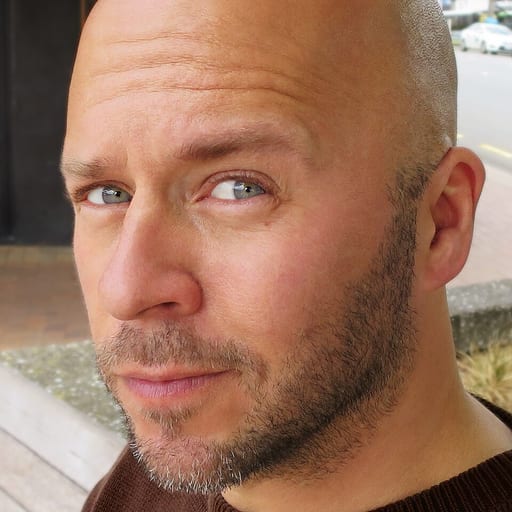
Photo: 49945carlo CC BY-SA 4.0 Original cropped
Quotes
450 basic records of 3,000
Quotes are word for word from the source.
Essential technical basics
I think people might just need to know, "Hey, if you're going to be launching something, you have to have a way to capture your errors in a way that you can dig into them
Our noteRob clarifies what level of technical detail is useful for non-technical founders.
Non-technical founder challenges
A non-technical founder may know how to market a SaaS app because they're able to handle the multiple channels. They have that tool belt. But purely getting one built is maybe ten times more complicated.
Our noteRob explains why building software is harder than marketing it for non-coders.
Stair step approach
if you're non-technical, you haven't learned to code, or you're considering, I wouldn't try to jump to that third step just yet.
Our noteRob advises against starting with complex SaaS as a first project.
Choosing a language
But if you're kind of going to dabble in it and you want to learn just enough, I would lean towards encouraging people to do PHP.
Our noteRob explains why PHP is a practical choice for non-technical founders.
Scaling user feedback
when you have 100 or 1,000 people using it, it's actually easier right? There's more data coming at you but it's easier to pick out the things that are most critical
Our noteRob explains how larger data sets help identify critical product improvements.
Developing thick skin
getting a little more fixed scanned and learning to ignore those things that should be ignored, is a learn skill.
Our noteRob emphasizes that learning to ignore irrelevant negativity is a skill that founders must develop.
Customer experience sophistication
I'm impressed with the level of sophistication and really feeling like we're not just going somewhere and going to spend days standing in line, but actually able to plan this thing and feel good that things are taken care of.
Our noteRob reflects on how Disney World's technology improves the customer experience.
Staged rollout strategy
This is exactly why we roll out to one customer at a time and test things. I mean it is a beta test in this case.
Our noteRob explains the importance of rolling out a new product to one customer at a time to catch issues early.
Intuitive decision making
It was not an easy decision at all. It was not clear cut. At a certain point, it just starts feeling institutively wrong like you were doing so much work.
Our noteRob reflects on the difficult decision to stop trying to onboard a customer who wasn't a good fit.
Market fit validation
I kept asking myself the question how many other users of my first hundred are going to need what we're building here. And that answer was like none or one.
Our noteRob uses a simple question to determine if a feature is worth building for the broader market.
Remote work necessity
Oftentimes, we can't afford an office or we can't afford to hire in our local cities, because we don't have the money to do it.
Our noteRob explains why bootstrapped founders often choose remote work out of financial necessity.
Remote Work Mindset
you talk a lot about remote work as async. It's a whole different mindset than being in an office. You can't just move being in an office work to remote and expect it to work.
Our noteRob emphasizes that remote work requires a fundamental shift in how work is structured.
founder focus
Really, it should be every few months. But people were like, nah, I actually want to be heads down working on my company as much as I liked my fellow batchmates.
Our noteRob explains that founders often prioritize deep work over frequent social gatherings.
Features not built
let's touch on one feature or more, frankly, that you haven't built, probably aren't going to build, and why.
Our noteRob asks about the features that were intentionally excluded from the product roadmap.
Social media rule
If someone picks a fight with me, I'm one and done. I post one response and it might be two Tweets or three Tweets in a chain, but, "Here is my stance."
Our noteRob explains his 'one and done' rule for handling online arguments and trolls.
Scaling revenue growth
As you scale up, you do, you add 5K a month, you have 10K a month, and that sounds crazy in the early days. But you just get the flywheels, you get the brand, whatever.
Our noteRob discusses how growth becomes easier once a business gains momentum and brand recognition.
Finding skilled writers
it's actually really hard to find someone who has both of those skills.
Our noteRob comments on the difficulty of finding writers who understand both marketing and specific technical niches.
Avoiding distractions
I think if you're easily swayed and it's kind of sucked in to that world of the high gross startup and it turns out to be a distraction for you, I would say do not listen to this book
Our noteRob warns against consuming content that might distract a founder from their specific path.
Hiring right people
I think that setting clear expectations if you hire the right people is quite easy to do because they just tend to do...they just tend to make good decisions.
Our noteRob explains that hiring competent people reduces the need for micromanagement and complex instructions.
Manual customer development
You don't need to have a high enough lifetime value in order to have 20, 30, 40 conversations by pinging people on LinkedIn, by announcing on your social media
Our noteRob suggests manual outreach for idea validation when paid traffic is too expensive.
Managing difficult changes
The best founders, best CEO that I see doing this, doing hard things and not pissing their customer base off, are the ones who are in touch with them.
Our noteRob discusses how to execute difficult business decisions without losing customer trust.
Founder time value
I am saving my time. So him spending five to seven minutes for several months is still worth me saving a few hours of time so that I can push the business forward.
Our noteRob explains why delegating a manual task is better than spending founder time coding an automation.
Hallway Track Insights
So the most notes that I have are from conversations like I had at the Whisky Priest and frankly just in the hallways and in between and after.
Our noteRob emphasizes that his most actionable notes come from informal peer conversations rather than formal sessions.
Game changing suggestions
we just got into this awesome conversation and he had this really it could be - like for me, it could be a game changing suggestion for HitTail. I could probably blew it up about this opportunity, you know, there's no market place and blah, blah, blah.
Our noteRob describes a chance encounter with David Cancel that provided a major business insight.
Sharing success stories
I think that it was a reminder of like yeah, you know, we need to be better about kind of bringing, bringing those stories to light because I think they're inspirational.
Our noteRob reflects on the importance of highlighting the successes of community members to inspire others.
Self assessment
I think I'm a pretty good writer now. I think you and I do a good podcast. I think I'm a good entrepreneur. I think my public speaking is actually maybe one of my lesser abilities.
Our noteRob reflects on his own strengths and weaknesses as a founder and communicator after his talk at MicroConf.
Customer development success
And basically the designed the best home based on the opinions of these women and just has it amazing homebuilding business now because of this customer development approach.
Our noteRob explains how designing a product based on direct customer feedback led to a successful business.
Founder peer groups
I became a believer in meeting with like-minded founders over time, a small group of founders who really followed my journey, almost like honorary co-founders.
Our noteRob describes the role of mastermind members as honorary co-founders.
Terminology nuances
I have a love hate relationship with the term product-led growth because I like shorthand terms, even product-market fit, I feel the same way.
Our noteRob discusses his mixed feelings about popular business buzzwords.
True free trial
And that was included in the trial itself. It truly was a free trial. And yes, they could do everything in terms of uploading subscribers, sending emails, getting the value that the product offered.
Our noteRob describes how Drip's free trial allowed users to experience the full value of the product.
You are seeing 705 basic records. Membership answers from all 4,700 of this master's records.
See membershipMore masters in this field
See the whole fieldSolo business and indie makers

These records are our compilation of public statements and sources. We are not affiliated with or endorsed by Rob Walling or any related company. If something should come down, tell us. Takedown request form