
Rob Walling
롭 월링
Founder of Drip, TinySeed and MicroConf; host of Startups for the Rest of Us
4,700 records in all
- Principles 1,000
- Episodes 700
- Quotes 3,000
3 free questions a day, no sign-up.
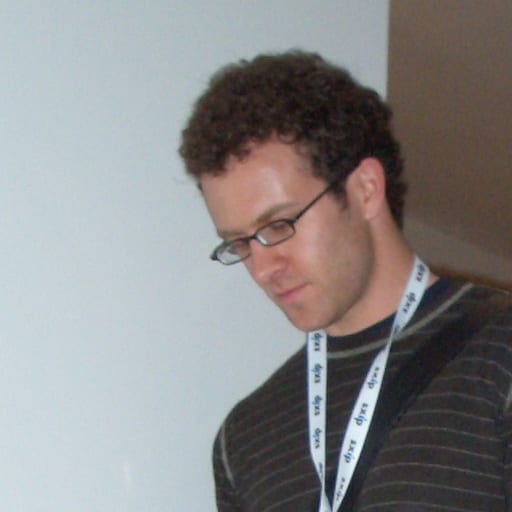
Photo: 49945carlo CC BY-SA 4.0 Original cropped
Quotes
450 basic records of 3,000
Quotes are word for word from the source.
Opportunity Cost
If I were running my own company and I was coding on my, I wouldn't do that, right? It becomes a lost opportunity cost.
Our noteRob explains why founders shouldn't waste time constantly switching to every new tool.
Bootstrapper entity choice
It seems if you're bootstrapping in business, the odds are pretty high. You're going to do an S Corp or you're going to do an LLC just because C Corp wouldn't make sense.
Our noteRob summarizes the typical corporate structure choices for self-funded founders.
The power of validation
I also think another factor is validation that something's working. If you toil for a year on a blog and you build up an email list, but you never sell anything - I guess the email count could be a validation, but it's weaker validation.
Our noteRob discusses why making actual sales is a stronger form of validation than just growing an email list.
Selling Timeline Stress
When I decide I want to sell a business, I want it to close tomorrow. When I hear 210 days, that's freaking painful.
Our noteRob reflects on how the long duration of an acquisition process is mentally taxing for action-oriented founders.
Focus and Selection
It's just not picking the right stuff to work on and then not focusing on that stuff, not wandering off to answer email, jump on Twitter, go to Reddit, really focusing.
Our noteRob identifies common distractions that prevent founders from being effective in shorter timeframes.
Marketing funnel content
the folks on the front-end of your marketing funnel, they really need to hear more about, probably some content, some education, stuff surrounding your product.
Our noteRob distinguishes between the needs of potential leads and existing customers.
Email mini courses
I find that email mini course gets folks used to receiving and reading emails from you. And so that's my personal preference, and that's why we've really focused on that with Drip
Our noteRob explains why he prefers multi-day email courses over one-time PDF downloads for building lists.
Finding competitor customers
find your competitor's customers, going to a site like Capterra or GetApp where people are rating your competitors, and you'll notice that most of the sites let people connect their LinkedIn or Twitter profiles, then you can reach out.
Our noteRob shares a practical hack for finding people to interview for customer development when you don't have your own customers yet.
Traditional publishing benefits
Going through a publisher gives her reach because the publisher already has this audience. These audiences are the people who expect.
Our noteRob explains why a traditional publisher is better for reaching a broader, horizontal market.
Defining design taste
Taste, I'm defining as just knowing a lot of these concepts, these rules of thumb of like, there should be more whitespace here or there are too many colors
Our noteRob defines taste as understanding fundamental design rules of thumb.
Learning by observation
I've sat and watched him for hours. I'll appear over and watch his design process. I'll watch him, look at his screen and watch him just take things away, and just keep it very simple.
Our noteRob describes watching Derrick Reimer's minimalist design process.
Planning horizon
When you have 15, 20 people, your horizon has to go out further.
Our noteRob explains how the planning timeframe changes as a company grows.
Benefits of upmarket
going up market, there's a lot of pros to it in terms of your just going to grow faster. You need a lot fewer customers to grow a lot faster.
Our noteRob explains why targeting larger customers can accelerate business growth.
Pricing for high-end
You have to find that level where you can either have that high end tier that they automatically fall into, or, if you're going to go after this, you have to raise your prices across the board just to be able to afford everything
Our noteRob explains why moving upmarket requires higher prices to cover the increased cost of service.
Handling negative feedback
It's just a very mature way of thinking about it, because it's so easy to say everybody's wrong and it's easy to also take offense to it and be too offensive.
Our noteRob comments on Tom Merritt's approach to dealing with angry or unreasonable audience comments.
Investing in seniority
at a certain point I need to spend more money on my team and I need to hire more mid-level and senior people so that we can move faster
Our noteRob explains the necessity of hiring experienced people to increase organizational speed.
Repeatable success
We want to be meticulous, disciplined, and have a way to repeat our success instead of relying on so much luck
Our noteRob emphasizes the importance of discipline over luck in startup growth.
Start by shipping
I often say, "Just start podcasting or start writing. Even if you want to ultimately do software products just get out in the world, build a small tool and ship it.
Our noteRob advises founders who are stuck to start by creating content or small tools.
Content creation efficiency
I really want to blog, I just don't have/make the time to do it, but I do make the time to podcast because it is so much less of an effort.
Our noteRob compares the effort required for blogging versus podcasting as a medium for personal branding.
Nature of coaching
Coaching is more asking questions and figuring out, "Hey, what is really the best option?" Usually, there is no one best option. There's a couple options that are viable based on criteria
Our noteRob explains that coaching is about inquiry rather than just giving directives.
Overcoming self censorship
I used to filter a lot more if I'm honest. I was like, "Oh, what if I have shown my real personality?" or "Maybe I shouldn't be so opinionated, but maybe this will make someone mad.
Our noteRob reflects on his transition to being more authentic and opinionated in his content.
Pragmatic goal setting
Both you and I, we're not super into motivational stuff. We believe in goal setting, but it's like a lot of people trumpet it too much, I think.
Our noteRob discusses his grounded approach to motivation and goal setting for entrepreneurs.
Small Brainstorming Groups
If you are going to whiteboard with someone, one or two people, I don't know if we ever found a third who is as in our own heads as we are, as in the flow.
Our noteRob emphasizes the importance of finding the right, small group for deep creative flow.
Breaking Through Blocks
oftentimes, if I try to do it on my own, I'll get to a point and I just get stuck. I just can't get past this and that's when you will step in, and be like, "What if we think about this?"
Our noteRob describes how a partner helps overcome mental blocks that would stop a solo founder.
Product Design Challenges
Mockups are often like that. You're almost trying to invent something new and you have to thread a needle because you can't be Slack but you can't be email.
Our noteRob discusses the difficulty of designing a product that sits between two established categories.
Generating Deal Flow
That was a big thing was for them to start a generating deal flow, but B, to get the trust I think from people
Our noteRob reflects on why venture funds started publishing educational content for founders.
Team engagement benefits
the more you know the other people on your team, the less likely there are to be, I don't know, maybe conflicts.
Our noteRob highlights how personal connections within a remote team can reduce workplace friction and conflict.
Remote team experience
I've run remote teams. I would have to even count. It's got to be four or five range. TinySeed is six people and MicroConf is five or six depending on how you count. And Drip was 10, half remote when we were running it.
Our noteRob discusses his extensive background managing various remote and hybrid teams over the years.
Evaluating meeting frequency
At what point is it too many? And does the value decrease?
Our noteRob questions the threshold where the number of meetings becomes counterproductive.
Managing sales complexity
I mean it just seems like you are really going to be strapped for time and there is a lot of complexity, sounds like there is complexity or just a lot of different options for the sales channels.
Our noteRob expresses concern about a founder trying to pursue too many sales avenues while working part-time.
You are seeing 705 basic records. Membership answers from all 4,700 of this master's records.
See membershipMore masters in this field
See the whole fieldSolo business and indie makers



These records are our compilation of public statements and sources. We are not affiliated with or endorsed by Rob Walling or any related company. If something should come down, tell us. Takedown request form