
Rob Walling
롭 월링
Founder of Drip, TinySeed and MicroConf; host of Startups for the Rest of Us
4,700 records in all
- Principles 1,000
- Episodes 700
- Quotes 3,000
3 free questions a day, no sign-up.
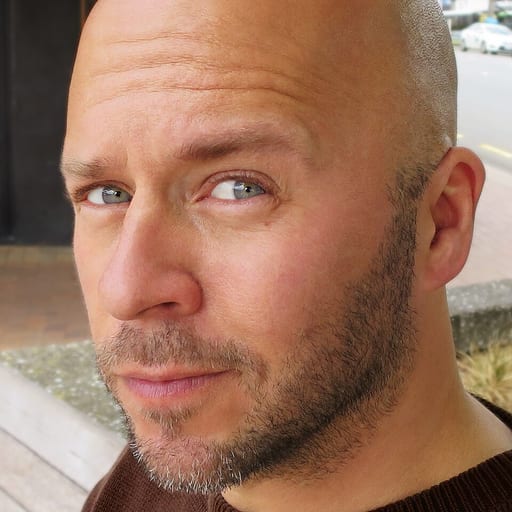
Photo: 49945carlo CC BY-SA 4.0 Original cropped
Quotes
450 basic records of 3,000
Quotes are word for word from the source.
Co-founder engagement
it's very unusual to have co-founders who are able to stay together that long, but it's also really interesting that all three of you have still felt so engaged with the business
Our noteRob comments on the rarity of a three-person founding team staying together and motivated for 14 years.
Valuing small audiences
how many of us have 2,500 people listening to every word we say on a show? It's like, yeah, you can have a lot of impact.
Our noteRob reframes the perspective on what constitutes a successful audience size for a podcast.
Bootstrapper advantage
As bootstrappers, we're actually in a really good position as the market shifts. We don't have these incumbent positions so to speak.
Our noteRob explains why small, self-funded companies can adapt faster to AI shifts than incumbents.
Marketplace Exception Rule
when I say don't bootstrap a two-sided marketplace, I always mean unless you already have access to one or both sides.
Our noteRob clarifies the specific condition under which a marketplace might be bootstrappable.
Reviewing own performance
I watched my video and I was like, "OK, this is what I should have done differently. So it was super helpful to have that. And I'm excited to kind of take that and step it up a notch and just hopefully ideally get better this time.
Our noteRob discusses the value of watching recordings of his own public speaking to improve for future conferences.
Defining brand awareness
Brand awareness is not so much about sales, but it's making sure that when the customer thinks about the problem you are solving, they think of giving your product or company a try.
Our noteRob defines brand awareness as being top-of-mind for a specific problem domain.
Global market entry
it is very common for people to start websites and apps from outside the US and market them to the US.
Our noteRob discusses the feasibility of non-US founders targeting the American market.
Sales process reality
My guess is they're not super technical, and so you're not going to be able to sit at home and put up a Google ad and have people come through a funnel and convert.
Our noteRob explains why some niche markets require manual sales rather than automated marketing.
Mastermind group goals
we're going to hang out and talk about our businesses and basically get accountability going, is going to be the big part of it, is to talk to each other about what we're trying to do and the hurdles we're facing
Our noteRob describes the core activities and benefits of his new mastermind group.
Overcoming procrastination
I'm kind of excited to get it going and really get motivated on a few projects that I've just been kind of...I don't know, I've had on the backburner and thought about doing and just having trouble getting motivated for them.
Our noteRob explains how he hopes the mastermind will help him start stalled projects.
Risks of premature growth
premature growth can be detrimental to a small team that's not equipped to handle a large number of sign-ups.
Our noteRob discusses why rushing to launch and grow too early can hurt a startup.
Early stage social engagement
monitoring Twitter and engaging with folks, especially in the early days, will earn you fans. It can earn you press.
Our noteRob explains the benefits of using Twitter to gain momentum and fans during the early days of a startup.
Charging for products
But as a one person company, man, you really just can't give it away for free.
Our noteRob argues that solo founders cannot afford to offer free products.
Niche SaaS pricing
in general, if you have a SaaS app aimed at a niche, I would expect that you are going to be much better off not having a free plan. A free trial is OK; a time-limited free trial of your app is fine.
Our noteRob suggests using time-limited trials instead of permanent free plans.
Lifecycle Email Strategy
As soon as someone signs up for a trial, it turns into live cycle emails and that's where you're educating more about your product, how to use it, how to get setup
Our noteExplaining the difference between marketing drips and lifecycle emails.
Need for documentation
He hit a point where right around between 10 and 12 employees he just couldn't go on any longer trying to do everything verbally and he had to start putting stuff in writing
Our noteRob describes the scaling point where verbal instructions fail.
Hiring through network
I think I'm going to take it in stages of I'm going to work the network first and then only if that doesn't work then I'll explore everything else.
Our noteRob discusses his strategy for finding a marketing intern by starting with his own audience and network.
Reality TV skepticism
I'm not a fan of most reality TV because it's so engineered and they act like it's reality, but it's loosely scripted or the producers set up these scenarios.
Our noteRob discusses his general dislike for the artificial nature of reality television shows.
Focus on Growth
Even if you know how to do it, none of that moves your business forward. I would always opt towards going with a platform as a service at the start.
Our noteRob emphasizes focusing on tasks that move the business forward rather than infrastructure maintenance.
Technical literacy
I don't think you should be able to code everything in a SaaS app, but maybe it's worth going through a code where the code camps or maybe it's worth on the side taking you to make classes.
Our noteRob suggests that non-technical founders should still learn the basics of coding.
Limited industry vocabulary
You'll be shocked, there's only so many terms in any space. In SaaS, it's an app and there's MRR and there's LTV and it sounds like there is infinite
Our noteRob reassures a listener that the number of essential industry terms is actually quite manageable.
Finding startup ideas
I think something else you're touching on is there's a ton of ways to find startup ideas, right? You can find a problem. Sometimes that problem is your own - scratch your own itch. Sometimes that problem is at your day job.
Our noteRob discusses various sources for identifying potential business problems to solve.
Course completion rates
Yeah, that's pretty impressive because the completion rate or even the consumption rate, so many information products for courses is very, very low.
Our noteRob comments on the difficulty of getting users to finish educational content.
Evaluating developers
Hiring coders, ten times harder even for me who write you know I'm a coder it's still really hard to evaluate and all that stuff.
Our noteRob compares the difficulty of hiring developers versus designers.
Building working relationships
I really need to know that we can work together. And it's good to have just a little bit of face to face so that the person understands kind of where you are coming from
Our noteRob emphasizes the importance of a brief personal connection when hiring.
Specialized design roles
I would recommend actually if possible finding a designer who just goes to PSDs and then using someone else who is very good in specialized that PSD to HTML.
Our noteRob suggests splitting design and front-end coding into specialized tasks.
Landing page content
I would lean towards not, especially if you are selling a product like a SaaS app people care more about what does it do.
Our noteRob advises on whether to include personal background on a coming soon page.
Buying fast data
But you learn so, so much faster if you have budget that you can work through because you learn very quickly what's working and what's not.
Our noteRob emphasizes that a higher ad spend allows for faster learning and more solid data.
Accepting hard feedback
If you're at the end of your rope and you're frustrated and you've been working on it for multiple years and it's not working, when you hear that it's going to sting, but I think it's good feedback to hear
Our noteRob explains why hearing that a project isn't working is painful but necessary when a founder is struggling.
Constant maintenance required
Just the online marketing stuff changes so fast that truly having a business that is profitable and lasts for 10 years online without quite a bit of concerted effort every 12-18 months to just fight the fires, I've done it.
Our noteRob explains that online businesses require frequent intervention to survive changing market conditions.
You are seeing 705 basic records. Membership answers from all 4,700 of this master's records.
See membershipMore masters in this field
See the whole fieldSolo business and indie makers

These records are our compilation of public statements and sources. We are not affiliated with or endorsed by Rob Walling or any related company. If something should come down, tell us. Takedown request form