
Richard Feynman
리처드 파인만
Nobel physicist and teacher; The Feynman Lectures on Physics
261 records in all
- Principles 73
- Episodes 84
- Quotes 104
3 free questions a day, no sign-up.
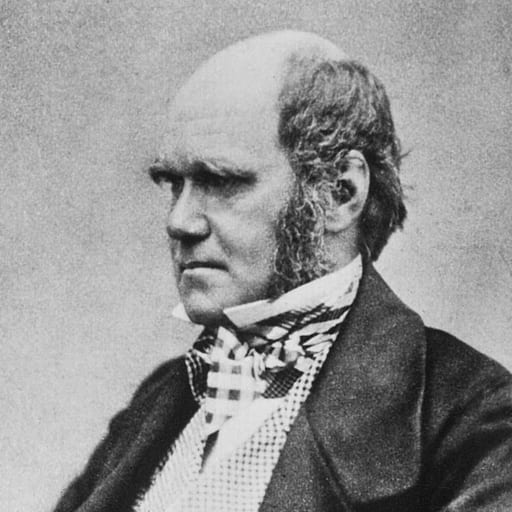
Photo: Copyright Tamiko Thiel 1984 CC BY-SA 3.0 Original cropped
Quotes
16 basic records of 104
Quotes are word for word from the source.
Limits of precision
It is really quite impossible to say anything with absolute precision, unless that thing is so abstracted from the real world as to not represent any real thing.
Our noteExplaining why absolute precision is often an abstraction from reality.
Danger of infallibility
Science alone of all the subjects contains within itself the lesson of the danger of belief in the infallibility of the greatest teachers of the preceding generation.
Our noteAddressing science teachers on the importance of teaching skepticism.
Embrace difficult problems
Nature isn't classical, dammit, and if you want to make a simulation of nature, you'd better make it quantum mechanical, and by golly it's a wonderful problem, because it doesn't look so easy.
Our noteFeynman was discussing the necessity of quantum computers to simulate physical reality.
Testing your ideas
The test of all knowledge is experiment. Experiment is the sole judge of scientific "truth".
Our noteHe emphasizes that empirical evidence is the only way to validate knowledge.
Interdisciplinary nature
Nature is not interested in our separations, and many of the interesting phenomena bridge the gaps between fields.
Our noteFeynman argues that the separation of scientific fields is merely a human convenience.
Beware simple assumptions
Whenever you see a sweeping statement that a tremendous amount can come from a very small number of assumptions, you always find that it is false.
Our noteFeynman discusses scientific imagination and the hidden complexity behind seemingly simple physical assumptions.
Patterns in systems
Nature uses only the longest threads to weave her patterns, so each small piece of her fabric reveals the organization of the entire tapestry.
Our noteFeynman illustrates how fundamental laws are interconnected and visible even in small parts of nature.
Recognizing the truth
You can recognize truth by its beauty and simplicity. It is always easy when you have made a guess, and done two or three little calculations to make sure that it is not obviously wrong, to know that it is right.
Our noteFeynman describes how experienced scientists can sense a correct theory early on.
Focus on knowns
They always want to know the things we don't know.
Our noteFeynman discusses how people ignore established knowledge in favor of speculative new theories.
Results over philosophy
but because physics is an experimental science and the framework agrees with experiment, it's good enough...
Our noteHe argues that practical results and experimental validation matter more than philosophical worries.
False sense of security
When playing Russian roulette the fact that the first shot got off safely is little comfort for the next.
Our noteHe explains why previous success doesn't guarantee future safety in flawed systems.
True understanding
I learned very early the difference between knowing the name of something and knowing something.
Our noteHe explains that labels are not the same as actual knowledge.
Embracing uncertainty
I can live with doubt, and uncertainty, and not knowing. I think it's much more interesting to live not knowing than to have answers which might be wrong.
Our noteFeynman discusses his comfort with not having absolute answers.
Fair self evaluation
Know your place in the world and evaluate yourself fairly, not in terms of the naïve ideals of your own youth
Our noteFeynman was advising a colleague on how to view their own career and identity.
True understanding
"I'll prepare a freshman lecture on it." But a few days later he came to me and said: "You know, I couldn't do it. I couldn't reduce it to the freshman level. That means we really don't understand it."
Our noteFeynman explaining why he couldn't simplify a complex physics concept for a beginner.
Utter honesty
It's a kind of scientific integrity, a principle of scientific thought that corresponds to a kind of utter honesty - a kind of leaning over backwards.
Our noteFeynman defines the essential quality missing in pseudoscience as a commitment to total transparency.
You are seeing 40 basic records. Membership answers from all 261 of this master's records.
See membershipMore masters in this field
See the whole fieldScience and first-principles thinking

These records are our compilation of public statements and sources. We are not affiliated with or endorsed by Richard Feynman or any related company. If something should come down, tell us. Takedown request form