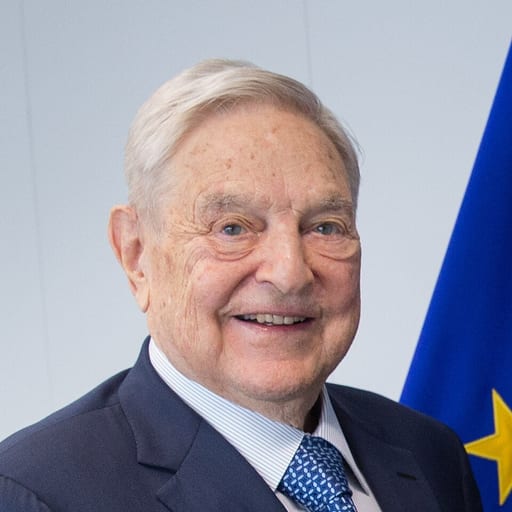
George Soros
조지 소로스
Hedge fund investor and philanthropist; theory of reflexivity
921 records in all
- Principles 312
- Episodes 195
- Quotes 414
3 free questions a day, no sign-up.
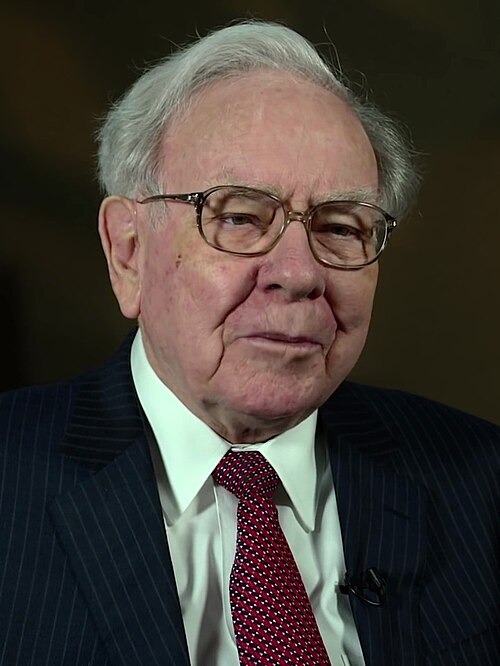
Photo: Aris Oikonomou / European Commission CC BY 4.0 Original cropped
Quotes
62 basic records of 414
Quotes are word for word from the source.
Grassroots Action
If Europe's leaders fail to act, those who want to save the EU in order to reinvent it should follow the lead of the young activists in Britain.
Our noteHe encourages bottom-up mobilization when top-down leadership fails to address a crisis.
Correcting mistakes
The strength of an open society lies in its ability to recognize and correct its mistakes.
Our noteHe emphasizes that the ability to pivot after a failure is a core competitive advantage.
Investment in education
The two trends are mutually reinforcing: marginalization breeds contempt, and vice versa . The only escape from this trap is investment in education, which would pay enormous social dividends.
Our noteSoros explains why education is the key to breaking the cycle of marginalization for the Roma people.
Breaking hostile stereotypes
Over that period, we have educated a small cohort of young Roma who retain their identity and yet can break the hostile stereotypes held by those with whom they interact.
Our noteHe describes the success of his foundation's long-term educational initiatives for Roma youth.
Facing Reality
The financial crisis has inflicted hardship on a population that does not like to face harsh reality.
Our noteSoros discusses the psychological impact of economic downturns on the public.
Negotiating From Weakness
Defenders of the current policy argue that Israel cannot afford to negotiate from a position of weakness. But Israel's position is unlikely to improve as long as it pursues its current course.
Our noteHe challenges the idea that one must wait for a position of absolute strength before starting talks.
Market Instability
Markets cannot be left to correct their own mistakes, because they are likely to overreact and behave in an indiscriminate fashion.
Our noteHe argues against the laissez-faire idea that markets are always self-correcting.
Reflexivity in Stocks
a company whose stock is overvalued can use that to justify the inflated expectations of its shareholders, but only up to a point.
Our noteSoros describes how market expectations can shape the very reality they are trying to predict.
Competition and control
The principle of unrestrained competition ought not to serve as the basis for public policy either in international or in domestic matters. Civilized existence requires both competition and control.
Our noteSoros explains that pure competition without a framework of rules leads to systemic instability.
Breaking Dogmatic Thinking
Once the isolation is broken, the huge discrepancy between dogma and reality becomes exposed and dogma loses its power to persuade.
Our noteSoros explains how opening a closed system exposes the flaws in its ideology.
Vantage Point Observation
My experience with the foundation has given me a vantage point from which to observe the evolution of Gorbachev's new thinking, and the changes being made in Soviet society
Our noteSoros describes how his philanthropic work provided unique insights into political shifts.
Scale of philanthropy
George Soros is one of the world's leading philanthropists. Over the past thirty years, he has provided more than $8 billion to his worldwide network of foundations
Our noteThe passage introduces Soros's massive financial commitment to his global foundation network.
Facing existential crisis
The European Union is in an existential crisis. Everything that could go wrong has gone wrong.
Our noteSoros describes the dire state of the European Union in 2018.
Regulation and Reform
I recognize that every new regulation has unintended adverse consequences, but this does not mean reform should be abandoned.
Our noteSoros discusses the imperfections of campaign finance laws and the need for ongoing reform.
Systemic Interdependence
But what works for Germany cannot work for the rest of Europe: no country can run a chronic trade surplus without others running deficits.
Our noteSoros critiques the idea that every country can follow the same economic model simultaneously.
Anatomy of Bubbles
Every sequence of boom and bust, or bubble, begins with some fundamental change, such as the spread of the Internet, and is followed by a misinterpretation of the new trend in prices that results from the change.
Our noteDescribing the starting point and the psychological progression of financial bubbles.
Step-by-step development
The three have to be developed together, step-by-step. There can be no treaty or constitutional clause preventing the establishment of the EFA if the German electorate, as represented by the Bundestag, approves it
Our noteSoros argues for a holistic and incremental approach to building European institutions.
Extraordinary measures
Europe needs to resort to extraordinary measures to deal with an extraordinary situation that is hitting all of the EU's members.
Our noteSoros argues for unconventional financial tools during the COVID-19 crisis.
Defining Open Society
An open society, in my definition, is an imperfect society that holds itself open to improvement.
Our noteSoros defines the core characteristic of an open society as its willingness to improve its flaws.
Identity and Success
In the past, when individual Roma made their way in the world, they tended to shed their Roma identity.
Our noteSoros notes how successful individuals often hid their roots, which prevented the breaking of stereotypes.
Political Self Preservation
Xi can't afford to come clean because he is at a very delicate moment in his career.
Our noteSoros discusses why leaders might persist in failing policies to protect their personal power.
Awareness of threats
Neither Europe's leaders nor its citizens are fully aware of the scope of this challenge, much less how to deal with it.
Our noteSoros discusses the lack of preparedness in Europe regarding Russia's invasion of Ukraine.
Critical Thinking Framework
The framework had nothing to do with finance, but it is based on critical thinking. This allowed me to analyze the deficiencies of the prevailing theories guiding institutional investors.
Our noteSoros explains how his philosophical background helped him succeed in the financial markets.
Purpose Over Profit
Why should I kill myself to make more money? I reflected long and hard on what I really cared about and in 1979 I set up the Open Society Fund.
Our noteSoros describes his midlife crisis and the decision to shift toward philanthropy.
Values over independence
The importance of preserving the shared values underpinning a whole way of life far outweigh any possible advantages of independence.
Our noteSoros argues that maintaining collective stability is more valuable than the perceived benefits of separation.
Shifting focus
I am giving up on changing the financial arrangements, the creditor-debtor relationship that has now turned into a permanent system. I will continue to focus on politics, because that is where I expect dramatic developments.
Our noteSoros explains why he is shifting his efforts from financial reform to political engagement.
Principle of fallibility
financial markets, far from accurately reflecting all the available knowledge, always provide a distorted view of reality. This is the principle of fallibility.
Our noteExplaining why market prices are never a perfect reflection of underlying reality.
Nature of busts
The bust is short and steep because it involves the forced liquidation of unsound positions. Disillusionment turns into panic, reaching its climax in a financial crisis.
Our noteExplaining why market crashes happen much faster than the preceding booms.
Dogma vs Reality
Communist dogma was false exactly because it claimed to incorporate the ultimate truth. Its tenets could be enforced only by doing a great deal of violence to reality
Our noteSoros explains why closed societies based on absolute claims eventually fail.
Resisting Enemy Desires
I could stop myself only by remembering that it must be irrational to follow the wishes of your enemies.
Our noteHe reflects on how to avoid falling into the traps set by opponents.
You are seeing 138 basic records. Membership answers from all 921 of this master's records.
See membershipMore masters in this field
See the whole fieldInvesting and capital allocation

These records are our compilation of public statements and sources. We are not affiliated with or endorsed by George Soros or any related company. If something should come down, tell us. Takedown request form