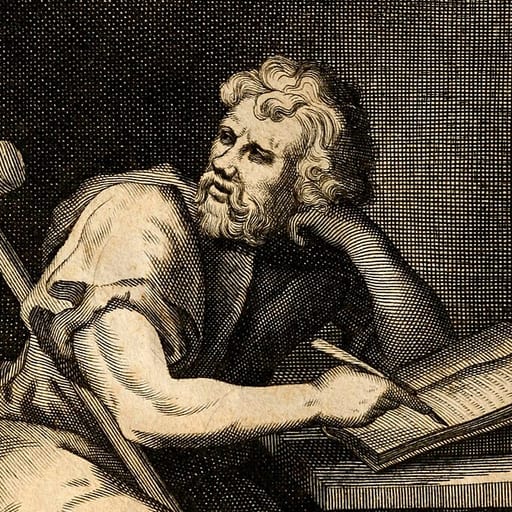
Epictetus
에픽테토스
Stoic philosopher born a slave; the Discourses and the Enchiridion
932 records in all
- Principles 303
- Episodes 208
- Quotes 421
3 free questions a day, no sign-up.
Photo: William Sonmans / Michael Burghers Public domain Original cropped
Quotes
63 basic records of 421
Quotes are word for word from the source.
Internal vs External
There are things which are within our power, and there are things which are beyond our power.
Our noteEpictetus defines the fundamental distinction between what we can and cannot control.
External Dependencies
Beyond our power are body, property, reputation, office, and, in one word, whatever are not properly our own affairs.
Our noteHe identifies external factors that people often mistakenly try to control.
The goal of virtue
Happiness, the effect of virtue, is the mark which God has set up for us to aim at.
Our noteThe text explains that happiness is a natural byproduct of living virtuously.
Internal vs External
What then should a man have in readiness in such circumstances? What else than this? What is mine, and what is not mine; and what is permitted to me, and what is not permitted to me.
Our noteHe defines the core Stoic practice of distinguishing between what we control and what we do not.
The Power of Reason
In short, if we observe, we shall find that the animal man is pained by nothing so much as by that which is irrational; and, on the contrary, attracted to nothing so much as to that which is rational.
Our noteHe explains that human suffering often stems from perceiving a situation as irrational.
Personal standards
Epictetus is not superior to Socrates; but if he is not inferior, this is enough for me
Our noteHe explains that one should strive for excellence even if they cannot reach the absolute peak.
Observe the world
Take care then not to die without having been spectators of these things.
Our noteHe urges people to appreciate and interpret the world around them before their life ends.
Definition of education
Education is the learning how to adapt the natural præcognitions to the particular things conformably to nature
Our noteHe defines education as the practical application of general principles to specific, real-world situations.
Understanding human error
When then any man assents to that which is false, be assured that he did not intend to assent to it as false, for every soul is unwillingly deprived of the truth
Our noteEpictetus explains why we should not be angry with people who make mistakes or hold wrong opinions.
Focus on control
I have learned to see that everything which happens, if it be independent of my will, is nothing to me.
Our noteEpictetus defines the core of his philosophy as ignoring things outside of his personal control.
Self guardianship
He has delivered yourself to your own care, and says: "I had no one fitter to entrust him to than yourself
Our noteEpictetus emphasizes that we are the primary guardians of our own character and integrity.
Root of anxiety
If he did not want something which is not in his power, how could he be anxious?
Our noteHe identifies that anxiety comes from desiring things we cannot control.
Confidence through practice
every art has a certain strength and confidence in the things which belong to it.
Our noteEpictetus explains why we feel anxious when speaking to powerful people if we haven't practiced.
The labor of learning
Every art when it is taught causes labor to him who is unacquainted with it and is unskilled in it
Our noteHe observes that the process of mastering a craft is often unpleasant to watch or experience.
Focus on purpose
Man, you have forgotten your purpose: you were not travelling to this inn, but you were passing through it.
Our noteHe warns against getting distracted by pleasant tools or environments instead of reaching the goal.
Specific progress
Do not then mix things which are different, and do not expect, when you are laboring at one thing to make progress in another.
Our noteHe warns against expecting results in areas where you haven't actually put in the work.
Resilient talent
But those who have a good natural disposition, even if you try to turn them aside, cling still more to reason.
Our noteThe best team members are those whose natural character drives them toward logic and truth.
Examine your beliefs
But show to me that you have made some inquiry into your opinions and have taken some pains about them.
Our noteEpictetus challenges a visitor to prove they have actually audited their own thinking process.
emotional boundaries
And the sorrow of another is another's sorrow; but my sorrow is my own.
Our noteHe emphasizes the importance of distinguishing between our own emotions and those of others.
External vs Internal
Is that shameful to you which is not your own act, that of which you are not the cause, that which has come to you by accident
Our noteHe questions why people feel shame for things outside their direct control.
Managing necessity
Do not attach yourself to them and they will not be necessary; do not say to yourself that they are necessary, and then they are not necessary.
Our noteHe argues that our sense of what is 'necessary' is often just a mental attachment.
Constant vigilance
if you only fall a nodding a little, all that you have up to this time collected is gone.
Our noteHe emphasizes the importance of maintaining focus to preserve one's character and progress.
Impregnable soul
nothing else than his opinions makes a man's soul impregnable.
Our noteEpictetus teaches that mental strength comes solely from one's internal judgments and beliefs.
Ownership of mind
my opinions alone are mine and they cannot be taken from me, and I am satisfied while I have them, wherever I may be and whatever I am doing.
Our noteEpictetus explains that internal beliefs are the only property that cannot be confiscated by others.
Purposeful work
What then do you wish to be doing when you are found by death? I, for my part, would wish to be found doing something which belongs to a man, beneficent, suitable to the general interest, noble.
Our noteEpictetus reflects on the importance of spending one's time on meaningful and noble actions.
danger of inattention
When you have remitted your attention for a short time, do not imagine this, that you will recover it when you choose
Our noteEpictetus warns that losing focus is not easily reversed because it creates a bad habit.
act today
If it is good to use attention tomorrow, how much better is it to do so today?
Our noteHe challenges the habit of procrastinating mental discipline and focus.
internal focus
we ought to keep the soul directed to this mark, to pursue nothing external, and nothing which belongs to others
Our noteHe advises focusing only on what is within our own control and will.
The price of success
You will be unjust then and insatiable, if you do not part with the price, in return for which those things are sold, and if you wish to obtain them for nothing.
Our noteEpictetus explains that social status and invitations have a cost, often in the form of flattery or time.
Live with standards
Immediately then think it right to live as a full-grown man, and one who is making proficiency, and let everything which appears to you to be the best be to you a law
Our noteHe encourages immediate commitment to high personal standards and professional integrity.
You are seeing 139 basic records. Membership answers from all 932 of this master's records.
See membershipMore masters in this field
See the whole fieldPhilosophy and wisdom traditions
These records are our compilation of public statements and sources. We are not affiliated with or endorsed by Epictetus or any related company. If something should come down, tell us. Takedown request form