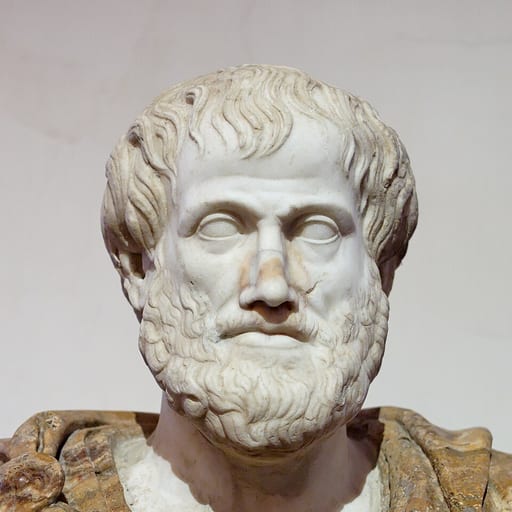
Aristotle
아리스토텔레스
Greek philosopher; ethics, rhetoric and logic
952 records in all
- Principles 311
- Episodes 302
- Quotes 339
3 free questions a day, no sign-up.
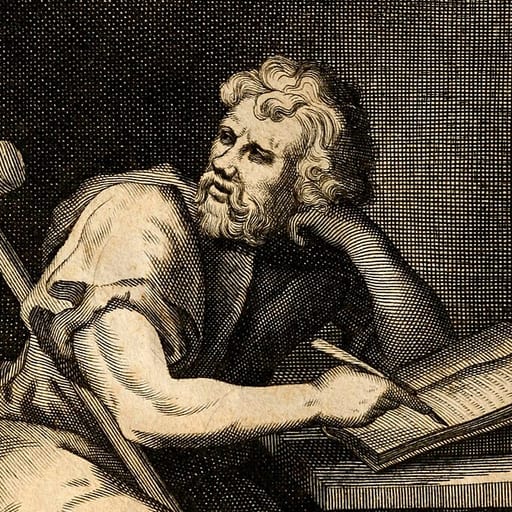
Photo: After Lysippos Public domain Original cropped
Quotes
51 basic records of 339
Quotes are word for word from the source.
Hiring for competence
The earliest of these offices was that of the King, which existed from ancestral antiquity. To this was added, secondly, the office of Polemarch, on account of some of the kings proving feeble in war
Our noteExplaining how new leadership roles were created when existing leaders lacked specific skills.
managing internal risk
they began to remove others as well, including any one who seemed to be more powerful than was expedient.
Our noteThe Athenians used ostracism to prevent any single individual from becoming too dominant.
Psychological safety
they abolished all indictments for illegal proposals, all impeachments and pubic prosecutions, in order that every Athenian should be free to give his counsel
Our noteThe state removed legal threats to encourage honest feedback and counsel from citizens.
Missing the window
They mismanaged their opportunity then, and in a very short time they learnt their mistake.
Our noteAristotle describes how the Athenians refused a peace proposal during the war.
Enforcing the rules
if they let this man escape they would encourage others to imitate him, while if they executed him they would make an example for all to learn by.
Our noteArchinus argues for strict enforcement of an amnesty agreement to prevent future violations of the law.
Penalties for nonpayment
If any one fails to pay his instalment, a note is made of it on the tablet; and he is bound to pay double the amount of the deficiency, or, in default, to be imprisoned.
Our noteAristotle explains the strict consequences for failing to pay debts or taxes to the state.
Protecting property rights
As soon as the Archon enters office, he begins by issuing a proclamation that whatever any one possessed before he entered into office, that he shall possess and hold
Our noteThe chief magistrate's first act is to guarantee the stability of private property for all citizens.
Authority in action
The Generals have full power, when on active service, to arrest any one for insubordination, or to cashier him publicly, or to inflict a fine
Our noteAristotle outlines the disciplinary powers granted to leaders during active operations.
Universal truths
Poetry, therefore, is a more philosophical and a higher thing than history: for poetry tends to express the universal, history the particular.
Our noteHe explains why creating possible scenarios is more valuable than just recording facts.
Consistent Inconsistency
The fourth point is consistency: for though the subject of the imitation, who suggested the type, be inconsistent, still he must be consistently inconsistent.
Our noteHe discusses the importance of maintaining a character's logic throughout a story.
Clarity and distinction
The perfection of style is to be clear without being mean.
Our noteAristotle defines the ideal balance for effective communication and writing.
Strategic word choice
A certain infusion, therefore, of these elements is necessary to style
Our noteAristotle advocates for a mix of common and unique language for maximum impact.
Justifying creative errors
If he describes the impossible, he is guilty of an error; but the error may be justified, if the end of the art be thereby attained
Our noteAristotle explains that technical errors are acceptable if they make the final product more striking.
Power of combination
No one of these terms, in and by itself, involves an affirmation; it is by the combination of such terms that positive or negative statements arise.
Our noteHe notes that isolated words lack truth value until they are combined into assertions.
Foundation of existence
if these last did not exist, it would be impossible for anything else to exist.
Our noteHe argues that abstract concepts depend entirely on the existence of individual, concrete things.
Focus on Individuals
All substance appears to signify that which is individual. In the case of primary substance this is indisputably true, for the thing is a unit.
Our noteAristotle explains that true substance is found in specific, individual units rather than abstract categories.
Fact Based Truth
The truth or falsity of a statement depends on facts, and not on any power on the part of the statement itself
Our noteHe emphasizes that external reality, not the words themselves, determines the validity of a claim.
Types of quantity
Quantity is either discrete or continuous. Moreover, some quantities are such that each part of the whole has a relative position to the other parts: others have within them no such relation of part to part.
Our noteAristotle explains the fundamental division of quantities into discrete and continuous types.
Secondary quantitative terms
It is because we have in mind some one of these quantities, properly so called, that we apply quantitative terms to other things.
Our noteHe clarifies how we often describe non-quantitative things using quantitative language by association.
Transient vs Permanent
Those conditions, however, which arise from causes which may easily be rendered ineffective or speedily removed, are called, not qualities, but affections
Our noteAristotle distinguishes between fleeting reactions and lasting character traits.
Meanings of possession
The term 'to have' is used in various senses.
Our noteAristotle analyzes the different ways humans describe owning or possessing things.
You are seeing 143 basic records. Membership answers from all 952 of this master's records.
See membershipMore masters in this field
See the whole fieldPhilosophy and wisdom traditions
These records are our compilation of public statements and sources. We are not affiliated with or endorsed by Aristotle or any related company. If something should come down, tell us. Takedown request form