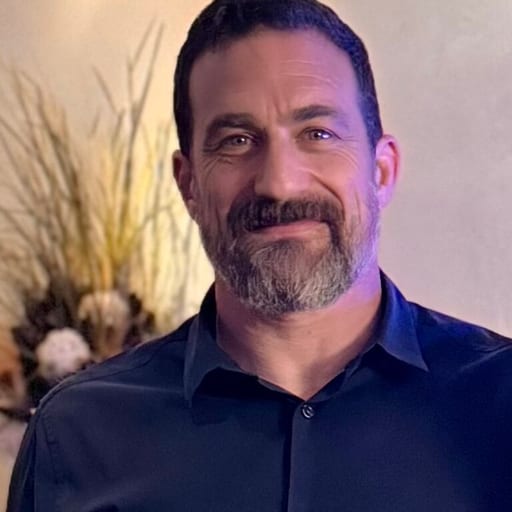
Andrew Huberman
앤드루 휴버먼
Stanford neuroscientist and host of the Huberman Lab podcast
1,154 records in all
- Principles 560
- Episodes 249
- Quotes 345
3 free questions a day, no sign-up.
Quotes
52 basic records of 345
Quotes are word for word from the source.
Self reflection timing
When somebody sits down to think about their strengths or to think about their self-talk, or to just think about what they're made of and how they want to change or not change certain things, build on certain strengths, when and how should they do it?
Our noteHuberman asks about the best approach for individuals to analyze their own character and habits.
Processing styles
some people do best by thinking, sitting and thinking, walking and thinking, driving and thinking, and working things through, and other people actually work it out by talking
Our noteAndrew asks about the difference between internal and external processors.
Foundational health
AG1 ensures that those gaps are filled. I get asked all the time by people, if they were to take just one supplement, what would my recommendation for that supplement be?
Our noteAndrew explains why he recommends AG1 as a comprehensive foundational supplement.
Assumptions on silence
There does seem to be this assumption that if people are talking a lot, that there's a lot going on in there all the time, and some of it's just getting out, and that if people are quiet, that it's either more regulated or there's not a whole lot going on in there.
Our noteAndrew discusses common misconceptions about verbal versus quiet personalities.
Questioning state control
But how much should we be trying to control our states? I do wonder if it's good for us to think that there's something wrong for us if we feel a certain way, period.
Our noteAndrew questions the modern obsession with constantly regulating one's internal emotional state.
Audience preference
You can get as nerdy as you want. This audience likes nerdy.
Our noteEncouraging the guest to share technical details because the audience values depth.
Cynicism and Rigidity
Cynicism and rigidity seem to go together. So that's why I'm lumping these kind of psychological phenotypes.
Our noteAndrew observes the connection between a cynical outlook and mental inflexibility.
Competitive Advantage
nowadays it's easier than ever to be extraordinary because most people are basically spending time just consuming experiences on social media and doing a lot less.
Our noteAndrew discusses how social media consumption reduces the general level of active striving in society.
Brain Efficiency
So there's really no blank real estate in the cortex. It's all used.
Our noteAndrew emphasizes that every part of the brain's cortex is actively utilized.
Early Specialization
it turns out that specializing too early, on average, doesn't play out so well in terms of peak of success later.
Our noteAndrew discusses a study about the timing of specialization in sports and creativity.
Goal of Plasticity
So plasticity, it seems, is not the goal. Directed plasticity is the goal.
Our noteHe clarifies that brain change should be intentional and targeted rather than random.
Glucose and willpower
Glucose directly impacts our brain function, mood, and energy levels, and it may even affect our levels of tenacity and willpower.
Our noteExplaining the biological basis of mental performance and persistence through glucose levels.
Mission and independence
this podcast is separate from my teaching and research roles at Stanford. It is, however, part of my desire and effort to bring zero cost to consumer information about science
Our noteClarifying the relationship between his academic roles and his public content creation.
Exercise and cognition
I think my cognition is better when I'm doing more cardio and when the repetition ranges are a little bit or higher, which is not to say that people who lift heavy are dumb
Our noteAndrew reflects on how different types of physical training affect his mental clarity.
Trusting Internal Signals
what's great about getting older is that you stop questioning the signals that come from, I think deeper recesses of your nervous system to say, "Hey, this is not good," or, "Hey, this is great, more of this."
Our noteAndrew discusses how aging provides the data needed to trust one's intuition and bodily signals.
Pain of procrastination
I know that the worst I feel, the worst way to feel is when I'm procrastinating and I don't do something.
Our noteAndrew reflects on the negative emotional impact of procrastination compared to doing hard work.
Subconscious awareness
There needs to be an awareness of the things that we're just not aware of. (00:32:51) So I think the answer to your question, do you embrace or do you fight these aspects of self is? I think you get in your subconscious through good work with somebody skilled.
Our noteAndrew emphasizes the importance of introspection to understand internal conflicts that hinder peace.
Dopamine and behavior
dopamine lies at the heart of addiction to all things, but today we are mainly going to focus on how what we do and how we do it, and how we conceptualize those things, leads to changes in this amazing molecule
Our noteIntroducing the role of dopamine in motivation and how our actions influence its levels.
Neuromodulation mechanism
dopamine release changes the probability that certain neural circuits will be active and that other neural circuits will be inactive. So it modulates a bunch of things all at once.
Our noteDescribing how dopamine acts as a neuromodulator to coordinate brain activity.
Dopamine and pleasure
What dopamine does is dopamine really colors the subjective experience of an activity to make it more pleasureful, to make it something that you want more of.
Our noteExplaining how dopamine influences our desire to repeat certain activities.
Subjective reward value
as we start to engage with something more and more, and what we say about it and what we encourage ourself to think about it has a profound impact on its rewarding or nonrewarding properties.
Our noteDiscussing how our internal narrative changes the dopamine response to an activity.
Power of neuroplasticity
we have neuroplasticity, this incredible gift that humans have more of than any other species as far as we know, which is we can decide to make changes.
Our noteHuberman highlights the unique human capacity to intentionally rewire the brain.
Varying reward timescales
my reward system was trained up on lots of timescales, short, medium, long timescales. As I've moved into podcasting, the temporal loops are shorter.
Our noteComparing the long feedback loops of science with the faster pace of content creation.
Closed reward loops
The only implication of the pornography masturbation scenario is more pornography masturbation. That's the only implication of it.
Our noteDiscussing how certain behaviors lead to no growth or external achievement.
Subconscious decision factors
there are many factors that impact whether or not we think something is good, very good, bad, or very bad, that operate below our conscious awareness.
Our noteHuberman introduces how hidden biological factors influence our daily valuations and choices.
Subconscious multitasking
It suggests that we are multitasking even when we think we are not multitasking.
Our noteReflecting on how the brain monitors potential notifications in the background.
Cognitive warm up
sitting down to do something difficult, or learn, or write, or pay careful auditory attention maybe even to a podcast, that there's a kind of a warming up period.
Our noteComparing mental focus to physical exercise in terms of needing a start-up phase.
Visual focus aperture
where we place our visual attention and the size of the aperture of that attention, whether or not we're looking at a small box or a big box, not metaphorically, but literally, determines the aperture of our attention going forward.
Our noteAndrew explains how visual focus directly dictates mental focus levels.
Behavioral neurochemistry
This is behaviorally driven pharmacology, as I like to call it, because clearly there's a change in our chemistry when we do this sort of thing.
Our noteAndrew emphasizes using behavior instead of just supplements to change mental states.
Splitting Focus
I can place all my attention on you and what we're talking about, or your face, et cetera. I can split my attention between you and something over there in the corner. Or I can take that second spotlight of attention and place it on myself
Our noteAndrew describes the different ways we can direct our internal and external attention.
You are seeing 173 basic records. Membership answers from all 1,154 of this master's records.
See membershipMore masters in this field
See the whole fieldScience and first-principles thinking

These records are our compilation of public statements and sources. We are not affiliated with or endorsed by Andrew Huberman or any related company. If something should come down, tell us. Takedown request form