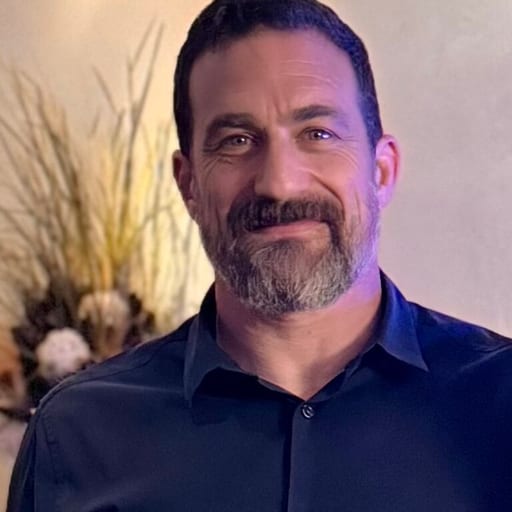
Andrew Huberman
앤드루 휴버먼
Stanford neuroscientist and host of the Huberman Lab podcast
1,154 records in all
- Principles 560
- Episodes 249
- Quotes 345
3 free questions a day, no sign-up.
Quotes
52 basic records of 345
Quotes are word for word from the source.
Dopamine shapes behavior
dopamine levels are constantly changing, and that shapes not just what you do now, but how you think about your recent past and what you will do next.
Our noteHe explains how fluctuating dopamine levels influence our perception of time and future actions.
Dopamine and novelty
The dopamine system loves novelty, especially positive novelty, right? You don't think you're going to have a great meal someplace that turns out to be spectacular, versus you're really expecting a place to be great.
Our noteAndrew explains how the dopamine system responds to unexpected positive outcomes versus met expectations.
Misunderstanding Dopamine
I think that dopamine is thrown around so much nowadays that we don't even really understand what motivation is, let alone how dopamine will be playing this key role.
Our noteAndrew critiques the casual use of scientific terms in popular culture.
Nature of ADHD
It's not a lack of ability to focus, it's that there's a lot of choppy terrain to get into that narrow mode of focus, unless it's something they love.
Our noteAndrew clarifies that ADHD is often a difficulty in entering focus rather than a total absence of it.
Effort and learning
Does effort strengthen an algorithm? In other words, if I get on social media, it's very easy to scroll, scroll, scroll, scroll, scroll, short-form video content. Doesn't take any effort.
Our noteAndrew questions if the lack of effort in consuming content prevents actual learning from occurring.
Personal health choices
I made the choice a few years ago to stop using the Bluetooth headphones based on my personal experience, which was I kept getting these cysts behind my ears, which I was told were swellings of lymph.
Our noteAndrew explains why he switched from wireless to wired headphones due to physical symptoms.
fear of isolation
I realized that I felt compelled to continue to reach out to people. And then I realized, as you just provided your answer to the last question, that there's probably something in me that has a bit of a fear of separation
Our noteAndrew reflects on why he struggles to focus on deep work without checking his phone.
Old research methods
I used to go to the library and Xerox copy papers, and I loved looking through the stacks, but frankly, it was physically exhausting and time-consuming
Our noteAndrew reflects on the difficulties of accessing information before the digital age.
Digital research tools
I love PubMed. The world's at my fingertips. The world of research is at my fingertips. My goodness.
Our noteAndrew expresses his appreciation for modern digital access to scientific research.
Improving attentional capacity
The important thing to remember is that we can all improve our attentional capacity. We can all rewire the circuits that make heightened levels of focus more accessible to us.
Our noteHe emphasizes that focus is a skill that can be trained and improved by anyone.
Smartphone induced ADHD
If you're struggling with focus nowadays, as a lot of people are because of stress, because of smartphone use, which turns out can induce adult ADHD - we'll talk about that - well, then pay attention to the symptomology.
Our noteHuberman warns about how modern technology and stress can negatively impact adult focus.
Dopamine and focus
Dopamine, when it's released in our brain, tends to turn on areas of our brain that narrow our visual focus and our auditory focus.
Our noteDescribing how dopamine acts as a neuromodulator to create a tunnel of attention.
Dopamine as conductor
What dopamine is doing in this context is dopamine is acting like a conductor. Dopamine is saying, "This circuit should be active, then that circuit should be active.
Our noteDescribing the regulatory role of dopamine in brain circuit activation.
Importance of inhibition
The pauses in music are just as important as the actual playing of notes. When dopamine is too low, neurons fire more than they should in these networks that govern attention.
Our noteUsing a music analogy to explain how focus requires silencing certain neurons.
The ultimate career goal
I think there's no higher celebration to be had at the end of one's career, if you can look back and be like, "Hey, I've put some really important knowledge into the world. People made use of that knowledge." And guess what? You spawned all these other scientific offspring or sport offspring or podcast offspring.
Our noteAndrew reflects on the legacy of providing value and mentoring others as the highest form of success.
Still body active mind
some incredible minds and creatives who have a practice of stilling the body while keeping the mind deliberately very active, very similar to rapid eye movement sleep.
Our noteDiscussing how high performers use physical stillness to enhance deep thinking.
Handling public criticism
I simply said what I would say anywhere, which was, "Hey, look, come on the podcast. Let's chat, and why don't you tell me where I'm wrong and let's discuss."
Our noteDescribing his response to a scientist who aggressively criticized his content on social media.
Early morning exercise
If I exercise before 8:30 AM especially if I start exercising when I'm a little bit tired, I get energy that lasts all day.
Our noteAndrew shares how early exercise helps him maintain energy levels throughout the day.
Handling public errors
I offered it as a teaching moment in two ways. One, for people to understand cumulative probability. It was interesting too, the number of people that had come out critiquing the gaffe.
Our noteAndrew describes how he turned a viral math error into a learning opportunity for his audience.
Correcting Data Mistakes
If you make a mistake, it's substantive and relate to data, you apologize and correct the mistake. Use it as a teaching moment.
Our noteAndrew discusses how to handle factual errors made during a podcast or presentation.
Crowdsourced Fact Checking
It's a reminder to be careful to edit, double check. But the internet usually edits for us and then we go make corrections.
Our noteAndrew explains how audience feedback helps identify small errors in long-form content.
Risk of Over-Caution
if you worry too much about it, then you aren't going to get the newest information out there.
Our noteAndrew discusses why he shares information on emerging topics like peptides despite limited data.
You are seeing 173 basic records. Membership answers from all 1,154 of this master's records.
See membershipMore masters in this field
See the whole fieldScience and first-principles thinking

These records are our compilation of public statements and sources. We are not affiliated with or endorsed by Andrew Huberman or any related company. If something should come down, tell us. Takedown request form